

Some artists roar their rebellion; others let it smoulder quietly, glowing from within. Duke Garwood belongs to the latter tribe – a rare musician whose grit, gentleness and uncompromising truth-to-self have earned him a place among modern music’s most authentic outliers.
His music doesn’t shout for attention; it waits, breathes, and then slowly gets under your skin. Gritty yet tender, dreamlike yet grounded, his songs feel less like performances and more like conversations you weren’t meant to overhear – intimate, unguarded, and quietly profound.
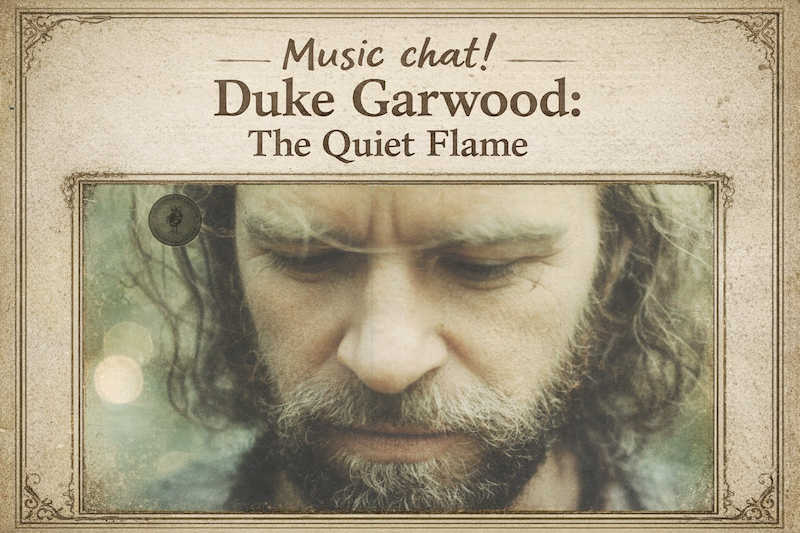
When we spoke, it was a calm morning, the kind that invites reflection rather than performance. Yet beneath Garwood’s gentle manner runs a steady flame: a deep commitment to craft, independence, and emotional truth. From the haunting Burning Seas – now indelibly linked to the cult Italian series Rocco Schiavone – to his love of unconventional instruments and collaborations that value trust over ego, this interview reveals an artist who has chosen depth over noise, solitude over spectacle. What follows is a rare glimpse into the mind of a modern rebel who believes that the most powerful music is often made softly, and on one’s own terms.
Monica:
Duke, you’re a great musician. I’ve been following you since watching a series in Italy called Rocco Schiavone (Ice Cold Murders airing on Channel 4). It’s my favourite TV crime series. That’s how I know you from.
Duke Garwood:
So you know me from my song Burning Seas?
Monica:
Yes! When I heard it on the first episode, I thought, “Oh my God, this is an amazing tune.” I was curious to investigate where this song came from. Fans come from everywhere!
Duke Garwood:
That’s great.
Monica:
How did that song come about from your creative perspective?
Duke Garwood:
Well, it’s a pretty old tune. I took quite a long time to write that one, actually. I sort of wrote it a bit in America in LA, a bit in London, and then it was nearly finished. I played it to my friend in LA, Mark Lanegan, and he was like “that’s cool.” Then I recorded one version that went on the album, and then another version live in the studio. That’s the one that’s on the TV show – it’s not the one on the record. It’s a different version.
I can’t even remember, but it’s pretty old. I think when I did that TV show I was living down here, so I guess that was about eleven years ago (in 2014).
Monica:
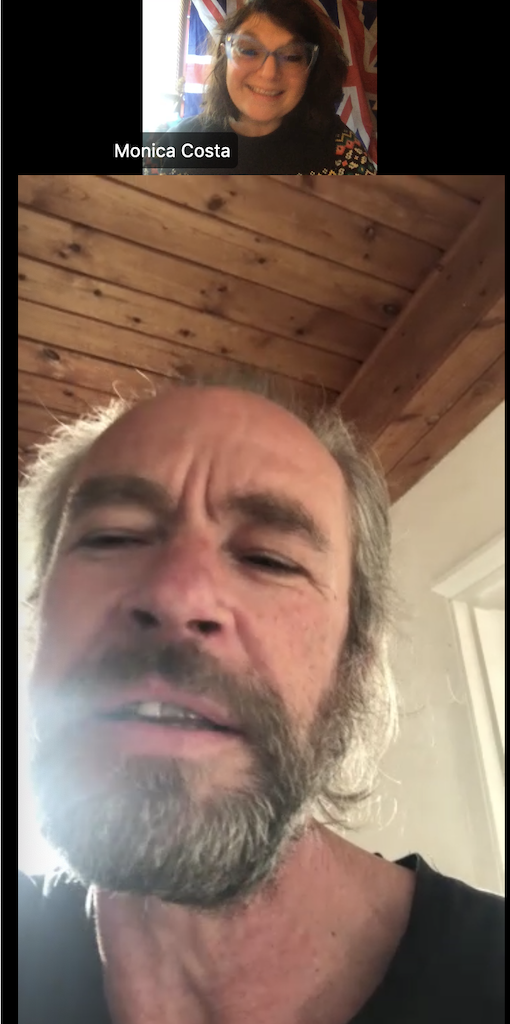
So the song predates the series by a couple of years. The series was aired in Italy in 2016. It’s the fourth one now.
Duke Garwood:
And then they used some other songs by Mark and myself – Mescalito is one they liked. And then, they just kept using it.
Monica:
It’s a very cool song and now it’s very much linked to the series: when you hear the first note, you know what’s coming.
Duke Garwood:
I love that. I played it live a bit differently in Italy once. This woman came up and said, “Why didn’t you play Burning Seas?” And I said, “I did play it.” And she said, “No, you didn’t.” And I said, “Yeah, I did, I just played it.” And she said, “Oh well, I suppose you’re allowed to be artistic or something.”
And she was quite annoyed that I didn’t play it in the same way she recognised it from the TV.
Monica:
I know what she means, in a way.
Duke Garwood:
Over time everything changes, I guess.
Monica:
Did you have any idea that the song would become the theme for such a popular Italian series when you wrote it?
Duke Garwood:
No, I just thought it was a cool tune. It was nice to play on my own.
…(aside about making coffee)
I just put it on the heat of my moka.
Monica:
You’re tuning into the Italian roots!
Duke Garwood:
I am a bit. I love it. I’d love to move there. Ah… I can’t leave my babies.
Monica:
Have you ever met Marco Giallini, the actor who plays the main role of Rocco Schiavone?
Duke Garwood:
No, we haven’t met, but we have communicated. I wanted to meet him but we can’t seem to coincide. But we are in touch sometimes – maybe a bit more in the past. He’s a cool guy. He plays music too.
Monica:
He loves that kind of music – blues, or that’s what I think. He’s a bit of a legend.
Duke Garwood:
I wanted to be in the show. Englishmen are usually baddies in films like that.
Monica:
You’d be great. Or you could play the song in a pub, you could be there playing your own tune. That’s what I thought.
I’ll work on it for the next season – please, you should be in it. We’d love to see you there.
And the track fits the show so perfectly – the mood, the tone. It almost feels like it was written for the series. That’s why they picked it: it’s smooth, a bit dark, but also… the character is a dark horse.
Duke Garwood:
It’s quite good, isn’t it? I saw one season – the one in the snowy place.
Monica:
Exactly the first episode of the first series.
Duke Garwood:
They used Mescalito when he’s rolling a joint in his office. He does it all the time. He’s kind of a messed-up guy.
Monica:
He is very messed up, but that’s why he’s so human.
Let’s talk about your other work. You’ve got a lot of music going on, and that’s an old track, but I wanted to start with that.
So, going back to the origins of your career – how did music first find its way into your life? What got you started?
Duke Garwood:
Right from the beginning. When I was little, I was given a guitar when I was two. I grew up in a very musical house. Back then everyone listened to records; we didn’t have a TV. My mother had a great collection, and a woman called Jo and her children lived with us – she had a great record collection. Then my mother met this guy, and he also had a great record collection.
So I grew up with great records – really cool stuff.
I had a kind of music thing as a kid, so they gave me instruments. We weren’t wealthy, but I was taught violin very young – too young, really. The teacher used to beat me a little bit. I was too small, about three years old. She was an old woman; she couldn’t help it. I learned piano from four. Someone gave me a piano. I had this ability to play things back to people, which I can’t do anymore.
But then life happens – school – and my musical gifts kind of left me and came back when I was about seventeen. Or rather, I found them again. So I started over – harmonica, guitar. It’s been a long run. It’s natural for me, I suppose.
Monica:
I can feel it from your tunes – when I listen to your music or watch your videos, you’re like a medium for something empowering. It’s rare. Some musicians are technically skilled but lack soul. But with you it’s the other way around: something soulful comes through. You grew up in London, didn’t you?
Duke Garwood: Well, just south of London, in Kent. It’s a huge county and it kind of joins London.
Monica: Is that the musical scene?
Duke Garwood: I lived right in the countryside. And then I moved to London when I was 17, 18 years old.
But now London is growing into Kent – where I grew up in Kent is now actually kind of part of London.
Monica: Yes, interestingly.
Duke Garwood: It is. So that’s how vast London is growing. But back then it was more country.
Monica: Is that what inspired you musically? That kind of area? The London vibe?
Duke Garwood: I don’t know. I’ve always been kind of an escapist. I really do like city vibes – certain city vibes I find inspiring. I love language; I like hearing different languages around me, I find that inspiring.
The countryside I find visually inspiring, but not musically. People often say, “Oh, do you find the desert inspiring?” And I’m like, well, the whole thing with the desert is it’s kind of a blank canvas, so that in itself is inspiring.
Everywhere is inspiring, but sometimes the most inspiring, beautiful places… they’re just beautiful, and they don’t necessarily make any music. I need a bit of grit, and a bit of dirt and grease and real life to make music out of.
I can’t make music out of perfect manicured gardens with beautiful trees – I’d rather just sit there and meditate. I don’t think, whereas if you put me in a gritty street then I feel inspired there.
Monica: That’s very nice. Cool. And I mean, you play all sorts of instruments, don’t you? Guitar, clarinet… even the rhaita, a Moroccan reed instrument.
Duke Garwood: The rhaita is my favourite. There aren’t many people who want you to play that around them.
They’re very loud – louder than a saxophone. They’re quite a violent, amazing instrument. I love the rhaita.
Yes, I love learning different instruments. I’m trying to properly learn the soprano saxophone at the moment, and that’s quite interesting. The most difficult one is the Irish penny whistle, the tin whistle. I don’t know the real name for it.
Monica: I’ve seen that. It’s the hardest thing there is. Is it difficult because it’s tiny? Because it’s petite.…
Duke Garwood: You have to blow it so gently. And you have to be so gentle to make the sound. The opposite of the soprano, where you’ve got to blow pretty hard. So that’s my new one, I’m trying to learn that.
Monica: Wow. I’m impressed because I thought when I was a young girl that it was easy to learn to play the guitar – but now I find it really difficult. Maybe if you grow up with it, then it’s easy.
Duke Garwood: Guitars are tough instruments.
There are so many parameters – they’re difficult. They’re amazing, but they cause anguish.
Monica: Not many people admit that. Some musicians tend to say “Oh no, it’s so easy and natural.”
Duke Garwood: It’s not, you know – the guitar.
Monica: It requires a lot of craft and attention. It’s tough. I play the guitar but my skills are really poor, and it’s very tough to craft it properly.
Duke Garwood: For sure.
Monica: If we talk about the collaborations you’ve had — you work with some amazing artists like Mark Lanegan, Morcheeba, The Orb… so many. What makes a good collaboration for you?
Duke Garwood: The best one really was with Mark. The latest thing I’m on is also a cool one with Mark, because we wanted the same thing, but we’re on different sides of the world and we’re trying to do it… You just need to at least have the common idea, and then people can bring their own special sauce to the soup.
The latest group I’m in Drink the Sea is with Barrett Martin and Peter Buck and Malin and Johannes. Everyone is coming at it from different places, and then we come together and we make something lovely.
You just have to trust it. Not try too hard.
I would say it’s lovely working with people. Everyone’s got their own way, and as long as they trust you — knowing you’re going to bring something special.
I just did collaborate because I took a couple of guys on the road to Europe, and we hadn’t really played shows altogether before… and I think we did a beautiful job.
Sometimes it works. There are nights when the muse isn’t with you and you’re maybe left floundering — but it’s probably only one minute or 30 seconds of real time.
In the scheme of the world, it’s nothing — but on stage it feels like a very long time that it’s not working. It feels like a whole night of hell.
But it’s worth it. You just have to trust people.
That’s what I tell my band: If you want to play with me, I trust you. If it goes a bit wrong, it’s down to all of us. I won’t blame anybody — I’ll probably blame myself first.
We’ll try to make it not go wrong, we’ll try to make it beautiful — and if it goes a bit wrong, let’s make that beautiful too.
Because in the end — who knows?
Monica: It’s an experience, isn’t it? Music is a real thing. It’s craft. No one ever said what it should sound like.
Duke Garwood: There’s no written thing like Moses and the tablets telling you “This is what music is.” Nobody knows.
Monica: It’s also how it’s perceived. It depends who you have in front of you. Some people are more receptive to your music, others maybe just… they’re not.
Duke Garwood: And also within the audience itself — different people… If they’re not into it, I can feel it. Then I’ll do the show and cut the night off. That’s it.
No regrets — I mean, no hard feelings about it. It’s so subjective. I make weird music sometimes.
Monica: You make really good music. There’s no weirdness in it, I tell you.
Your albums, like Garden of Ashes and Heavy Love, have such a strong atmosphere – dreamy, dark and peaceful all at once.
Do you plan that, or does it reflect where you are in life at that time?
Duke Garwood: It’s very much where I am at that time. I’ll always bring, say, 50% of the written material, but it’s all then subjective – the mood of the studio, the mood of the world, how it’s going to go.
I like things to be dreamy. I suppose I try to make music that is not like real life.
I know some people want to make music that’s almost like real life but animated into music form — hard-hitting industrial sounds, very cutting, very dynamic.
I guess I’m a bit of a dreamer.
I don’t want to hit it too hard. I want to be gentle. When I’m playing I’m afraid of breaking the big bubble I’m sitting in.
Because otherwise it all just falls down. I’m always riffing on these things, but I want to keep it.
You want to create the sound, and once the thing is in, anything you add is to support the main theme — not become a new thing everyone focuses on. That’s how I work.
Monica: Your song Burning Seas – I have it on my phone. I wake up with it sometimes, and it really relates to me.
I imagine the sea, the burning sea – it becomes visual. Your songs feel very visual to me.
Duke Garwood: Well then, that’s beautiful.
Monica: Do you see images or stories in your head when you write your music? Like Burning Seas. I can see it.
Duke Garwood: I do. I couldn’t really describe them, but I definitely did. All the things, different colours and stuff.
I never really talk about it much – they’re personal.
But I do see things, but I’m not trying to make them come alive… well, maybe I am.
Monica: Like audio movies, sound films.
Duke Garwood: But the beautiful thing with music is… Images burn into our brain. They download, and you can never get rid of them again.
So you’ve got to be careful with images. We look at too many nowadays — we’re downloading too much stuff, and it’s confusing.
Whereas with sound and music, if it creates visuals, they’ll be different every time. Even the music will sound different the next time you remember it.
It’s a more beautiful way of massaging the mind, rather than images all the time.
We see too much stuff — we get numbed to violence and horrible things. Images that disturb us… we sort of ignore them, but then they sit there forever.
So you’ve got to be careful.
That’s why I think music will outlast films, will outlast the videos you make for it — it will outlast everything.
Monica: It’s worrying that all this imagery stays stuck in our brain. It’s a download. Our brain is an amazing computer and we don’t know…
We should reset sometimes — format all of it, like boom.
That thing you do — delete. It would be great.
So I run a lifestyle magazine in London, and I’m also working on a book called Rock Rebels. I’m looking for artists who represent some of the themes I want to explore.
Your music struck me as one of those kinds of rock rebellion, because even if the term “rock rebel” sounds very rebellious, what I mean is artists who stay true to themselves — and you struck me as one of those.
Considering this, what does being a rebel mean to you?
Duke Garwood: You’re ahead of the curve.
You’re first on the wave and you have to face the fact that you might be quite alone.
You can think outside and go against — well, not “go against”, but think outside and question everything.
And then you will be alone a lot.
You never know who’s going to like what you do. You might think you’ve done something for everybody and no one likes it, or you did something for nobody and everybody likes it. You don’t know.
I think any kind of rebellion requires the need to be in solitude — independence in creating your art form.
You can’t be looking for applause or money from anybody.
You’ve got to question everything, be honest, and accept that you will be… you’ve got to be stronger inside, and be willing to find it.
I had to get everything out of my head — let it pass through me.
I was talking to someone once — I’d made this music and my record label hated it. I said, “Well, I love it, and I’m going to keep it. I won’t throw it away because you said so.”
And I still love that music.
He said, “Well, it’s lonely, isn’t it, being in that place?” And I said, “Yeah — but it’s a great place, because it means you know yourself. You’re standing by what you’re doing.”
I think that’s what makes a kind of rebel, if you will. Long way around saying it, but that’s how I see it.
Monica: You couldn’t have said it better.
That’s a great quote.
You’re very consistent — no mixed messages. Consistency is rare these days.
You’ve kept a low profile compared to many musicians. Do you enjoy the freedom — being able to create without too much noise around you?
Duke Garwood: I need that. I have to have that.
I’m deliberately not very social-media-y because I think if you spend too long shouting about what you’re doing, you’re not spending enough time doing it.
I understand it — it’s okay for anyone who’s into that.
Some people want to shout louder, attack the world with their work — and that’s fine.
But when you hit my age, you know the harder you attack the world these days, the more it resists. You’ve got to relax.
People will find your thing.
The pressure to be aggressive on social media has saturated everybody so much that it all seems a bit worthless.
I don’t see any benefit; most people just switch off.
We all try — when you want to sell a record, you tell everybody again and again. But in the end you’ve got to be at peace in yourself. But that’s cool.
I’ve been involved in lots of campaigns lately with the new group — it’s been pretty full on, and that’s groovy. It’s working, it’s getting the new thing out to people.
Monica: But if it was down to me, I probably wouldn’t do much of it.
Duke Garwood: I like it quiet.
Monica: What’s up next? Any music in the pipeline?
Duke Garwood: Next Sunday I’m going to Spain to start rehearsing with this new beautiful band I’m in, which is called Drink the Sea.
I’m going to really get that down.
Sadly we’re not going to Italy — I’m really bummed out, but I’m hoping on the next run we will. I’m really working on that because I want to get there again.
So we’re doing Spain and Paris, then Ireland, and we’re going to America next year.
So I’m going to be a busy guy.
With this new group, it’s exciting, and I’m a little nervous because I’ve got to be on a different thing – not leading my band, which I’m used to.
So I’ll be in a band with lots of other people – a different approach.
I’m working hard every day to get my stuff together.
It’s very funny. I’m very excited. I’m lucky, I’m blessed really.
Monica: Musicians are blessed – they do what they love for a living. This is the most rebellious thing to do.
Duke Garwood: Do what you like.
Monica: Do what you like.
Duke Garwood: That’s rebellious. Right on.
Monica: Well then, I won’t keep you here chatting – I’m sure you’ve got lots to prepare for.
Thank you. It’s great to be here, thank you for talking to me. It’s been really inspiring and insightful — so many great quotes.
Thank you very much, Duke. Best of luck with the tour and the new music.
I’ll be following you for sure. Keep posting sometimes, okay?
Duke Garwood: Yes, I will. Ciao, bye-bye, take it easy.
Monica: Ciao!
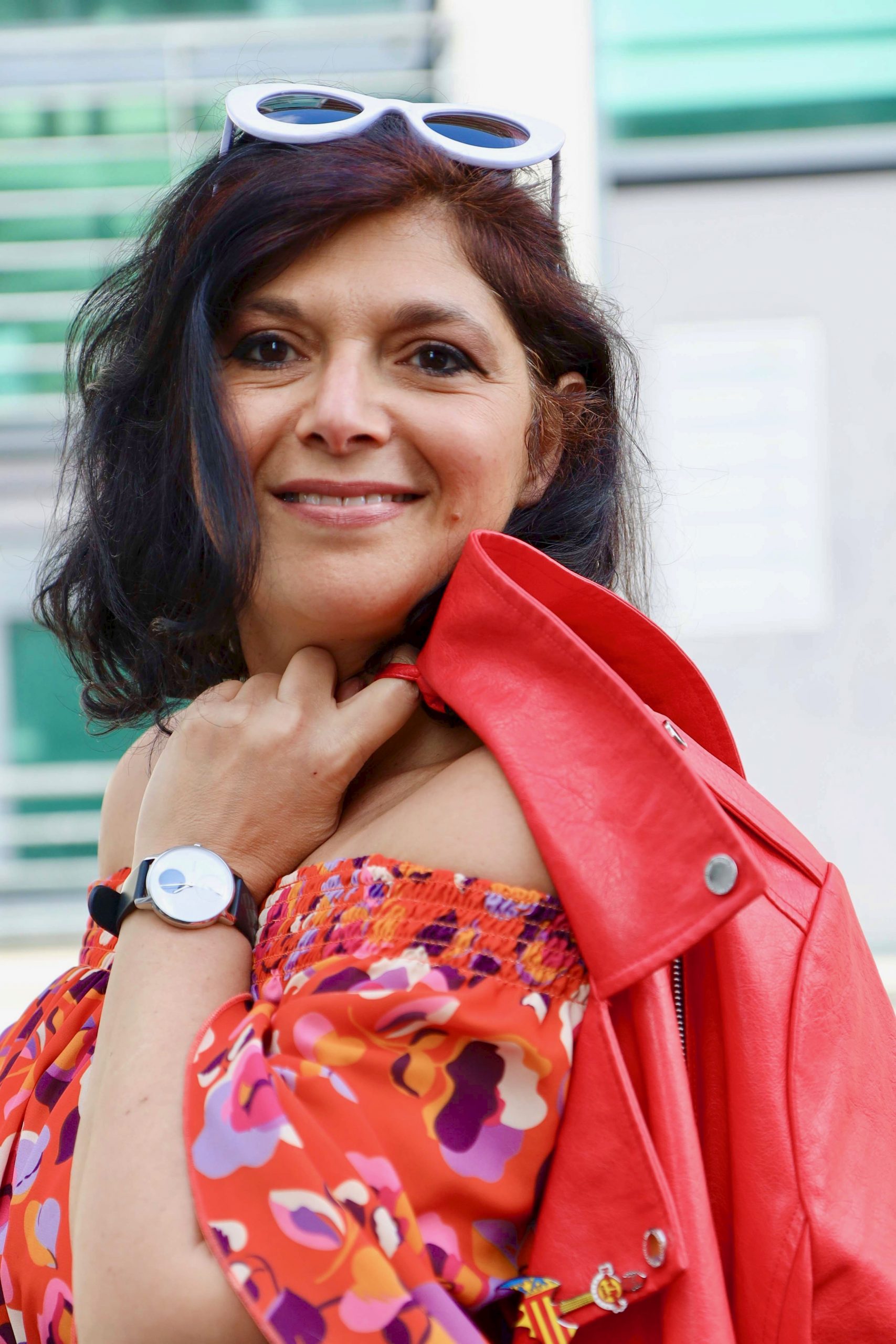
Monica Costa founded London Mums in September 2006 after her son Diego’s birth together with a group of mothers who felt the need of meeting up regularly to share the challenges and joys of motherhood in metropolitan and multicultural London. London Mums is the FREE and independent peer support group for mums and mumpreneurs based in London https://www.londonmumsmagazine.com and you can connect on Twitter @londonmums
