

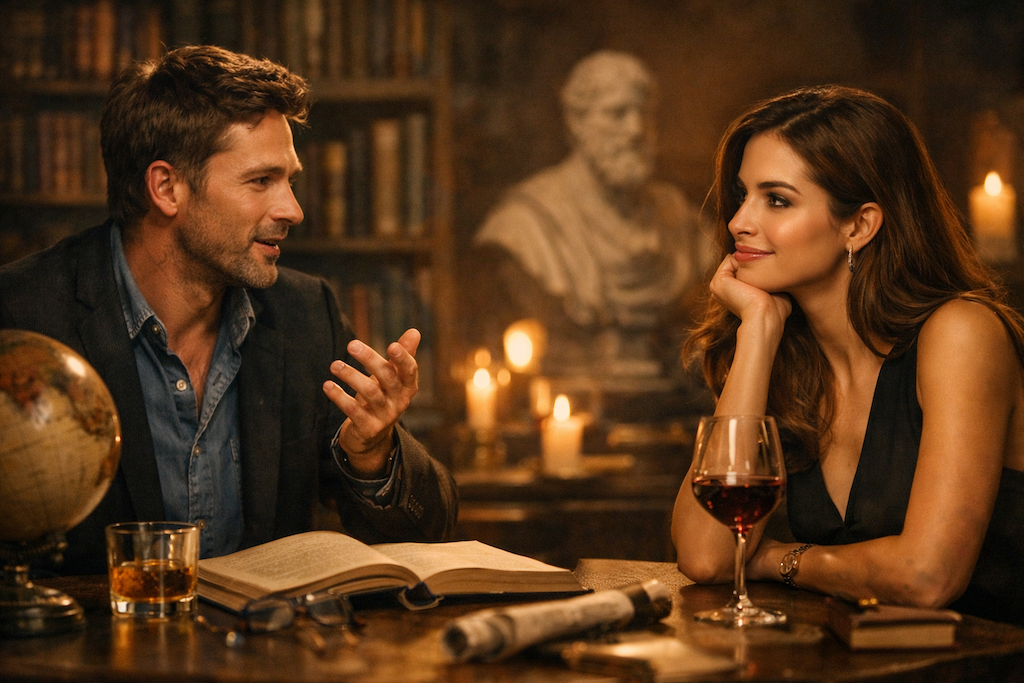
You know that feeling when a man starts talking – really talking – about something that matters? Philosophy, history, the kind of conversation that crackles with curiosity? For some of us, that is attraction. Not the chiselled jawline or the gym-toned physique, but the mind behind it. As our London Mums’ editor Monica Costa put it recently: “For me, a man is charming and sexy when he can speak well, talk about philosophy and history – not necessarily when he is universally handsome.”
But here’s the uncomfortable question that follows: in 2026, is that view hopelessly outdated? Are those of us who prize intelligence over aesthetics becoming an endangered species in a world increasingly obsessed with appearance? And if so, what do the facts actually say?
Let’s start with the data – because the truth is more interesting than either side of this debate wants to admit.
The 90% Statistic (That Sounds Very Noble Indeed)
Ask people what they want in a partner and – how reassuring – we all turn into philosophers. Around 90% of dating app users claim they prioritise personality over looks. Kindness, intelligence, emotional stability… all the things one would proudly declare over brunch with a flat white in hand.
Jess Alderson of So Syncd confirms this isn’t a niche quirk – it shows up across ages, backgrounds, the lot. In theory, we’re all out here searching for depth, meaning, and someone who can hold a proper conversation.
Now for the tiny wrinkle.
What we say we want at 11am and what we tap right on at 11pm are not always the same person. Call it optimism, call it good manners, call it a very human desire to sound like we’ve got our priorities impeccably sorted. Psychologists, ever the party-poopers, call it “social desirability bias”.
And yet – despite our occasional hypocrisy – the bigger picture holds. When people think long-term (holidays, families, surviving IKEA trips together), traits like kindness, intelligence and emotional steadiness consistently outrank looks. Money, status, the showy bits? Surprisingly low on the list.
In other words, we may flirt with superficiality, but when it comes to building an actual life, most of us quietly return to substance.
The 2026 Dating Landscape: A Subtle Rebellion
If modern dating has left you feeling like a reluctant participant in a never-ending audition, you’re in good company. The swipe-fatigue is real – and, finally, it seems, consequential.
According to sexologist Sofie Roos, 2026 is ushering in a quiet but noticeable shift. Think fewer meaningless matches and more intentional encounters. Early dates are moving out of dimly lit bars and into galleries, concerts, long walks – places where conversation can breathe and personalities can unfold without the pressure of instant performance. And, perhaps most radical of all, people are rediscovering the art of waiting – allowing emotional connection to build before racing towards the physical.
Even the vocabulary is evolving. “Sapiosexual” – once the darling of niche corners of the internet – has gone thoroughly mainstream, appearing in dating profiles, bios, and the occasional earnest TikTok. Roll your eyes if you must, but its popularity reveals something rather telling: people are craving a way to say, without irony, “stimulate my mind, and the rest will follow.”
But Wait… The Looks Still Have a Say
Before we crown intelligence the undisputed victor, let’s not get carried away.
A recent UK survey exploring the “ideal” physical traits across generations shows that when people are asked to focus purely on appearance, they do so with surprising precision. Boomers leaned towards the classic blonde-and-blue-eyed archetype, while Millennials and Gen Z have shifted towards brunettes with darker eyes. Body preferences? Reassuringly predictable: hourglass for women, athletic for men.
It’s important to note that this research isolates looks from everything else – but that’s precisely the point. When we do talk about appearance, we reveal just how specific – and, at times, narrow – our ideals can be. (And yes, the conspicuous lack of diversity in these standards is a conversation very much worth having.)
In other words, looks haven’t left the chat. They’ve simply been forced to share the stage.
The Verdict: Not Either/Or
So where does that leave the so-called “white mosquito” (borrowing the expression from the Italians who call this ‘mosca bianca‘) – hovering politely above the chaos, drawn not to cheekbones but to a well-formed argument?
Happily, not nearly as alone as one might fear. The data paints a rather civilised picture: intelligence remains high on the wish-list, particularly when romance is expected to last longer than a weekend. Compatibility – life’s unglamorous but essential choreography – has emerged as a leading character, not a background extra. And, in a plot twist worthy of applause, 2026 dating seems to be inching away from mindless swiping towards something resembling actual connection.
That said, let’s not descend into delusion. Physical attraction still matters. It always has, it always will, and pretending otherwise is the romantic equivalent of insisting one only drinks champagne for the bubbles. The real insight is subtler: context is everything. What one fancies on a Friday night is not necessarily what one needs on a Tuesday morning with a leaking dishwasher and a school run looming.
Because in the end, real life has a way of clarifying one’s priorities. The person who can hold a conversation about philosophy while loading the dishwasher, who reads history aloud to a fidgeting child, who remains curious, kind, and mentally awake year after year – that is the gold standard. Looks fade; substance endures.
Sapiosexuality, then, is not some fading trend whispered about on dating apps. It’s alive, well, and – finally – backed by something even more seductive than opinion: evidence.

Lady Rantingham: The unconventional Voice with a bit of sass
Meet Lady Rantingham, a witty and rebellious spirit who brings a fresh twist to the “Rant” theme. While her name might evoke a touch of aristocracy, she’s anything but conventional. With a playful, humorous tone and a slight air of authority, Lady Runtingham is here to run riot on just about anything – especially the things that bother her.
Whether it’s the little annoyances of everyday life or the larger absurdities of the world around her, Lady Runtingham isn’t afraid to call out what grinds her gears. Her rants are filled with sharp wit, unfiltered thoughts, and an unapologetic perspective that blends rebellion with a dash of humour.
Her commentary goes beyond just mockery; she touches on everything from societal quirks to the frustrating intricacies of modern life, all while maintaining a sense of lighthearted authority. Lady Runtingham isn’t just runting about the monarchy — she’s ranting about anything that makes her roll her eyes.
