

If you’ve ever scrolled Instagram while nap-trapped on the sofa, chances are Jessica Urlichs’s words have stopped you mid-scroll. The New Zealand-based poet has built a global following by capturing the exact feelings of motherhood that somehow never made it into the books – the bittersweet, the exhausting, the overwhelming love that leaves you breathless.
Her latest picture book, You’ll Always Be My Baby, began as a poem written in those hazy early days with a newborn and a toddler. Now it’s a bedtime story for families everywhere. We caught up with Jessica to talk about the poem that started it all, her late-in-life ADHD diagnosis, and why she believes connection matters more than advice.
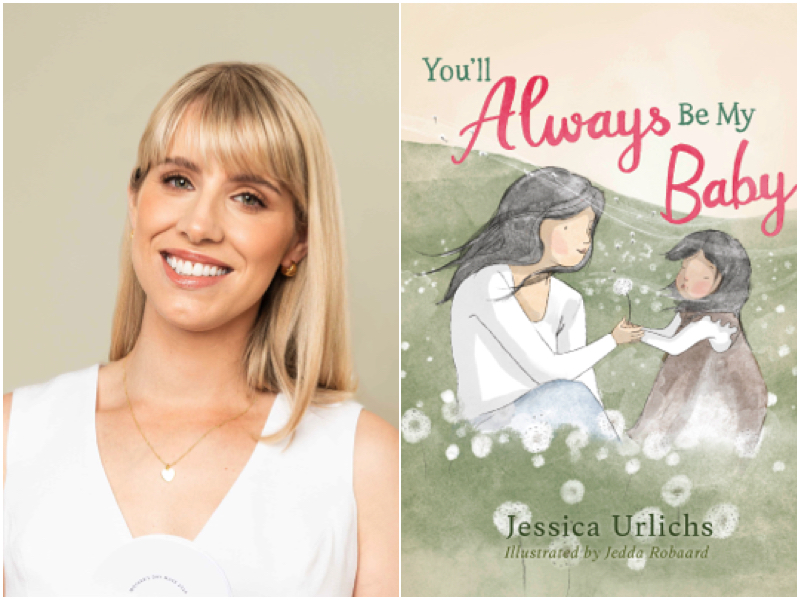
You’ll Always Be My Baby has touched millions of parents online. Do you remember the moment you first wrote it – and what sparked it?
I don’t remember the exact moment, as so many of those little pockets of writing were during the sleep deprived nights or nap trapped days. But I do remember holding my newborn and looking at my other baby who was just learning to walk. I remember how much heavier he felt in my arms and how that felt so foreign to me until I had another. It was that overwhelming bittersweet feeling mixed with gratitude, how no matter how much he grew, I knew I would always see that face and those eyes somewhere in my son or my daughter.
The line “just heavier to hold” feels especially powerful. What does that sentence mean to you as a mother?
It isn’t so much about the weight that we can often experience through the seasons of growth, it is quite literal to me. I imagine holding them at any age and how that would still completely feel natural to me as their mother, and I imagine most of us would feel this way looking at our little ones.
When did you first imagine this poem becoming a picture book, and how did that idea change the way you looked at the words?
It was a poem that many of my readers would read to their children at night. While my book was a poetry book to mums, so many of the pieces were letters to my children that many resonated with, motherhood is so wonderfully universal like that. And readers reached out often about that particular piece saying they would love it as a picture book for a night time story, I just loved that idea so much.
Was there a particular age or stage of your children’s lives that influenced this poem the most?
It was the transition from one to two for me, I think it just hit me the hardest, because they are also so close in age. Suddenly it felt like my baby had to grow up faster, and I grappled with the guilt of that also, but with that came emotion, which is how the poem came about. I think it’s a lovely way to also remind your children how much they still mean to you when your attention feels so sharply divided.
Your writing often captures feelings parents struggle to put into words. Why do you think motherhood comes with so many unspoken emotions?
I think often we are just so busy with everything motherhood can entail that it’s hard to slow down and take a moment to piece together the whirlwind of emotions we go through. It’s so lovely to see other mothers saying ‘same’, and ‘me too’, in an instant we are seen and understood. There’s so much happening it can be hard to catch a breath, I feel like short bursts of poetry can be that breath, holding space for the highs and he lows. We feel so intensely in these seasons and yet we don’t often talk about it.
The poem balances love, worry, joy and letting go. Do you think modern parents feel these contradictions more intensely?
I don’t think these feelings are unique to any one moment in time. Across generations, mothers understand it. My children are still young, however I have grandparents message me saying they wish they had words to explain how they felt back during this season for them. It’s really shown me how motherhood endures, how it stretches across space and time and outlives us all.
Which line in the poem feels the most personal to you – and which one do readers mention most often?
I think the sentence ‘you’ll always be the ticking clock in a world you made slow down’. For me this says so much to the push and pull of trying to be 10 steps ahead but also wanting to stay present. Children really make you stop and notice, even when you’re rushing, they have this beauty of pulling you into the ordinary. It’s fast and slow and I’m wanting to rush moments forward and never wanting it to end. It’s contradictory and it still, it makes sense.
You’ve said you didn’t need another parenting book – just reassurance that you weren’t alone. How does that philosophy shape your writing?
I write honestly, about regular moments, about getting it wrong, about the beauty, about how it’s mentally shaped me (physically too) and how I am OK with that. While there are obviously some wonderful books out there that can help, at the time, what helped me the most was support and connection, another shoulder to lean on even when that shoulder might have been across the ocean. I thought someone else would probably feel the same which made it easier to share.
Many parents say your work feels like a friend “who just gets it”. Is that the connection you aim for when you write?
I have never led with this thought in my writing, however I think I naturally write the words I need to read, which in turn is many of us. I just think so many of us know the feeling of sore breasts, curling toes, crying in the shower, love that bursts and stings, the bittersweet feeling of watching them grow, and feeling foreign in your new role while also knowing you’re exactly where you’re meant to be. It is such a privilege to navigate motherhood, and it is also OK to talk about the messy parts too, I write in the way that doesn’t make you feel ungrateful for that, because we’re not!
What do you hope a parent feels when they close this book after reading it to their child?
Connection, I hope that there are cuddles and conversations about how special they are to them, at every stage of their life, how that unwavering love never changes, and how it only grows.
You’ve spoken openly about being diagnosed with ADHD and OCD later in life. How has that helped you understand your creativity?
I think deep down I always knew, I read the books and listened to the podcasts and did a lot of research, especially raising a neurodivergent son. I understood him in ways that helped me see myself, and he triggered me in ways that helped me see myself too, I knew who I needed to be for him, and realised who maybe I might have needed in certain situations too. I think if anything when an idea or thought I want to explore comes to me, writing about it never feels like a task, it feels like something I have to do. This can also be equally frustrating when it doesn’t come and I know I just need to take a break and keep away from social media and focus on what’s in front of me.
Do you think feeling things deeply is both a gift and a challenge when you’re a writer – and a parent?
I think most creatives feel deeply and notice everything, I wouldn’t change any of this but it can be a heavy thing to carry.. I also think as mothers we wear these feelings like a second skin, while also learning how to live with ourselves in a state of constant exposure; to the joy, the worry, the heartache, the love. Writing helps me process it all, though that level of vulnerability always carries a fear of judgment. What I’ve learned along the way is that so many of us are moving through the same things. So many of us would do anything for our children, while still searching for the ‘me’ within ‘mum’. There are countless ways to parent, yet we’re all leading with love, and at our core, we have so much in common.
Has becoming a parent to a neurodivergent child changed the way you see yourself or your work?
Yes, in so many ways. It’s made me more patient, more curious, and more aware that every child experiences the world differently. It’s also made me realise how much we need to advocate for our children, and how important it is that they feel seen exactly as they are. That’s bled into my writing too – I want all children and parents to feel represented.
You describe yourself as shy at heart, yet your words are incredibly brave. Does writing feel safer than speaking sometimes?
Often yes, it actually feels easier sharing my poetry with an online community whom obviously most of which I do not know. Standing in front of my friends and family reading some of my pieces would feel a bit more raw. I don’t know how to explain that, or why it’s like that. Obviously my friends and family support my work, but the first piece I put out into the world I did far before I told friends I was sharing my poems, maybe because I knew I would have to talk through it? At the time it felt easier to write something short (even if what it was about was really big) and leave it at that.
How do you manage self-doubt and rejection sensitivity when your work is shared so widely?
I’m lucky to be busy with my family, so I don’t have the headspace to read everything. Over time, I’ve learned that when someone responds negatively, it usually comes from not feeling seen. They read my work, they had a reaction, and that’s human. I don’t take it to heart, especially when I’m surrounded by a genuinely supportive community, which is overwhelmingly the majority.
What would you say to parents – especially mothers – who worry they’re “not doing enough”?
I wrote this poem for them, and for myself.
You are not ‘just’ anything
Not just a woman
Or just a friend
A wife
A partner
Or just a mother
You are a universe
Made up of waves that brought life
Stars that hold dreams
Landscapes of home
Rocks that will crumble but will always remain
The winds gentle sway, and strongest roar
You are someone’s ‘all’
And ‘all’ is not lost
You are a mother
But never, just.
You write about love and tenderness, but you’re also very honest and funny about real life. How important is humour in motherhood?
Very important, I actually have a pretty dry sense of humour in real life and I worry so many of my poems make people cry that they may not know this about me! I love to laugh too, it’s my love language (but also so is crying about how beautiful and brutal motherhood can be!) Need a bit of both to get through!
Your taste in music is famously eclectic – does music influence your writing rhythm at all?
I think music influences everything, doesn’t it? I can hear a song and be transported straight back to a moment, a feeling, a person. I wouldn’t say I write to music, but it definitely feeds the creative part of my brain.
What does a perfect, simple day look like for you and your family?
A perfect simple day is no plans, everyone home, good food, maybe a walk somewhere, and no one is fighting over who had the blue cup. The bar is low, and that’s okay!
How would you explain ‘You’ll Always Be My Baby’ to a child in one sentence?
Always the mother of a baby, always the baby of a mother.
What conversations do you hope this book might spark between parents and children?
I hope it opens up conversations about how love doesn’t change as we grow. That no matter how old you get, you’re still their baby, and that’s a special thing.
If this book could become part of a bedtime routine, what would that mean to you?
I would love that so much, my true highlight in my writing career will always be the messages from parents, I get photos and videos, and it’s what makes it so rewarding. Bedtime stories are such core memories, and I am honoured if my books are ever a part of that.
How does it feel seeing your words move from social media into something families can hold, keep and pass on?
It is very surreal. To write a book, let alone a poetry book and children’s books has always been my dream. People ask you about your dreams when you’re little and I would always tell them a poet or an author (or famous popstar maybe too) Even these dreams as a young girl never felt like they could be real. I am so grateful I can share my passion with others, and that they feel something from it too.
What’s next for you creatively – and do you always need a project on the go?
I do like to have something I can sink my teeth into, I really enjoy writing and connecting with such a lovely community, so yes there is always something I am thinking about. But having said that, breaks and pockets of calm are nice too (if there is much of that as a mum of 3 littles!) but next for me is a Motherhood Journal called ‘The Years Are Short’. I want this book to be something mums can leave behind for their children in their voice, with my poetry prompts to guide them.
Finally, what would you like parents reading this interview to know, right now, in this season of their lives?
I hope they know how much they gave today, how much they give every day, and that it’s enough. I hope they feel like we’re all on this wonderful bumpy ride together.
You’ll Always Be My Baby by Jessica Urlichs is available now from Penguin.
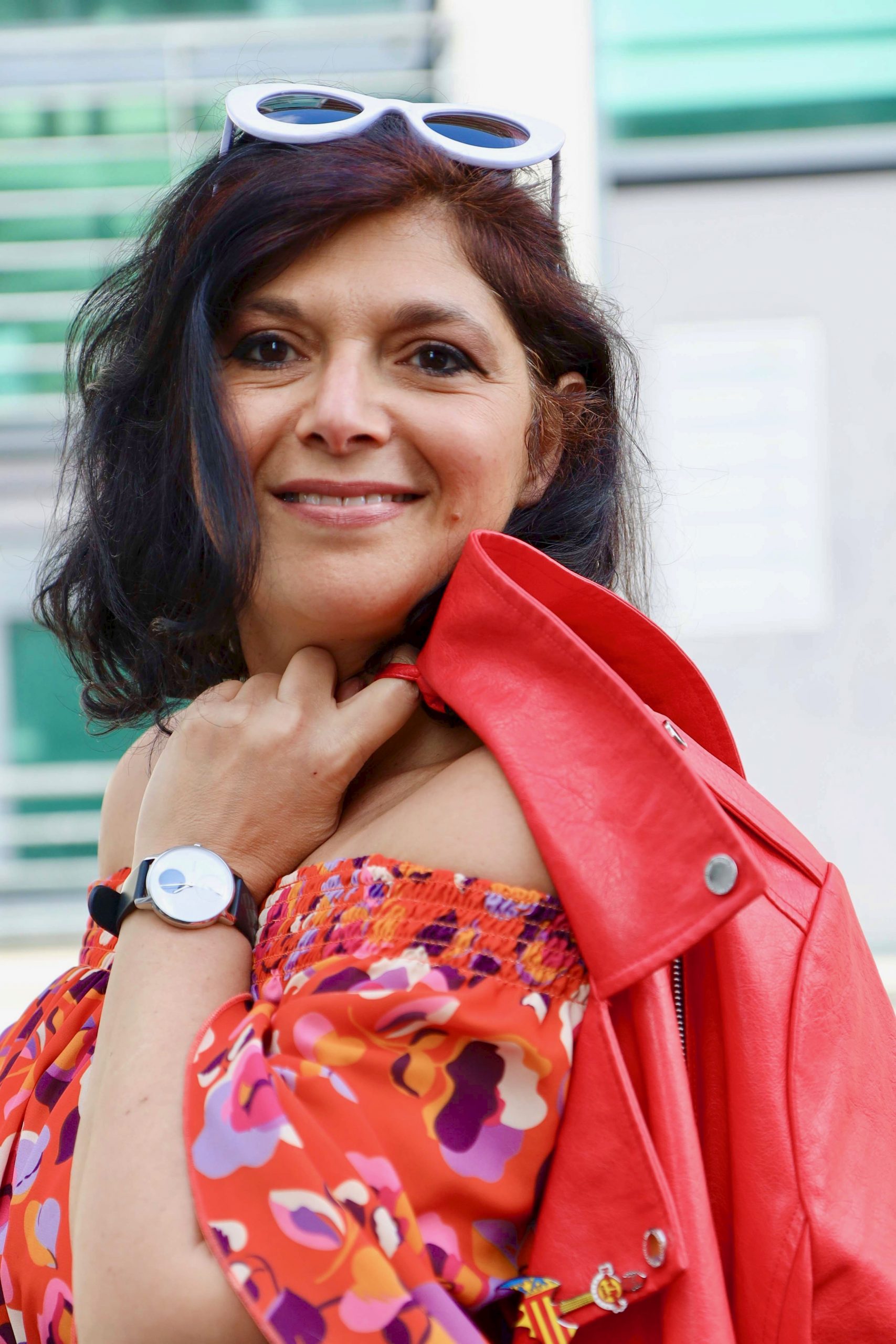
Monica Costa founded London Mums in September 2006 after her son Diego’s birth together with a group of mothers who felt the need of meeting up regularly to share the challenges and joys of motherhood in metropolitan and multicultural London. London Mums is the FREE and independent peer support group for mums and mumpreneurs based in London https://www.londonmumsmagazine.com and you can connect on Twitter @londonmums
