

Sometimes, the universe sends you little signs. And for me, one of those signs arrived in Piazza del Popolo, Rome,von 16th July 2024.
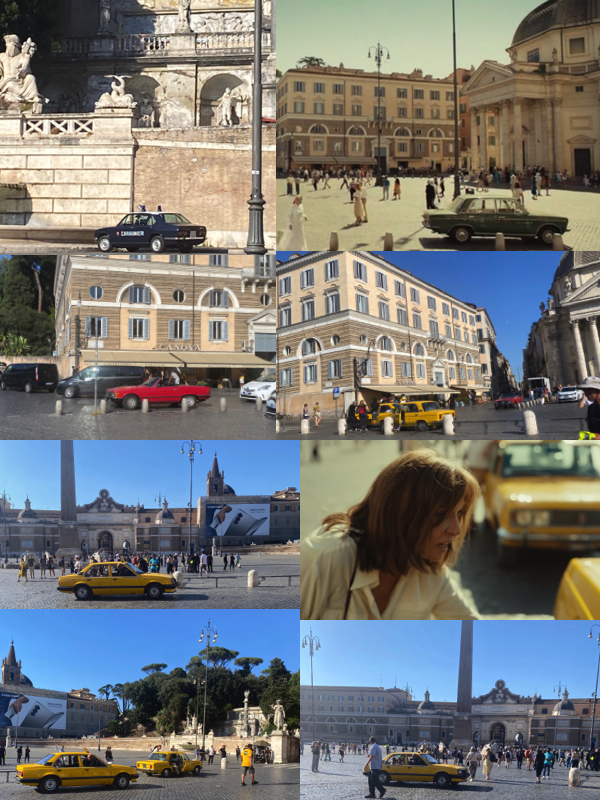
It was scorching. I’m talking melt-your-gelato-in-seconds, seek-shade-or-perish, Roman summer at its most glorious and most unforgiving. My son Diego and I were doing what any sensible people do in such heat – wandering through one of Rome’s most beautiful squares with gelato in one hand and cold drinks in the other, him obsessed with finding the perfect flavour, me obsessed with soaking up every drop of Roman sunshine before we had to return to grey London skies.
That’s when we stumbled upon a film set.
There were vintage cars from the 1980s parked up – a glorious yellow taxi catching the afternoon light – cameras on tracks, and that electric buzz that surrounds movie-making. A lighthearted scene was being filmed, and we stood there watching, completely transfixed, as Valeria Golino emerged from that taxi and walked through the square with the kind of effortless presence that makes you forget anyone else exists.
I had no idea then that I was witnessing the making of Fuori.
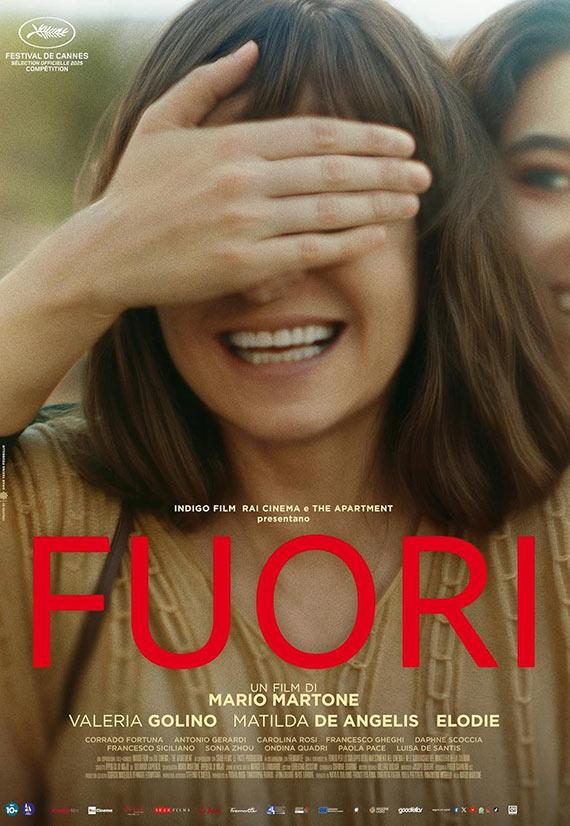
Fast forward to 2026, and I finally sat down to watch the finished film – not just because of that chance encounter, but because it stars Valeria Golino, an actress I have adored ever since I first saw her in Rain Man alongside Dustin Hoffman and Tom Cruise. In that film, she held her own against two Hollywood heavyweights with a warmth and authenticity that stayed with me. Since then, I’ve followed her career closely, and one thing has always been clear: Golino has never been afraid of difficult roles or challenging stories.
Fuori is no exception.
Who was Goliarda Sapienza?
Before diving into the film, let me introduce you to the remarkable woman at its heart.
Goliarda Sapienza was an Italian actress and writer whose life reads like a novel she might have written herself. Born in Catania, Sicily, in 1924 to fervent anti-fascist parents – her mother Maria Giudice was a prominent socialist journalist – Goliarda grew up in a household where political activism and intellectual curiosity were the air she breathed. Her father, a lawyer who helped draft the Italian Constitution, pulled her out of formal education at 14 to protect her from fascist propaganda.
She moved to Rome at 16, studied at the prestigious Accademia d’Arte Drammatica, and went on to act for legendary directors including Luchino Visconti and Luigi Comencini. But her true passion was writing – a calling that would lead her down a difficult path.
Sapienza suffered from severe depression throughout her life, attempting suicide twice and undergoing electroshock therapy that caused partial memory loss. She poured herself into her writing, spending nine years crafting her masterpiece, The Art of Joy (L’arte della gioia), only to have it rejected by publishers who found its portrayal of a woman pursuing freedom – sexual, financial, cultural – too scandalous.
By 1980, she was 55, broke, and desperate. In a moment of recklessness, she stole jewellery from a friend and spent five days in Rome’s Rebibbia prison.
And this is where Fuori begins.
The Film: Inside and out
Directed by Mario Martone, Fuori (which translates to “Outside”) premiered in competition at the 78th Cannes Film Festival in May 2025 and was released in Italy shortly after. Rather than attempting a traditional cradle-to-grave biopic, Martone focuses on a single summer in 1980 – the period immediately following Sapienza’s release from prison.
The film opens with Sapienza (Valeria Golino) being strip-searched upon entry to Rebibbia. It then moves restlessly between her brief time inside and her life outside, where she struggles to find work, faces rejection from the literary establishment, and forms an intense bond with a younger inmate named Roberta (Matilda De Angelis), a charismatic heroin addict and political activist.
Alongside Roberta is Barbara (Italian pop star Elodie), completing a trio of women whose friendship, born behind bars, continues to sustain them on the outside.
What works: Performances that breathe
Let me be honest with you from the outset: Fuori has divided critics. On Rotten Tomatoes, it sits at 58% from 12 reviews, while Metacritic gives it a middling 47, indicating “mixed or average” notices. Some have called it “repetitive” and “tediously non-linear.” Others have dismissed it as “a thoroughly uninteresting film from an interesting life.”
But here’s the thing about critics: they’re not always right. And when it comes to the performances, they’re genuinely missing the point.
Valeria Golino is intense. She embodies Goliarda Sapienza with a weathered, wistful gaze that speaks volumes without words. This is a woman who has lived – who has loved, lost, been rejected, and somehow found the strength to keep going. Golino captures that resilience beautifully. As one Italian reviewer put it, she “consegna Goliarda Sapienza al mito” – delivers Goliarda Sapienza to myth. Having directed the acclaimed television adaptation of The Art of Joy herself, Golino brings an intimate understanding of this complex woman to every scene.
And here’s where my Roman summer memory comes flooding back: watching her on screen, I could almost feel that July heat, see her stepping out of that yellow taxi in Piazza del Popolo, doing take after take with the patience of someone who knows their craft inside out. She was filming then, and watching her now, I realised she wasn’t just acting – she was becoming Goliarda.
Matilda De Angelis is electric. Playing Roberta, she injects the film with vital energy whenever she appears. Her Roberta is capricious, self-destructive, and utterly compelling – a young woman who chafes against being studied even as she craves connection. The chemistry between Golino and De Angelis is the film’s beating heart. Their relationship defies easy categorisation – is it maternal? Romantic? A meeting of kindred spirits? It’s all of these and none of them, and that ambiguity feels true to life.
Elodie, meanwhile, brings fresh authenticity to Barbara, grounding the trio with a quiet presence.
Where the film trips over its own feet
Alright, I’m not going to pretend Fuori is perfect, because it isn’t. And if I’ve learned anything from writing for London Mums, it’s that you don’t sugar-coat things for your readers – you tell them straight, with a wink and a nudge.
The film has a bit of an identity crisis. It can’t decide if it wants to be a prison drama, a character study, a friendship chronicle, or a writer’s biopic. So it tries to be all four, and the result sometimes feels like someone kept changing channels while you were watching.
Martone and his co-writer Ippolita Di Majo have this thing for jumping around in time that left me occasionally squinting at the screen thinking, “Hang on, when are we now?” Key information like the actual circumstances of the theft that landed Sapienza in prison is withheld until halfway through, which is less “clever storytelling” and more “slightly annoying game of hide and seek.”
Also, for a film about a writer, we see remarkably little of her actual writing. We watch her scribble in notebooks, we hear about publishers slamming doors in her face, but we never really understand what makes her words special or why we should care about them. It’s a bit like making a film about a brilliant chef and only showing them doing the washing up.
And yes, there are moments that tip into cliché. The pensive stare in the shower. The triumphant drive through the countryside with wind in everyone’s hair. The dramatic scribbling on scrap paper as inspiration strikes. You’ve seen these scenes before, probably in films that cost a lot less to make.
The bigger picture: Why this story matters
Here’s what the critics overlook, though: Fuori matters because Goliarda Sapienza matters.
After her death in 1996, her husband Angelo Pellegrino financed the publication of The Art of Joy, printing 1,000 copies at his own expense. The novel was eventually discovered by a German editor at the Frankfurt Book Fair, who recognised it as a masterpiece. It went on to sell 300,000 copies in France alone. Today, Sapienza is regarded as one of the most important Italian writers of the 20th century – but she never lived to see it.
The film ends with real archival footage of Sapienza being interviewed on television, trying to explain her prison experience while male intellectuals chuckle and miss her point entirely. It’s a devastating moment – a reminder of how easily women’s voices can be dismissed, even when they’re speaking profound truth.
As one reviewer beautifully put it: “She wasn’t saying that inside was good, but that outside was bad. ‘Outside’ is too hard on women.”
The mum verdict
Would I recommend Fuori to London Mums readers? Yes – with a caveat and a cappuccino.
This isn’t your Friday night “stick a rom-com on and switch off” fare. It’s a slow-burn character study that asks you to sit with discomfort and ambiguity. But for anyone interested in Italian cinema, women’s stories, or the creative process, it rewards patience.
For me, watching it felt like completing a circle – from that scorching July afternoon in Piazza del Popolo with Diego, gelato melting down our wrists, to seeing those vintage 1980s cars come to life on screen, to finally understanding the story they were helping to tell.
And Valeria Golino? She’s still the actress I fell in love with in Rain Man. Older now, wiser, carrying the weight of a real woman’s life on her shoulders – and absolutely magnificent.
If you get the chance to see Fuori when it lands in UK cinemas, take it. Then go home, buy a copy of The Art of Joy, and raise a glass to Goliarda – the woman who waited until after she was gone to become the legend she always deserved to be.
Fuori screened at the Cinema Made in Italy festival at BFI Southbank and is awaiting UK distribution. Keep an eye on London Mums Magazine for release dates.
The trailer
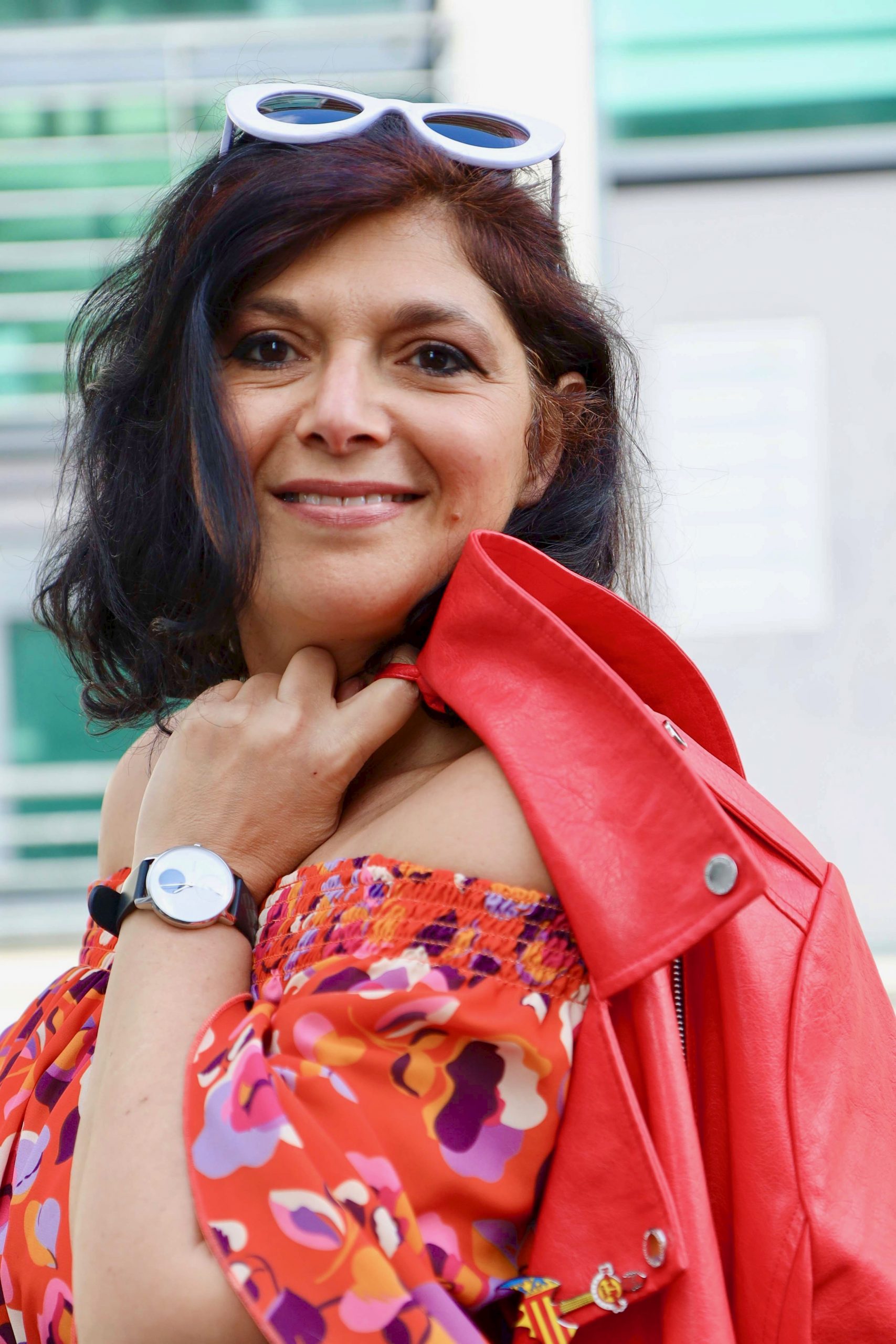
Monica Costa founded London Mums in September 2006 after her son Diego’s birth together with a group of mothers who felt the need of meeting up regularly to share the challenges and joys of motherhood in metropolitan and multicultural London. London Mums is the FREE and independent peer support group for mums and mumpreneurs based in London https://www.londonmumsmagazine.com and you can connect on Twitter @londonmums
