

Liver cirrhosis develops over time, and early signs often stay quiet. As a result, many people miss the chance to act before serious damage occurs. Early symptoms of liver cirrhosis often appear subtle, yet they signal liver stress that needs attention.
This article guides the topic toward how the body may show trouble through daily energy, skin changes, and fluid buildup. Therefore, a clear view of these early signals helps people understand what may happen and why prompt medical care matters.
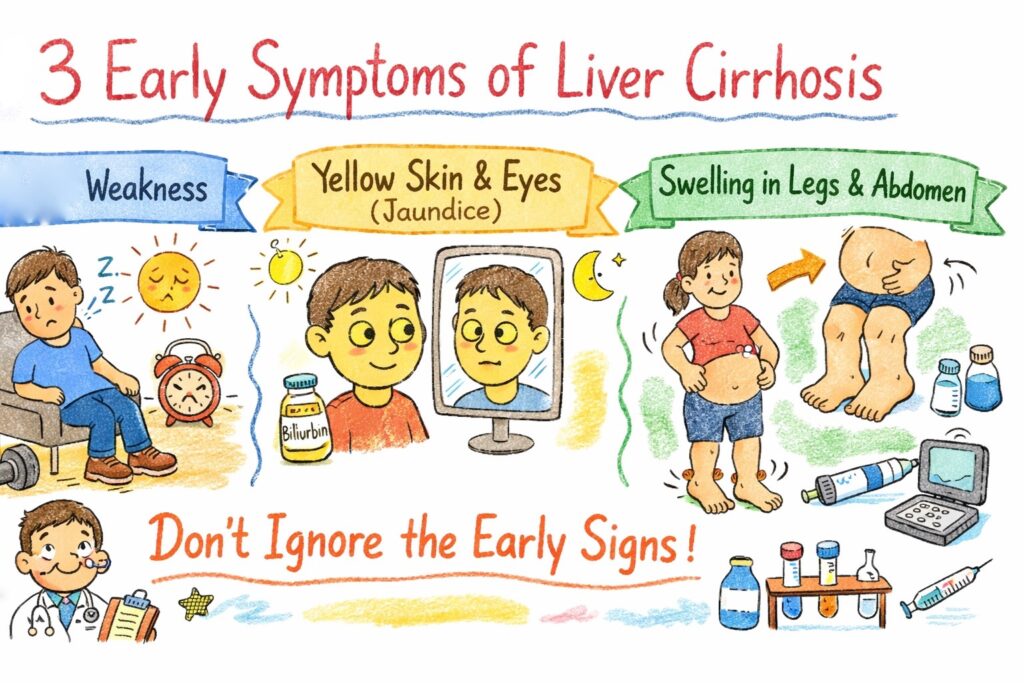
- Fatigue and weakness
Fatigue and weakness often appear as early signs of liver cirrhosis. A person may feel tired after normal tasks or notice less strength during daily activities. However, rest may not restore energy as expected.
The liver helps manage energy and clear waste from the blood. As damage develops, this process slows. As a result, the body struggles to keep steady energy levels, which leads to weakness.
Many factors explain what causes cirrhosis of the liver, such as long-term alcohol use, chronic viral hepatitis, and fatty liver disease. These cause harm to liver cells over time. Therefore, the liver loses its ability to support normal metabolism, which adds to constant tiredness.
Muscle loss may also play a role. The body may break down muscle for fuel as liver function drops. In addition, poor appetite and nausea can reduce food intake, which further lowers strength.
Fatigue linked to cirrhosis often feels different from common tiredness. It may last all day and affect focus and mood. For example, a person may struggle with work tasks that once felt easy.
Weakness can appear along with other mild symptoms. These may include discomfort on the right side of the upper abdomen or easy bruising. However, many people dismiss these signs at first.
Early fatigue does not confirm cirrhosis on its own. Still, persistent weakness deserves medical review, especially with known risk factors. Timely care can help slow liver damage and support better daily function.
- Yellowing of the skin and eyes (jaundice)
Jaundice often appears as one of the first visible signs of liver cirrhosis. The skin and the whites of the eyes take on a yellow tone that others may notice before the person does. This change can develop slowly and may seem mild at first.
This symptom develops because the liver struggles to process bilirubin, a yellow pigment in the blood. As a result, bilirubin builds up and spreads into the skin and eyes. However, the yellow color does not always match the level of liver damage.
The eyes often show this change before the skin. Family members may point out a yellow tint in the whites of the eyes during daily contact. Therefore, eye color changes deserve attention even if skin tone looks normal.
Jaundice linked to cirrhosis may appear along with other subtle signs. For example, urine may look darker, while stools may appear pale. In addition, some people notice itchy skin without a clear cause.
The yellow color may fade or deepen over time. A brief change does not always signal cirrhosis, since other liver or bile duct problems can cause jaundice. However, repeated or persistent color changes suggest a deeper issue.
Cirrhosis-related jaundice often reflects ongoing liver stress rather than a sudden illness. As liver function declines, the body loses its ability to clear waste from the blood. Therefore, jaundice may signal that the liver no longer keeps up with normal demands.
Doctors treat jaundice by addressing the liver problem behind it. The color change itself does not cause harm, but it serves as a warning sign. Early medical review can help clarify the cause and guide next steps.
- Swelling in legs and abdomen (edema and ascites)
Swelling in the legs and belly often appears early in liver cirrhosis. This change happens as the liver loses control over fluid balance. As a result, fluid shifts into soft tissues and open spaces.
Edema refers to fluid in the legs, ankles, and feet. Many people notice tight shoes, sock marks, or heaviness after long periods of sitting or standing. However, the swelling may fade after rest at first.
Ascites describes fluid that collects inside the abdomen. The belly may look round or stretched, and clothes may feel snug without weight gain. In addition, pressure from fluid can cause discomfort or shortness of breath.
These problems link to low levels of blood proteins made by the liver. Therefore, fluid leaks out of blood vessels more easily. Salt and water also build up, which adds to the swelling.
The swelling may seem mild at the start. Over time, it can worsen and spread if liver damage continues. As a result, daily tasks such as walking or bending may feel harder.
Fluid in the abdomen can also become infected. This risk raises concern because infection may affect the kidneys and overall health. Early medical care helps reduce these risks and guides treatment choices.
Doctors often check the belly and legs during routine visits. They may track body weight and measure abdominal size over time. These steps help spot fluid changes early and support timely care.
They often miss early signs of liver cirrhosis, such as fatigue, nausea, and skin itch. However, clear awareness helps people seek care sooner.
As a result, doctors can slow disease progress and limit added harm. Simple tests and scans can confirm liver damage and guide next steps.
Key takeaways
- Early signs often feel mild and easy to ignore.
- Prompt care can reduce later problems and support steadier health.

Monica Costa founded London Mums in September 2006 after her son Diego’s birth together with a group of mothers who felt the need of meeting up regularly to share the challenges and joys of motherhood in metropolitan and multicultural London. London Mums is the FREE and independent peer support group for mums and mumpreneurs based in London https://www.londonmumsmagazine.com and you can connect on Twitter @londonmums
