

Inflammation has become something of a buzzword in recent years, but at its core it’s simply the body’s natural response to stress, injury or infection. Short-term inflammation helps us heal. Chronic, low-grade inflammation, however, is a different story – it’s linked to fatigue, joint pain, digestive issues, hormonal imbalance, skin flare-ups and a host of long-term health concerns.
The good news? What we put on our plates every day can make a powerful difference. And no – this isn’t about cutting out everything you love, especially at Christmas. It’s about balance, awareness and making food work for you, not against you.
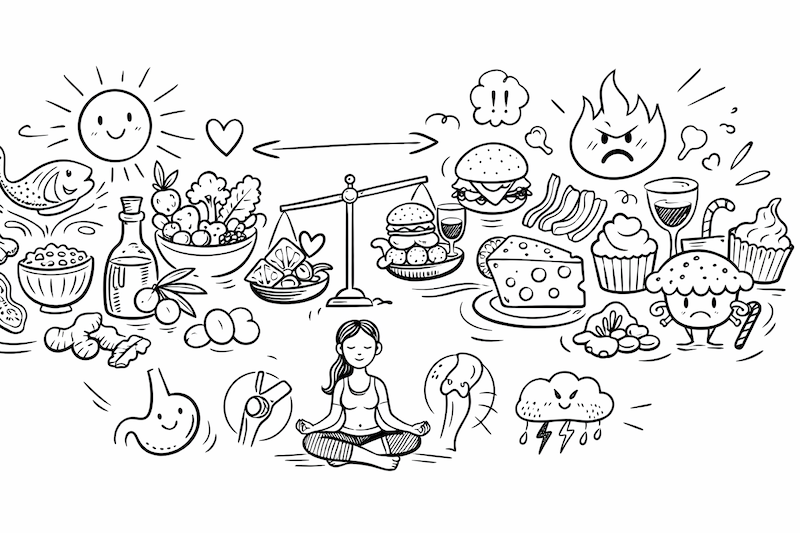
Foods that help reduce inflammation
Oily fish
Salmon, sardines, mackerel and anchovies are rich in omega-3 fatty acids, which have been shown to lower inflammatory markers in the body. Aim for two portions a week if possible.
Colourful vegetables and fruits
Think leafy greens, broccoli, peppers, berries and tomatoes. These are packed with antioxidants and polyphenols that help neutralise inflammatory stress in the body. The more colourful your plate, the better.
Extra virgin olive oil
A cornerstone of the Mediterranean diet, olive oil contains oleocanthal, a compound with anti-inflammatory properties similar to ibuprofen. Use it generously on salads and vegetables.
Nuts, seeds and legumes
Almonds, walnuts, flaxseeds, lentils and chickpeas provide fibre and healthy fats that support gut health — a key player in managing inflammation.
Spices with benefits
Turmeric, ginger, cinnamon and garlic aren’t just flavour boosters; they’ve been studied for their anti-inflammatory and immune-supporting properties.
Whole grains
Oats, brown rice, quinoa and wholegrain bread provide slow-release energy and fibre, helping to stabilise blood sugar – an important factor in keeping inflammation at bay.
Foods that can promote inflammation (when overdone)
This is where Christmas comes in – not as a villain, but as a gentle reminder to enjoy mindfully.
Highly processed dairy
Rich cheeses, cream-based sauces and processed dairy products can contribute to inflammation for some people, particularly when eaten in large quantities. That doesn’t mean ditching cheese altogether. Opting for smaller portions, pairing cheese with fibre-rich foods, or choosing less processed options can make a difference.
Fried and fatty foods
Roast potatoes dripping in fat, pigs in blankets, crisps and party snacks are festive favourites, but they’re also high in saturated fats, which can promote inflammatory pathways when consumed frequently. Enjoy them – just not as everyday staples.
Sugary treats and refined carbohydrates
Mince pies, biscuits, cakes and chocolates can cause blood sugar spikes, which may trigger inflammation over time if they become a daily habit. Balancing sweet treats with protein or saving them for after meals can help soften their impact.
Alcohol
A glass of prosecco or mulled wine is part of the season for many, but alcohol can interfere with nutrient absorption and increase inflammatory stress on the body. Spacing drinks out, drinking water alongside alcohol and having alcohol-free days can help restore balance.
A gentle, real-life approach
Inflammation isn’t about one meal or one indulgent day – it’s about patterns over time. Christmas doesn’t “ruin” your health, and nor does a cheese board undo weeks of good habits. What matters most is what you return to afterwards.
For families, this means:
- Filling plates with vegetables first
- Cooking mostly from scratch when possible
- Enjoying treats without guilt
- Getting back into nourishing routines in January, not punishing ones
Food should support joy, connection and wellbeing – especially during the festive season. And sometimes, the most anti-inflammatory thing you can do is sit down, share a meal, and actually enjoy it.
Because calm bodies don’t come from restriction – they come from balance.
Related articles

Monica Costa founded London Mums in September 2006 after her son Diego’s birth together with a group of mothers who felt the need of meeting up regularly to share the challenges and joys of motherhood in metropolitan and multicultural London. London Mums is the FREE and independent peer support group for mums and mumpreneurs based in London https://www.londonmumsmagazine.com and you can connect on Twitter @londonmums
