

As millions of Brits embrace Dry January, many are motivated by better sleep, clearer heads and healthier habits. Yet one of the most surprising – and motivating – benefits often appears right in the mirror.
When people stop drinking, their skin frequently responds faster than expected. Within days, sometimes weeks, faces look calmer, brighter and more rested. This isn’t wishful thinking – it’s biology. Alcohol has a direct and often disruptive effect on the skin, influencing everything from hydration and oil production to inflammation and collagen breakdown. Removing it gives the skin a rare opportunity to reset.
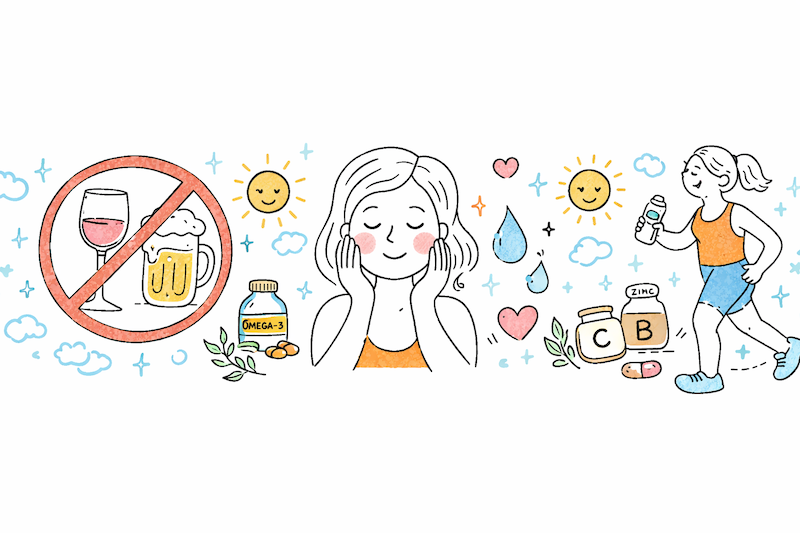
Why alcohol shows up on your face
Alcohol is inflammatory by nature. It dilates blood vessels, dehydrates the body, interferes with nutrient absorption and raises cortisol levels. Over time, this combination can lead to redness, puffiness, breakouts and a dull, uneven complexion. For many women – particularly those juggling stress, sleep deprivation and winter weather – alcohol quietly amplifies existing skin concerns.
Dry January removes that daily stressor. Without alcohol, the skin is no longer fighting a constant internal fire, and that change becomes visible surprisingly quickly.
The skin changes people notice most
One of the earliest improvements is reduced redness and puffiness. Alcohol causes blood vessels to expand, which is why cheeks flush and eyes look swollen after drinking. When alcohol is removed, inflammation settles and facial features appear calmer and more defined, particularly around the cheeks, jawline and under-eye area.
Hydration is another noticeable shift. Because alcohol acts as a diuretic, it pulls water from the body and the skin. Without it, the skin holds onto moisture more effectively. Fine lines often look softer, makeup sits better, and there is a natural brightness that no highlighter can quite replicate.
Breakouts also tend to ease. Alcohol can spike blood sugar and cortisol, triggering excess oil production and inflammation. Many people notice fewer spots during Dry January, especially stress-related or hormonal breakouts around the chin and jaw.
Over a few weeks, skin tone and texture often improve. Alcohol interferes with collagen production and vitamin absorption, particularly vitamins A, C and B-complex, all essential for healthy skin. Giving the body a break allows the skin barrier to strengthen, resulting in smoother texture and a more even complexion.
Dark circles can also fade. Better sleep quality, improved circulation and hydration all contribute to brighter under-eyes – a change many people report by week three or four.
Supporting your skin while your body resets
Quitting alcohol does much of the work on its own, but January is a demanding month for skin. Cold air, indoor heating and post-festive fatigue can still take their toll. Supporting the body internally can help accelerate visible improvements.
Omega-3 fatty acids are particularly helpful. They strengthen the skin barrier, reduce inflammation and support hydration – ideal for anyone prone to redness, dryness or sensitivity.
Zinc plays a role in oil regulation, wound healing and immune function. It is often beneficial for congested or breakout-prone skin, especially when hormones or stress are involved.
Vitamin C supports collagen production and helps brighten tired-looking skin. After a period of festive indulgence, replenishing vitamin C can make a noticeable difference to skin tone and resilience.
B-complex vitamins are frequently depleted by alcohol. These vitamins are essential for cell turnover and repair, and restoring them can improve overall skin strength and clarity.
Probiotics can also be useful. The gut-skin connection is well established, and supporting the microbiome may help reduce inflammation and improve conditions such as acne or rosacea.
When will you see results?
Some changes appear within days – reduced puffiness, better hydration, calmer skin. By the end of week two, many people notice fewer breakouts and a more even tone. By week three or four, the cumulative effects become harder to ignore: brighter eyes, smoother texture and a rested, healthier appearance.
Dry January isn’t a miracle cure, but it offers something rare – a pause. A chance for the skin to repair rather than constantly compensate. Whether people choose to return to drinking afterwards or not, many find the experience quietly transformative.
Sometimes the most effective skincare decision isn’t found in a bottle at all – but in what you decide to leave out.

Monica Costa founded London Mums in September 2006 after her son Diego’s birth together with a group of mothers who felt the need of meeting up regularly to share the challenges and joys of motherhood in metropolitan and multicultural London. London Mums is the FREE and independent peer support group for mums and mumpreneurs based in London https://www.londonmumsmagazine.com and you can connect on Twitter @londonmums
