

There are certain habits that have quietly slipped into everyday life and, somewhere along the way, became “normal”. They’re rarely questioned, often joked about, and frequently justified as unavoidable. Yet many of them place unnecessary strain on family finances, health and wellbeing – especially in households already juggling rising living costs, work pressures and caregiving responsibilities.
It may be time to pause and reassess what we’ve collectively accepted as standard.
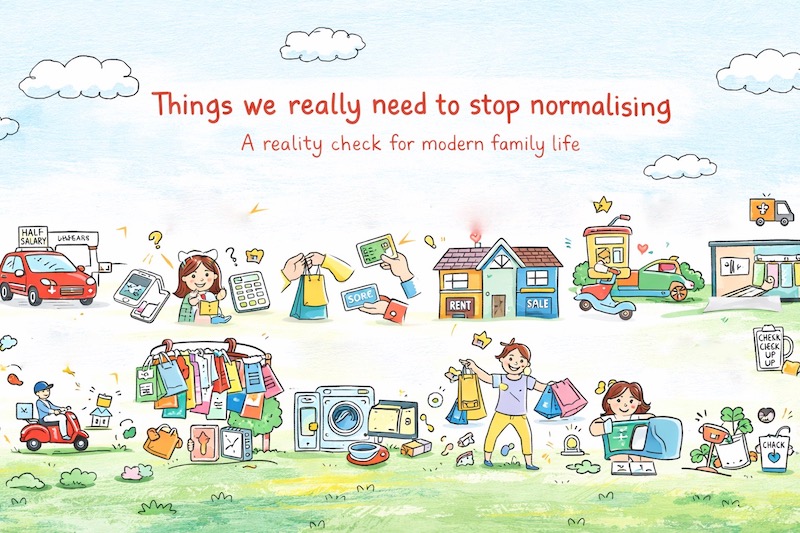
Car payments that swallow half a salary
Monthly car payments that consume a significant portion of household income are increasingly common. While reliable transport is often essential, particularly for families, financing vehicles far beyond realistic budgets can lock households into long-term financial stress. Depreciation means the asset loses value quickly, while repayments, insurance and maintenance continue.
Constant tech upgrades
Replacing phones, tablets and laptops simply because a newer model exists has become routine. Yet many devices function perfectly well for years. Normalising frequent upgrades not only strains finances but also contributes to growing electronic waste.
Trusting “girl maths” over actual maths
Social media trends that reframe spending as harmless fun may be entertaining, but they blur the line between humour and poor financial decision-making. Budgets, savings and long-term planning do not respond well to creative justifications.
“Buy now, panic later” culture
Buy-now-pay-later schemes have made immediate consumption easier than ever, often masking the real cost of purchases. While useful in specific circumstances, normalising deferred payment as a lifestyle choice can lead to unmanageable debt, particularly when multiple small repayments accumulate.
Assuming buying is always better than renting
Home ownership is often presented as the ultimate goal, yet it is not universally the best option. For some families, renting provides flexibility, lower upfront costs and reduced maintenance responsibilities. Treating ownership as the only sensible choice ignores diverse financial realities.
Living off takeaway and delivery apps
Food delivery services have shifted from occasional treats to daily habits for many households. While convenient, frequent reliance on them significantly increases food spending and often reduces nutritional quality, impacting both budgets and long-term health.
Buying a whole new wardrobe for every “new chapter”
Life changes – new jobs, new phases, new identities – are increasingly marked by complete wardrobe overhauls. This normalisation fuels unnecessary consumption when existing clothing could be adapted, repaired or restyled.
Replacing instead of maintaining
From household appliances to clothing and furniture, replacement has become the default response to wear and tear. Regular maintenance and repair are often more cost-effective and environmentally responsible, yet are frequently overlooked.
Skipping annual health check-ups
Preventative healthcare is one of the most effective tools for long-term wellbeing, yet many adults delay or skip routine check-ups due to time pressure or perceived inconvenience. Normalising neglect of preventive care often leads to more serious – and costly – health issues later.
Treating caffeine like a meal
Coffee culture is deeply ingrained, particularly among busy parents. However, replacing proper meals with caffeine is increasingly common and can contribute to energy crashes, anxiety and long-term health concerns.
A quiet cultural shift worth questioning
None of these behaviours happen in isolation, and many are shaped by economic pressures, marketing and social expectations. But normalising them without reflection can gradually erode financial stability, physical health and emotional resilience.
Reconsidering what we accept as “just how things are” is not about judgement – it’s about awareness. Small, intentional changes can make family life more sustainable, balanced and secure.
Sometimes, the most radical step forward is simply refusing to accept what no longer serves us.

Monica Costa founded London Mums in September 2006 after her son Diego’s birth together with a group of mothers who felt the need of meeting up regularly to share the challenges and joys of motherhood in metropolitan and multicultural London. London Mums is the FREE and independent peer support group for mums and mumpreneurs based in London https://www.londonmumsmagazine.com and you can connect on Twitter @londonmums
