

Honshu rarely presents itself as a single story. It feels more like a sequence of adjustments — in pace, in sound, in how closely space presses in. Cities here do not replace one another as you move across the island; they overlap gently. What changes is not direction, but pressure. Streets narrow or widen. Attention turns inward, then outward again. History and modern life do not take turns. They operate at the same time.
From Kyoto’s measured calm to Tokyo’s constant motion, Honshu reveals itself through use rather than explanation. Landmarks remain active. Neighbourhoods continue to evolve without abandoning their habits. You learn the island not by ticking places off, but by noticing how often your behaviour shifts without being asked to.
Movement as a Way of Understanding
Travel across Honshu rarely feels disruptive. Distance shortens quietly. You leave one environment and arrive in another without a clear sense of rupture. Riding the Tokyo to Kyoto route, the change registers later — in posture, in tempo, in how long you linger before moving again.
This ease of movement makes geography feel relational rather than fixed. Cities are understood through how they connect, not how they differ.
Kyoto and the Weight of Continuity
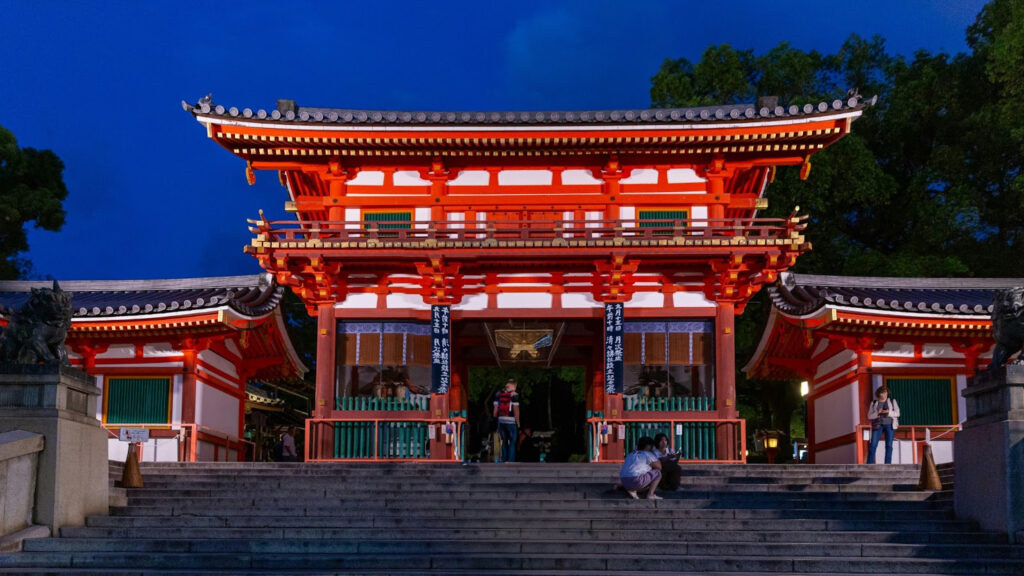
Kyoto carries time without displaying it loudly. Streets remain low. Buildings sit close to one another. Sound feels contained, even in busy areas.
In Kyoto, historic sites are not isolated from daily life. Shrines appear along ordinary routes. Temple walls run behind residential streets. The city does not frame its past as something to be visited. It allows it to remain in use.
Attention here sharpens gradually, shaped by repetition rather than instruction.
Landmarks That Do Not Interrupt Routine
Kyoto’s landmarks feel integrated rather than elevated. People pass through them on the way to errands. Pauses happen briefly, then dissolve.
Nothing asks to be completed. You notice how often familiarity replaces awe. The city encourages observation without insisting on it.
History remains close because it has not been separated from habit.
The Transition Without Reset
Leaving Kyoto does not feel like closing a chapter. The rhythm carries forward. Routes extend naturally, allowing one atmosphere to fade gently into the next.
The network of trains in Japan supports this continuity. Movement remains smooth, contained, and expected. Arrival does not feel like an event. It feels like continuation.
The island stays legible through motion.
Tokyo and Accumulated Energy
Tokyo gathers rather than settles. Neighbourhoods change tone quickly. Density increases and releases in cycles.
In Tokyo, attention is pulled outward. Light reflects. Sound layers. Movement overlaps. The city does not ask you to focus on one thing at a time.
Yet beneath the surface intensity, patterns repeat. Routes become familiar. Corners return. Rhythm emerges through use.
Iconic Landmarks as Reference Points
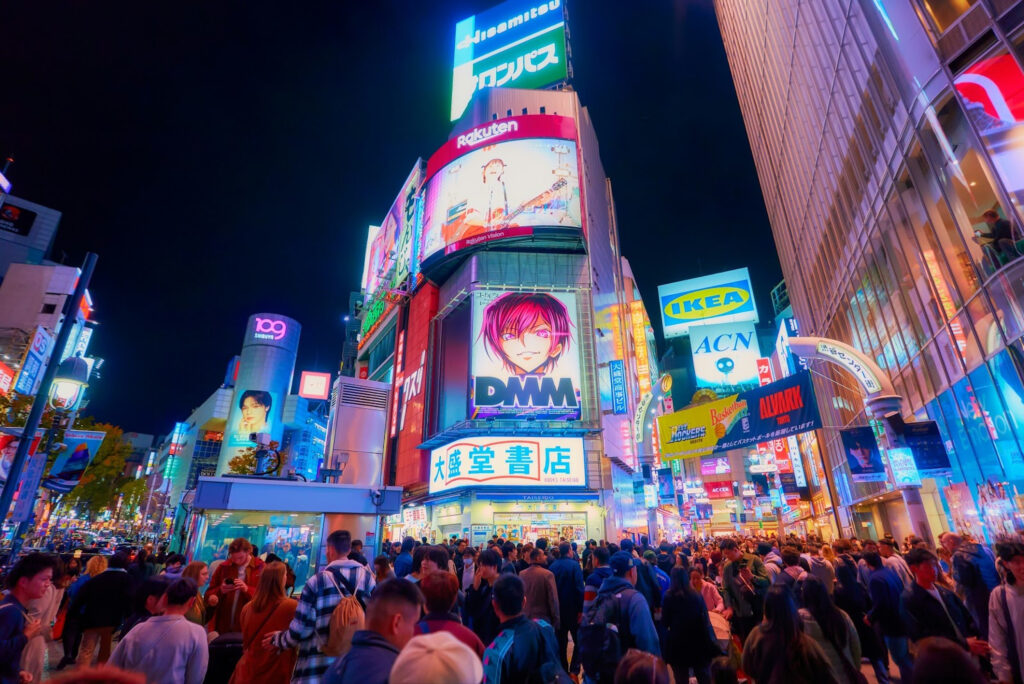
Tokyo’s landmarks often begin as destinations and end as reference. You pass them repeatedly. Eventually, they stop demanding attention and start organising movement instead.
This familiarity softens scale. What once felt overwhelming becomes navigational. The city teaches orientation through repetition.
Landmarks here function because they are used constantly.
Bustling Streets That Resolve Themselves
Crowded streets in Tokyo rarely feel chaotic for long. Movement aligns. People adjust instinctively. Flow replaces friction.
What appears overwhelming from above feels coordinated at ground level. The city relies on shared understanding rather than instruction.
Density becomes manageable through habit.
Quiet and Noise Side by Side
One of Honshu’s defining qualities is how easily stillness and activity coexist. A busy street opens into a calm passage. A shrine entrance appears beside a commercial block.
These shifts do not feel dramatic. They feel expected. You adjust without marking the change.
The island trusts you to find the right tempo.
Learning Through Repetition
Understanding Honshu does not come from a single visit or landmark. It builds through return — walking the same street twice, hearing the same space at different hours, noticing how your pace changes without decision.
The island teaches by being lived in, not by being explained.
Knowledge accumulates quietly.
What Remains in Memory
Later, what stays with you is not a list of capitals or icons. It is the sensation of adjustment — slowing in one city, accelerating in another, letting movement guide attention.
Honshu does not ask to be summarised. It remains open-ended, shaped by continuity rather than contrast.
The experience lingers not as a route completed, but as a rhythm you learned to move within — steady, layered, and still unfolding long after you have left.
Monica Costa founded London Mums in September 2006 after her son Diego’s birth together with a group of mothers who felt the need of meeting up regularly to share the challenges and joys of motherhood in metropolitan and multicultural London. London Mums is the FREE and independent peer support group for mums and mumpreneurs based in London https://www.londonmumsmagazine.com and you can connect on Twitter @londonmums
