

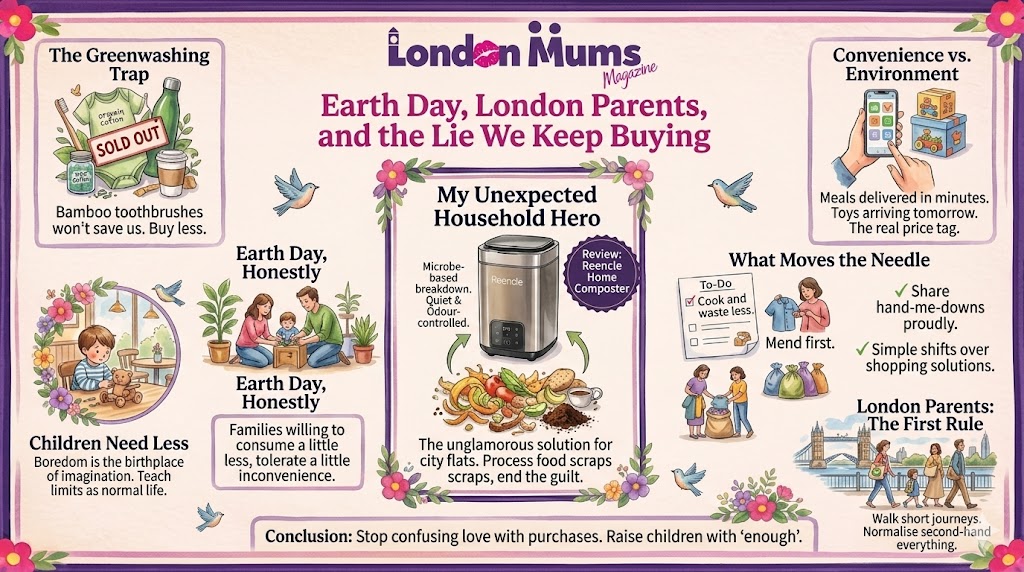
Every April, Earth Day arrives wrapped in the same polite script: recycle more, buy greener, switch bulbs, carry a reusable bottle, plant something photogenic in a terracotta pot.
All fine. All useful. All wildly insufficient.
Because the real environmental problem in many London homes is not that families forget their tote bags. It is that we are raising children inside a culture of endless consumption while pretending the issue can be solved with bamboo toothbrushes.
That may sound harsh, but it is worth saying aloud.
We tell children to care about the planet, then reward them with plastic tat for good behaviour. We discuss sustainability, then order three versions of the same trainers to try on at home and send two back by courier. We lecture them about waste, then host birthday parties where half the decorations are in a bin bag before sunset.
Children notice hypocrisy faster than they notice instructions.
The new status symbol: Convenience
For years, wealth meant ownership. Then it became experiences. Now, in much of urban parenting culture, wealth often looks like convenience.
Meals delivered in minutes. Toys arriving tomorrow. Outgrown clothes replaced instantly. Gadgets solving problems we barely had. Homes full of objects purchased to save time, then time spent managing the objects.
Many of us are not buying because we need more. We are buying because we are tired.
That is understandable. London family life can feel like logistics with a side of guilt. But convenience has an environmental price tag, even when wrapped in pastel branding and the word “eco”.
The uncomfortable truth: some of the greenest households are not the richest or trendiest. They are simply the ones that consume less.

Why children need less, not more
Modern parenting sometimes treats boredom as an emergency.
A child waits five minutes in a café? Hand over a screen.
Rainy afternoon? Buy a craft kit.
Weekend gap? Book an activity, purchase supplies, arrange transport.
Yet boredom has always been the birthplace of imagination. Waiting teaches patience. Reusing teaches creativity. Repairing teaches competence.
Children do not need a constant stream of newness. Adults often do.
And if we want future generations to care for resources, they need to experience limits not as punishment, but as normal life.
The greenwashing trap
Perhaps the cleverest trick consumer culture ever pulled was persuading us that we can shop our way out of over-shopping.
Organic cotton romper.
Sustainable lunchbox.
Eco glitter.
Compostable party cups individually wrapped in plastic.
A fifth reusable water bottle.
There is nothing wrong with better choices when something genuinely needs replacing. But replacing perfectly functional things in the name of sustainability is often just waste wearing nicer language.
The first rule of greener living is not “buy ethical”.
It is “buy less”.
What actually moves the needle at home
If London parents truly want to make a difference, the glamorous answer is disappointing:
Cook and waste less food
Mend clothes before replacing them
Borrow occasion items
Share hand-me-downs proudly
Walk short journeys when possible
Keep children out of the habit of reward-through-shopping
Normalise second-hand everything
Let birthdays be memorable, not landfill-heavy
None of this photographs particularly well. That may be why it works.
My unexpected household hero: The Compost Machine I didn’t know I needed
Speaking of unglamorous solutions, I recently received a Reencle Home Composter to review, and I have become slightly evangelical about it.
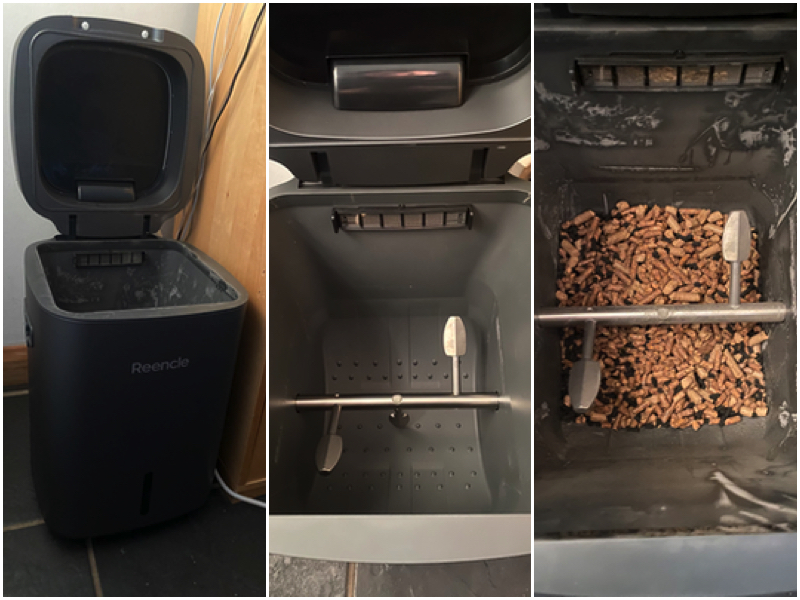
This countertop electric composter uses microbes to break down food scraps continuously, rather than simply drying and grinding waste. The brand says it is designed to run quietly, control odours with a filter system, and process a broad range of scraps including fruit, vegetables, eggshells, and even some meat and dairy.
What matters more is real life: it has changed the mood of my kitchen.
Peelings, leftovers, tired salad leaves, forgotten berries, crusts, coffee grounds, instead of that familiar guilt-laden scrape into the bin, they now become something useful. I waste less because I notice waste more. Children notice too. Food suddenly has an afterlife.
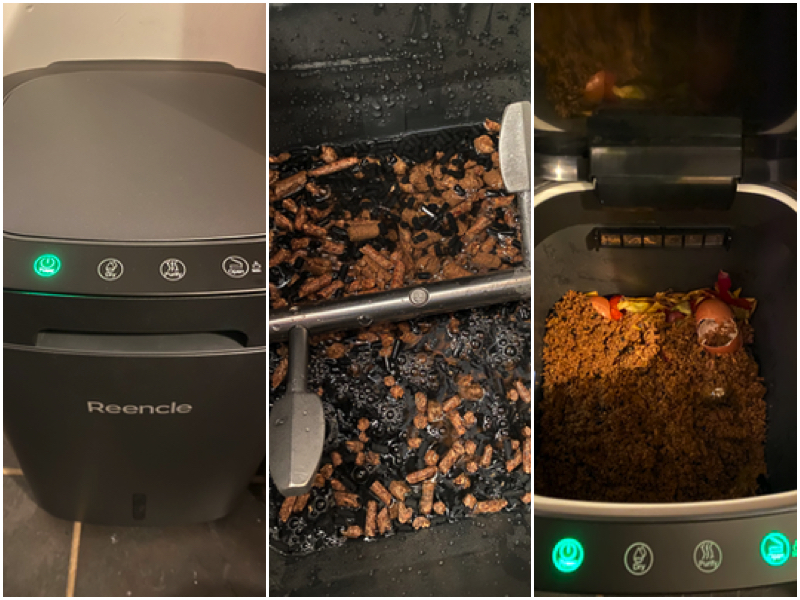
It is tidy, surprisingly unobtrusive, and for households serious about reducing food waste, genuinely practical. Independent reviews have also praised Reencle models for odour control and ease of use, while noting the higher upfront cost.
Is it cheap? No. Is it for everyone? Also no.
But if you live in a city flat, lack outdoor compost space, and feel frustrated by how much food a family throws away, it can be a smart long-term shift rather than another gadget.
The irony is delicious: the most satisfying machine in my kitchen right now is the one helping me buy less and waste less.
Earth Day, honestly
This Earth Day, perhaps we need fewer slogans and more honesty.
The planet does not need perfect parents with colour-coordinated reusable jars.
It needs families willing to consume a little less, repair a little more, tolerate a little inconvenience, and stop confusing love with purchases.
Children raised with enough are far more sustainable than children raised to expect everything.
Related articles

Monica Costa founded London Mums in September 2006 after her son Diego’s birth together with a group of mothers who felt the need of meeting up regularly to share the challenges and joys of motherhood in metropolitan and multicultural London. London Mums is the FREE and independent peer support group for mums and mumpreneurs based in London https://www.londonmumsmagazine.com and you can connect on Twitter @londonmums
