

If you are in Rome for work, pleasure, or travelling solo or with family, Impressionismo e oltre, Impressionism & beyond, Capolavori dal Detroit Institute of Arts, currently on display at the Museo dell’Ara Pacis, is one of those exhibitions that genuinely elevates your stay. I recently visited while in the city for work (and pleasure!) and was struck not only by the quality of the works on show, but by how clearly and enjoyably the exhibition tells the story of modern European art.
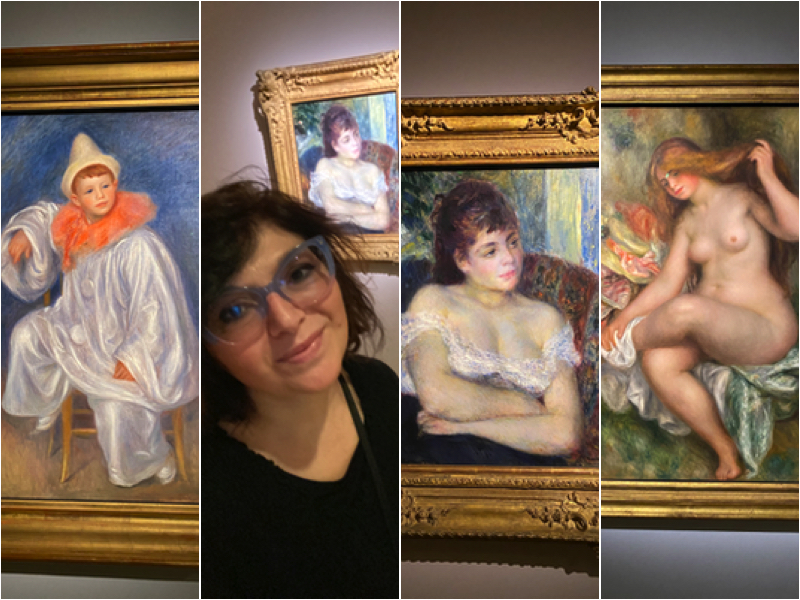
Bringing 52 extraordinary masterpieces from the Detroit Institute of Arts to Italy, this exhibition offers a rare opportunity to explore one of the most transformative periods in art history – from the birth of Impressionism in the mid-19th century to the bold avant-gardes of the early 20th century. Many of these works entered the American collection shortly after they were painted and are now, for a limited time, finally back in Europe.
The exhibition opens with the renewal of French painting, when artists began to turn away from academic rules and instead focused on everyday life, modern cities and natural light. Works by Edgar Degas, Pierre-Auguste Renoir, Camille Pissarro and Alfred Sisley capture fleeting moments with freshness and immediacy. Particularly memorable are five paintings by Degas, the elegant Donna in poltrona (1874) by Renoir – chosen as the visual icon of the exhibition (and frankly always my favourite one to watch and enjoy) – and Cézanne’s celebrated Bagnanti, which hints at the structural experimentation that would shape modern art.
As the exhibition progresses beyond 1886, the year of the last Impressionist exhibition, the narrative deepens. Artists begin to explore form, colour and emotional expression in new ways. Cézanne’s Sainte-Victoire reveals a more solid, architectural vision of landscape, while Vincent van Gogh’s works stand out for their vibrant, rhythmic brushstrokes and intense emotional charge, reminding visitors how art can communicate inner states as powerfully as it depicts the external world.
The heart of the exhibition is dedicated to Paris in the early 20th century, when the city became the undisputed centre of artistic innovation. Here, the works of Pablo Picasso and Henri Matisse truly shine. Six paintings by Picasso guide visitors through key moments of his career – from the Rose Period to Cubism and beyond – while Matisse’s works from 1916 to 1919 show a fascinating evolution from geometric restraint to a more sensual, expressive style influenced by Renoir. The inclusion of artists such as María Blanchard (the only female artist represented from the DIA collection), Juan Gris, Modigliani and Chaïm Soutine enriches this section and highlights the diversity of voices shaping modern art.
The final part of the exhibition is particularly powerful and emotionally resonant, focusing on German Expressionism. Works by Kandinsky, Beckmann, Nolde, Kokoschka, Pechstein and Feininger reflect the dramatic social and political upheavals of the early 20th century. Beckmann’s Self-Portrait from 1945 is especially striking, capturing the uncertainty and fragility of post-war Europe with haunting intensity.
What makes Impressionismo e oltre especially appealing to London Mums readers is its clear, well-structured layout and its commitment to accessibility and inclusion. The exhibition offers multi-sensory pathways, creative workshops, LIS-subtitled videos and tactile visits, making it welcoming for visitors of all ages and abilities. Families with older children, in particular, will appreciate how the exhibition connects art to history, emotion and modern life without feeling overwhelming.
Set within the light-filled, contemporary space of the Ara Pacis Museum, this exhibition is easy to navigate even if you are short on time – perfect for fitting into a busy Roman itinerary. Whether you are an art lover, a curious traveller or simply looking for a meaningful cultural pause between sightseeing and meetings, this is a show that rewards attention and sparks conversation.
Impressionismo e oltre. Capolavori dal Detroit Institute of Arts is more than an exhibition – it is a journey through fifty years of creativity that reshaped how we see the world. Highly recommended.
Exhibition details
Museo dell’Ara Pacis, Rome
4 December 2025 – 3 May 2026
Daily 9:30–19:30 (last entry 18:30)
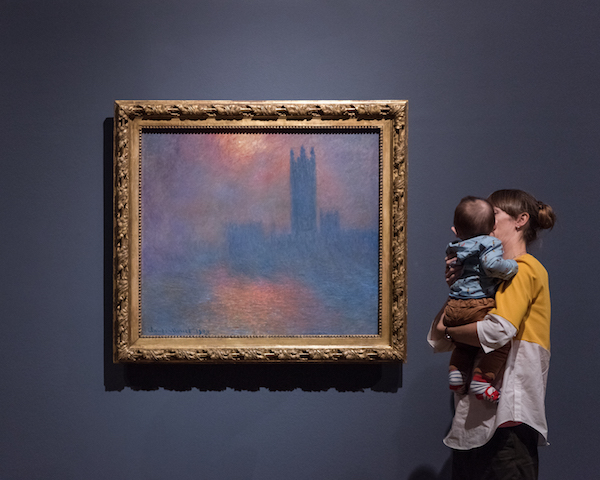
Why Go With Kids?
A clear story, not just paintings!
The exhibition is laid out as a journey through time, making it easy for children (especially 8+) to follow how art evolves from Impressionism to bold modern styles.
Colour, movement and emotion!
From Degas’ dancers to Van Gogh’s swirling brushstrokes and Kandinsky’s abstract forms, there’s plenty to spark curiosity and conversation with young visitors.
Perfect for school-age children and teens!
Links between art, history and emotions make this exhibition ideal for older children studying art, history or humanities – without feeling like homework.
Family-friendly and accessible
The Ara Pacis Museum offers inclusive, multi-sensory experiences, tactile visits and subtitled video content, making it welcoming for children with different learning styles and needs.
A calm cultural break
After busy Roman streets, the museum provides a peaceful, light-filled space where kids can slow down, observe and engage – without sensory overload.
Easy to fit into your day
The exhibition can be enjoyed in 60–90 minutes, making it manageable for families balancing sightseeing, meals and travel plans.
Top 5 Works to Spot with Children
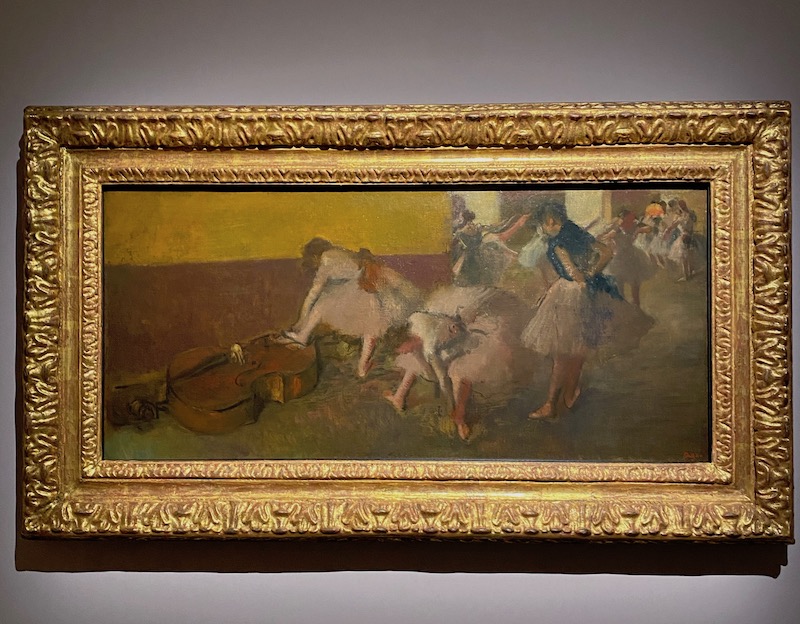
Edgar Degas – The Dancers
A brilliant starting point for younger visitors. Ask children to spot the movement in the figures and imagine the music playing in the room. Why do the dancers look caught mid-step rather than perfectly posed?
Pierre-Auguste Renoir – Woman in an Armchair (1874)
Chosen as the visual of the exhibition, this painting is perfect for discussing colour and mood. Does she look relaxed, bored or thoughtful? What colours make the scene feel warm and inviting?
Paul Cézanne – Bathers
This work is great for encouraging observation. Ask children to notice how the figures are built almost like shapes rather than detailed bodies. Can they spot triangles and blocks in the composition?
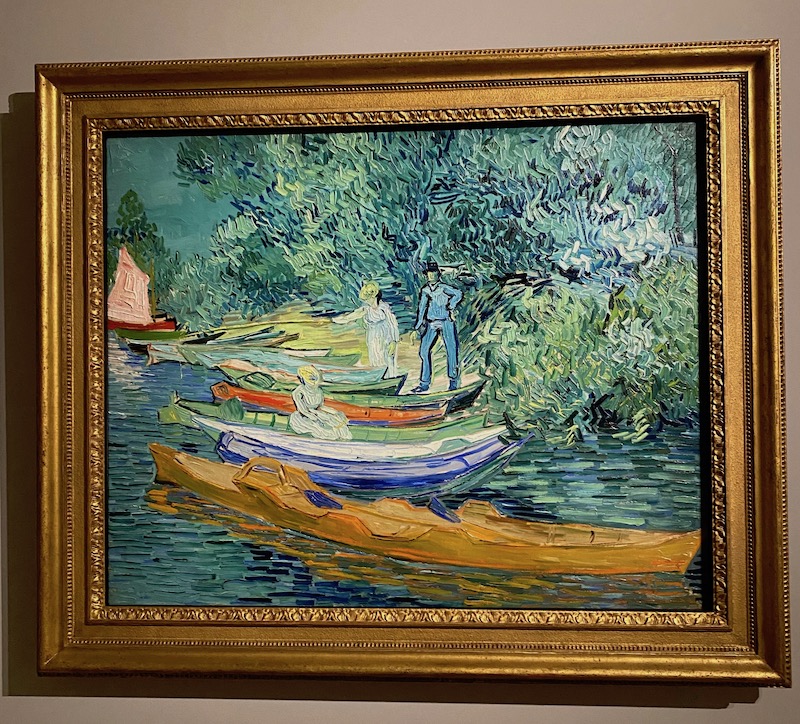
Vincent van Gogh – Two Paintings from the Exhibition
Van Gogh’s energetic brushstrokes are always a hit with kids. Invite them to follow the direction of the paint with their eyes and talk about how the painting makes them feel – calm, excited or restless?
Wassily Kandinsky – Abstract Composition
A wonderful moment to let imagination run free. There’s no “right answer” here – children can describe what they see, name the shapes and colours, or even invent a story inspired by the artwork.
Mini Art Challenge – Try This in the Gallery
Become an Art Detective
Invite children to choose one favourite artwork and complete these mini missions:
Spot the movement: Is anything dancing, walking, leaning or floating? How did the artist show motion?
Follow the colours: Pick one colour and see how many times it appears in the painting. Is it calm, bright, or dramatic?
Name the mood: If this painting were a feeling, what would it be — happy, busy, quiet, stormy?
Freeze-frame: Ask children to copy a pose from a figure in the painting (quietly, of course!) and notice how it feels in their own body.
Older children can take it a step further by imagining a before-and-after scene: what happened just before the moment in the painting, and what might happen next?
Talk About It Later – Questions for Parents
Keep the Conversation Going at Home
After the visit, these gentle questions help children reflect without feeling like a lesson:
Which artwork do you remember most – and why?
Was there a painting that made you feel something straight away?
Which artist would you like to meet, and what would you ask them?
Did you notice how paintings changed as you moved through the exhibition?
If you could take one painting home, where would you hang it – and what would you call it?
You could even encourage children to draw their own version of a favourite artwork or create a “modern masterpiece” inspired by shapes, colours or emotions they spotted at the museum.
Monica Costa founded London Mums in September 2006 after her son Diego’s birth together with a group of mothers who felt the need of meeting up regularly to share the challenges and joys of motherhood in metropolitan and multicultural London. London Mums is the FREE and independent peer support group for mums and mumpreneurs based in London https://www.londonmumsmagazine.com and you can connect on Twitter @londonmums
