

Since July this summer, I’ve been testing a new device called Zeez – a simple wedge designed to improve the quality of sleep. Over the past five months, I have felt more rested after a good night’s sleep, though I cannot completely confirm that this improvement is solely due to the Zeez. Sleep quality is complex and highly individual, but the concept and design of this product are genuinely intriguing.

To an extent, ‘success’ is fairly subjective, but for those who like a bit of evidence, any standard sleep monitor can be used alongside Zeez. Devices such as Fitbit, Apple Watch, Oura Ring, or Whoop can track sleep duration, awakenings, and how quickly you fall asleep. Anecdotally, users – including myself – often notice longer, less interrupted sleep, and greater daytime energy. Some also report improvements in heart rate variability, a key indicator of restorative rest.
A 2023 survey confirmed what many of us already suspect: most of us simply don’t get a good night’s sleep. Two-thirds of British workers are not performing at their best, according to The Nuffield Health Survey, with obvious knock-on effects for productivity. Beyond work, sleep deprivation carries significant health risks, including heart disease, obesity, cancer, and mental illness. The recent autumn weather has only exacerbated that foggy, fatigued feeling across the country.
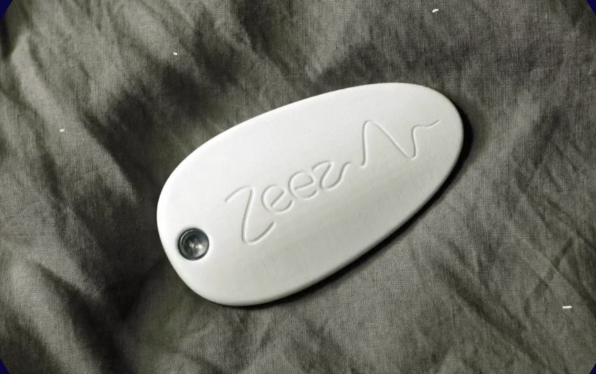
Enter British entrepreneur Anna Mackay. Once a successful London lawyer, Anna recalls the bleary haze of exhaustion that haunted her through childhood and her professional life. Determined to find a solution, she joined forces with Steve Walpole, former head of hardware development at IBM. Together, they developed the Zeez Sleep Pebble, a device designed to bring relief to poor sleepers around the world.
The Zeez has earned praise in the press: Anna Maxted of The Daily Mail described it as “a seriously impressive piece of kit,” while Craig Charles and sleep expert Nerina Ramlakhan endorsed it on The Gadget Show. This elegant, palm-sized device works by emitting pulses that mimic the neural activity of a healthy sleeper across four sleep cycles over roughly seven hours, encouraging the user’s sleep patterns to follow suit.
Sold with a 45-day money-back guarantee, Zeez is backed by confidence in its results, though most users report noticeable improvement within one to three weeks. The device comes with clear instructions and helpful tips on maximising its effects. Of course, the usual sleep hygiene basics still apply: charge your Zeez, maintain a balanced diet, turn off other devices at bedtime, and place the Zeez under your pillow.
While it’s straightforward to use, sleep quality remains inherently difficult to measure with certainty. After five months of testing, I can say that I feel more rested, though I cannot definitively confirm that this is entirely due to the Zeez. That said, the device does offer a scientifically inspired, practical approach to improving rest – and in a world where quality sleep is increasingly hard to come by, that is a welcome innovation.
Truly, in our busy lives, the value of a good night’s sleep is priceless, and Zeez represents a thoughtful tool that could help many of us reclaim it.

Monica Costa founded London Mums in September 2006 after her son Diego’s birth together with a group of mothers who felt the need of meeting up regularly to share the challenges and joys of motherhood in metropolitan and multicultural London. London Mums is the FREE and independent peer support group for mums and mumpreneurs based in London https://www.londonmumsmagazine.com and you can connect on Twitter @londonmums
