

For decades, we’ve known that our bones need calcium, vitamin D and weight?bearing exercise. But what if the secret to strong bones also lies in something as simple as when we sleep?
A pioneering study funded by the Royal Osteoporosis Society (ROS) has uncovered a compelling link between the body’s internal clock – the circadian rhythm – and the breakdown of bone tissue. The discovery could transform how osteoporosis is diagnosed and prevented in the future, especially for the millions of women navigating the hormonal changes of menopause.
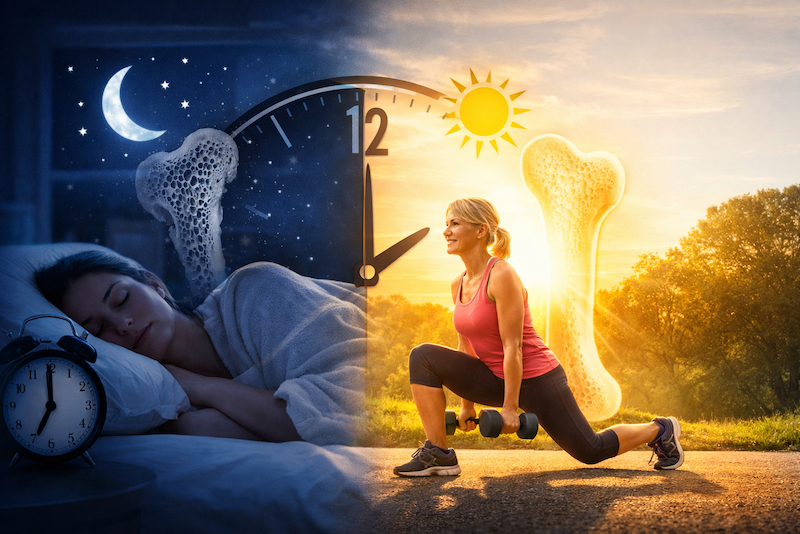
The science of night?time bone loss
A team of researchers led by Dr Andrea Darling at the University of Surrey found that osteoclasts – the cells responsible for breaking down bone – are significantly more active at night. This natural rhythm means that, under normal circumstances, our bones undergo a predictable cycle of breakdown and rebuilding.
But when sleep patterns are disrupted – as they often are for shift workers, new parents, or anyone suffering from poor sleep – that delicate balance may be thrown off.
“Bone tissue is constantly being broken down and rebuilt,” explains Dr Darling. “Our findings show that this breakdown process peaks at night when it’s dark. If someone’s circadian rhythm is heavily disrupted, this could alter the balance and potentially weaken bones over time.”
A hidden risk for millions like Jo
The stakes are high. Half of women and one in five men over 50 will break a bone due to osteoporosis. Yet despite the condition being treatable, two?thirds of patients miss out on crucial care – often because they’re diagnosed late, after suffering multiple fractures.
For former NHS midwife Jo, that delay had lifelong consequences. After years of undiagnosed spinal fractures, she now lives with chronic pain, reduced height and an ongoing fear of falling. Importantly, Jo worked night shifts for much of her career – a factor that Dr Darling’s study suggests could be a possible contributor to bone loss.
“My scans found several fractures I never knew I’d had,” she says. “It’s frightening to think it could have been spotted earlier.”
Why menopause makes bones especially vulnerable
For women, the drop in oestrogen after menopause accelerates bone loss, often by as much as 20% in the first five to seven years. This is when the skeleton is most vulnerable. Adding circadian disruption – whether from poor sleep, night shifts, or even the hot flushes that disturb rest – can further tip the balance toward bone breakdown.
But the good news is that osteoporosis is common, treatable and often preventable – if you know your risk and take action.
Five ways to strengthen your bones after menopause
Whether you’re in your 40s, 50s or beyond, these expert?backed tips can help keep your skeleton strong:
- Prioritise sleep hygiene
Since bone breakdown peaks at night, protecting your sleep matters. Aim for 7–9 hours of quality rest. Keep bedrooms cool and dark, avoid screens before bed, and try to go to sleep and wake at the same time – even on weekends. - Load up on calcium and vitamin D
After menopause, the body’s ability to absorb calcium changes. Aim for 700–1000 mg of calcium a day from dairy, leafy greens, almonds or fortified alternatives. Vitamin D – from sunlight, supplements or oily fish – helps your body use that calcium. Many women over 50 are advised to take a daily 10?microgram supplement, especially in autumn and winter. - Embrace weight?bearing and resistance exercise
Bones respond to impact and load. Brisk walking, jogging, aerobics and dancing all count. For even greater benefits, add strength training twice a week – squats, lunges, or lifting weights help stimulate new bone formation. - Look at your lifestyle
Smoking and excessive alcohol both weaken bones. Cutting back or quitting can significantly reduce fracture risk. - Know your risk – and act early
The ROS’s free Great British Bone Check is a 3?minute online tool that helps you understand whether you might be vulnerable to osteoporosis. Since its launch, more than half a million people have completed it – and 84% have taken action as a result. That’s estimated to lead to up to 71,000 people receiving an early diagnosis, giving them the chance to protect their bones before fractures start happening.
“Research is the key to preventing more stories like Jo’s”
Dr Caroline Sangan, Research and Evidence Lead at the ROS, believes studies like Dr Darling’s mark an essential step towards spotting people at risk much sooner. “This study opens a completely new avenue in understanding osteoporosis risk,” she says. “If disrupted sleep and shift work are contributing factors, we need to know and we need to act fast.”
The charity is now calling on the public to help accelerate this vital research. Donations will fund further studies into the biological triggers of osteoporosis, helping doctors identify vulnerable people sooner and protect them from painful fractures.
Take the first step today
You can complete the Great British Bone Check here:
https://thegreatbritishbonecheck.org.uk/risk
To support the ROS’s research appeal, visit theros.org.uk/boneclock or call 01761 473287.
Your bones work for you 24 hours a day. By understanding the hidden rhythms that govern them, you can help keep them strong – for life.

Monica Costa founded London Mums in September 2006 after her son Diego’s birth together with a group of mothers who felt the need of meeting up regularly to share the challenges and joys of motherhood in metropolitan and multicultural London. London Mums is the FREE and independent peer support group for mums and mumpreneurs based in London https://www.londonmumsmagazine.com and you can connect on Twitter @londonmums
