

There is a particular moment, somewhere between Christmas leftovers and the first school shoe hunt of January, when London reveals its true personality. Slightly unhinged. Deeply charming. Exhausted, but still determined to put on a show.
New Year in London is not neat or minimal. It does not whisper fresh starts. It clangs, sparkles, queues politely, complains loudly – and then delivers magic anyway.
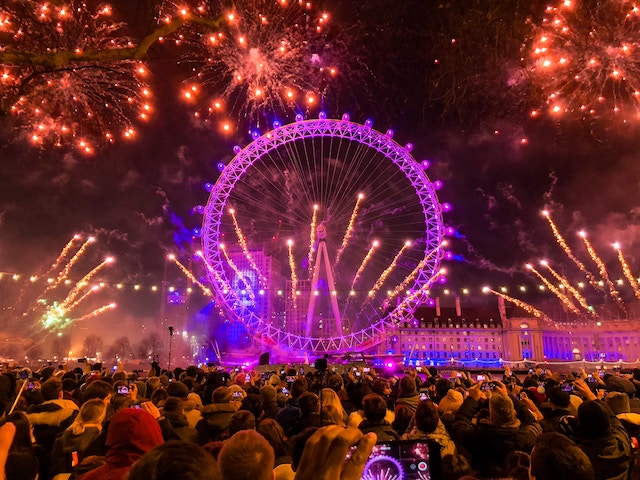
For families, this strange in-between week is when the city really comes into its own. The rush of December softens, the tourists thin just enough, and London feels briefly like a playground designed by someone with an excellent sense of humour and a tolerance for chaos.
Take the lights, for instance. By the time Christmas Day has passed, they feel less frantic and more forgiving. A walk through the West End after Boxing Day is still dazzling, but calmer – the perfect excuse for a top-deck bus ride where children press noses to glass and adults pretend they are not cold. Kew Gardens glows its final purple hues, Kenwood’s Neverland sparkles one last time, and London collectively agrees that yes, we will absolutely squeeze in one more light trail before reality returns.
Then there’s the city’s obsession with doing things properly – and theatrically. Ballet at the Royal Albert Hall, ice skating in improbable locations, gingerbread cities built by actual architects, steam trains wrapped in fairy lights puffing through Essex like something from a storybook. London doesn’t simply mark the end of the year; it stages it.
And yet, for all the grandeur, this is also peak “real London”. Canal boats serve mince pies. Museums run quietly brilliant tours through warehouses, tunnels and Roman ruins. You can watch pirates at Greenwich, vampires in Highgate, and punk legends at the 100 Club – sometimes all in the same day, if you plan well and drink enough coffee.
New Year’s Eve itself is the city at its most contradictory. Half of London is wrapped like a survival expedition along the Thames, insisting that this year will be “different”. The other half is at home, smugly warm, watching the fireworks on television and congratulating themselves on avoiding queues for the toilet. Both camps are correct.
For families, the daytime belongs to children – and London knows it. Midday countdowns replace midnight meltdowns, rom-com screenings become a sanctioned escape from overstimulation, and film scores thunder through concert halls while parents quietly marvel that everyone is still awake.
Then comes New Year’s Day, when London performs its most endearing trick of all: the great reset. The city empties, exhales, and reappears slightly rumpled but hopeful. There is a parade – of course there is – stretching gloriously across central London, free, joyous and slightly surreal. Dinosaurs roam Piccadilly. Samba dancers shake off the cold. Boroughs compete with cheerful pride. It is impossible not to smile, even through a hangover.
Parks fill with walkers declaring new beginnings. Cafés serve restorative flat whites to parents in sunglasses. There are ceilidhs where no one remembers the steps, concerts where Auld Lang Syne is sung with conviction rather than accuracy, and family walks that turn into accidental history lessons about Romans, blitzed streets or secret alleys.
What makes London extraordinary at New Year is not the promise of reinvention – it’s the permission to be imperfect. Here, resolutions are made with enthusiasm and revised with realism. “This year I’ll slow down,” we say, while booking three events and a museum visit before the first school week back. And that, somehow, feels right.
Because London doesn’t demand transformation overnight. It offers possibility instead. A week where children are still dazzled, adults are cautiously optimistic, and the city reminds us that joy can exist alongside exhaustion.
So yes, London at New Year is loud, cold, impractical and occasionally absurd. But it is also generous, theatrical, funny and deeply alive. For families, it is a reminder that magic doesn’t have to be perfect – it just has to show up.
And London, as ever, does.
Related articles

Monica Costa founded London Mums in September 2006 after her son Diego’s birth together with a group of mothers who felt the need of meeting up regularly to share the challenges and joys of motherhood in metropolitan and multicultural London. London Mums is the FREE and independent peer support group for mums and mumpreneurs based in London https://www.londonmumsmagazine.com and you can connect on Twitter @londonmums
