

It is not every day you attend a conference where a former Strictly Come Dancing professional offers to sing Ed Sheeran’s Perfect – and where his wife, a high?flying marketing executive, reveals that her stomach has swollen so badly she once had to wear a ‘tent’ dress to a black?tie gala in Dubai. But this was no ordinary conference. This was an event hosted by Endometriosis UK, and the stars of the afternoon were Hannah Du Beke (Chief Marketing Officer of the Clean Food Group) and her husband, the nation’s favourite ballroom dancer, Anton Du Beke. Together, they laid bare a 22?year journey through misdiagnosis, career turmoil, fertility heartache, and the slow, painful process of learning to live with a condition that affects an estimated 1.5 million women in the UK – yet remains stubbornly invisible to most of the population.
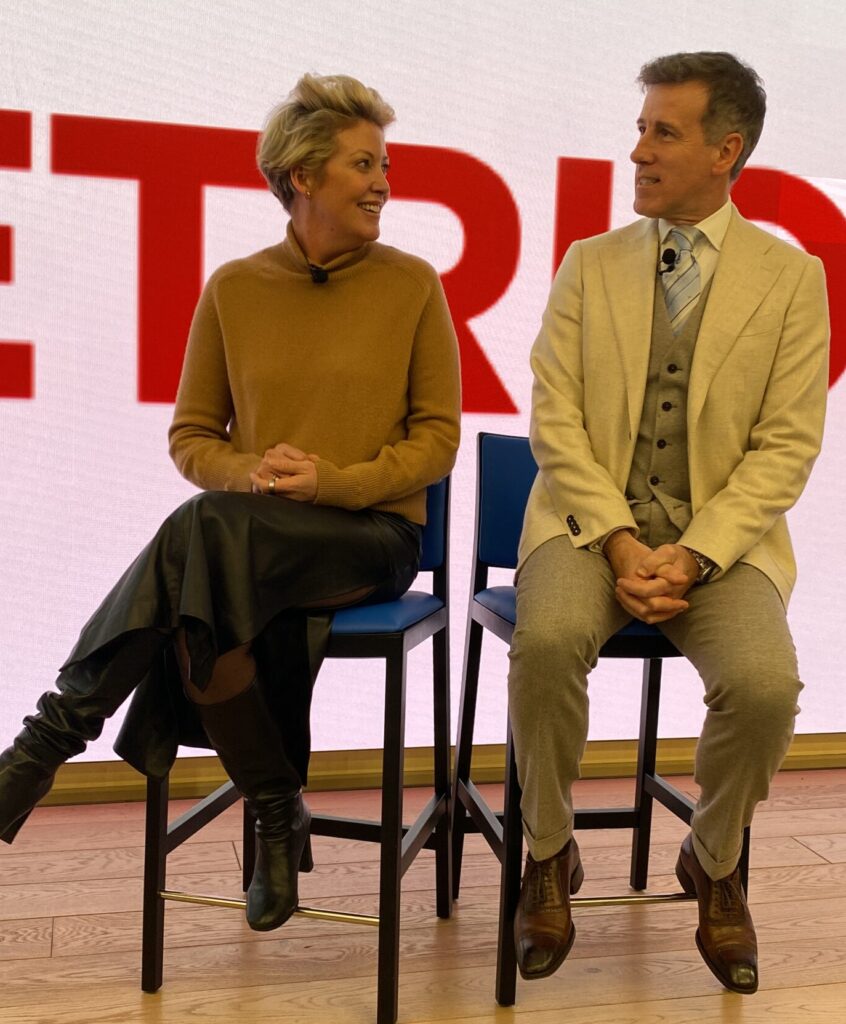
The good news? Diagnosis times are finally improving. The bad news? They are still far too long, and the NHS gynaecology waiting lists are among the worst in the system.
A tale of two shadows
Hannah, now 50, was diagnosed with endometriosis at 28. That was 22 years ago. Before that, she had spent a decade – from the age of 18 – experiencing extreme bloating, chronic pain, and a creeping sense that something was wrong with her body. But like so many women, she got used to managing it alone.
“You are trained from the age of 12 to hide your period,” she told the room. “Pushing a tampon up your sleeve and walking to the loo like that. So it is no surprise that as you get older, you just cope by yourself. You don’t expect sympathy for it.”
The shadow of endometriosis, she explained, has been a constant companion. It affected her career, her relationships, and her sense of self. And for 12 agonising years, it stopped her from getting pregnant.
The diagnosis that came too late
When Hannah finally received her diagnosis, she had never even heard the word endometriosis. The explanation – “a condition in which cells similar to the lining of the uterus grow outside the uterus” – left her none the wiser. What she did know was that all her close friends were having babies, and she was not.
“I was living in the heady days post ? Four Weddings and a Funeral, when all my friends had got married and were now starting to have families. That was resolutely not happening for me.”
For the next 12 years, she underwent three laparoscopies (her stomach, she says, now looks like a pincushion – “except for knitting needles, not pins”) and a punishing cycle of hope and despair. Meanwhile, her career took off. She was handpicked for a fast?track senior advancement programme in Silicon Valley, travelling constantly, living in the US, and watching the clock tick away on her chances of having children.
“If there had been someone in the business who understood the overwhelming impact of a condition like endometriosis, and who could have helped me unpick my physical, emotional and professional conditions, that would have changed everything.”
Instead, she fell into a fatalistic pattern. If she could not get pregnant, what was the point? She drank, she smoked, she threw herself into work. “It was my way of sticking two fingers up at myself.”
Enter Anton: the unlikely life raft
By her late 30s, Hannah was living alone in the suburbs of Slough with her miniature Dachshund, commuting weekly to Dublin, and convinced she would die alone and be found three weeks later, half?eaten by an Alsatian – a nod to Bridget Jones that drew knowing laughter from the audience.
Then, unexpectedly, Anton du Beke entered stage right.
“Honestly, no one was more surprised than me. As I got older, I realised that if you are lucky in life, you don’t get what you think you want. You get what you need.”
Anton, a teetotal ballroom dancer and national treasure, was the unlikeliest partner imaginable for a corporate cog living in the shires. But he proved to be exactly what she needed.
The turning point came when they sat on her kitchen floor. Hannah had been dropping hints about children, getting increasingly frustrated that Anton was not responding. Finally, he asked her directly: “Do you want to have children?”
He told her that he was 48, that having children was not something he had ever seen as a need, but that if she wanted them, he would be with her every step of the way. She had to own the decision.
“I remember him saying, ‘Hannah, if we have children, it will be the best thing we have ever done. And if we don’t have children, it will be the best thing we never did.'”
For the first time in years, Hannah felt master of her own ship. She embarked on IVF with renewed determination – even when she was diagnosed with tuberculosis just as doctors were about to lower her immune system. After a successful cycle, Anton’s first words on seeing the scan were: “F me, Hannah – twins!”
George and Henrietta turned nine this year.
The cruel irony of remission
Pregnancy and breastfeeding gave Hannah 14 or 15 months of complete freedom from endometriosis symptoms. Then she stopped breastfeeding, and within days, the bloating and pain returned.
“It was with absolute incredulity,” she said. “I had forgotten what it felt like not to have it. And then it came back.”
Today, she manages her symptoms largely with a Mirena coil (a hormonal intrauterine device), though she remains prone to flare?ups. Only a few weeks ago, she had to attend a high?profile conference at the Bezos Centre for Sustainable Proteins in central London dressed in a tent – “much to the raised eyebrows of my colleagues, because I literally could not fit into any of my clothes.”
She has been congratulated on non?existent pregnancies more times than she can count. The most memorable was in Dubai, over Christmas and New Year, at a gala dinner that cost a small fortune.
The Dubai story (as told by Anton)
Anton, with the timing of a born performer, recounted the now?legendary holiday.
They had booked a lavish trip to Dubai. Hannah was mid?flare?up, feeling enormous and self?conscious. On the beach, she panicked about paparazzi – “delusions of grandeur” – and insisted on staying at least a metre away from him. At the black?tie gala, a woman approached them, looked at Hannah’s swollen belly, and said: “Should you be drinking that?”
“I get so embarrassed,” Hannah admitted. “I don’t say, ‘I’m not pregnant.’ I just stand there drinking, thinking, ‘I am a terrible pregnant person.'”
Anton, less diplomatic, told the next well?wisher to “shut your face.” They forewent the all?you?can?eat buffet and stuck to the all?you?can?drink part of the deal. By 10pm, they were back in their room, Hannah in tears, watching the fireworks from bed.
“We laugh now,” Anton said. “But it is hugely difficult. The great thing is, it has a happy ending. We were fortunate enough to have children. So we can laugh about it. But it is not funny at the time.”
Why Anton had never heard of endometriosis
One of the most striking moments came when Anton admitted that before meeting Hannah, he had never heard the word endometriosis.
“I understood periods,” he said. “I knew they could be debilitating. That was the extent of my knowledge. Fast forward many years, and I was staggered that I had got to this point in my life and never heard of this thing that affects half the population of the planet, regardless of race, class, age.”
He contrasted the lack of awareness with other conditions. “I know all about breast cancer. I know all about cervical cancer. But why is there not a whole department at the NHS saying, ‘Come and see us, we are the endometriosis department’? This is not new. It has been around forever.”
His bewilderment was met with nods and murmurs of agreement from the room. For many women in the audience, his words were a mirror.
The employer’s role: signing up to change
Hannah is now a passionate advocate for workplace support. She signed her company, Clean Food Group, up to Endometriosis UK’s employer scheme.
“When I first discussed this with my CEO and CFO – two great male colleagues and friends – they were immediately supportive. But I was conscious of the massive gender divide. We are a start?up headquartered in a manufacturing facility on the outskirts of Liverpool. There are only a couple of females in the business. But that made it even more important that they felt they had support and understanding if needed.”
For larger organisations, she added: “Making sure your top female talent is helped through the tsunami of mental and physical requirements during pivotal moments in their career will be the best thing you have ever done. You will be repaid in spades.”
A note of optimism
Despite the grim statistics – gynaecology waiting times rose more than any other specialty during COVID and have stayed stubbornly high – there are reasons for hope. Endometriosis UK’s latest diagnosis report shows that diagnosis times have improved over the last two years. Scotland has invested £13 million in improving gynaecology services. The Women’s Health Strategy is being updated. And new research into non?invasive diagnostic tools and treatments is on the horizon.
Emma, the charity’s representative, summed it up: “The future is bright, but we need to be here helping you, supporting you to thrive as we go through that.”
What Hannah learned
At the end of her talk, Hannah distilled her experience into three pieces of advice.
First, find your tribe. The enormous relief for her was understanding that other people were going through the same thing. Shared stories – some hilarious in hindsight, never quite so funny at the time – are a form of treatment in themselves.
Second, own your decisions. Whether about children, career, or treatment, the moment she stopped waiting for someone else to tell her what to do was the moment she started to heal.
And third, speak up at work. Employers cannot support what they do not know. The Endometriosis UK employer scheme is a free, practical tool that helps businesses create environments where women can thrive.
As the Q&A drew to a close, Anita, the moderator, reminded Anton of his earlier promise. “You said you might learn ‘Perfect’ by Ed Sheeran.”
Anton laughed. “I was listening to it the other day. It is quite high key. It will take quite a variation of vocal chords.”
He did not sing. But he did not need to. The room had already heard something far more valuable: a genuine, unscripted conversation between two people who have navigated the shadow of endometriosis together, and emerged not just intact, but laughing.
And that, perhaps, is the most hopeful message of all.
Monica Costa is the founder and editor of London Mums Magazine. She recently attended the Endometriosis UK event in London and met Hannah and Anton du Beke afterwards. For more information on endometriosis, including workplace resources and support, visit www.endometriosis-uk.org.
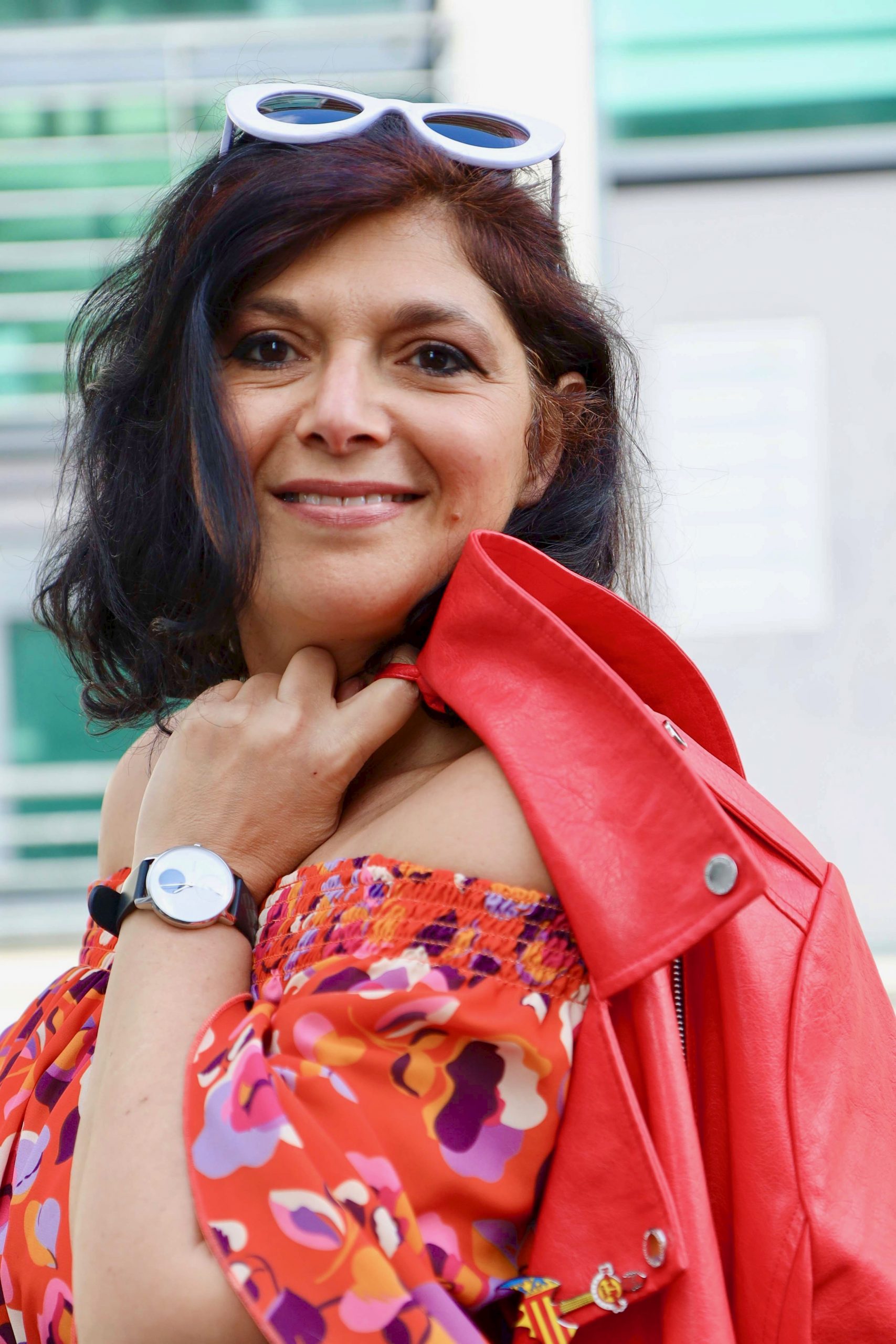
Monica Costa founded London Mums in September 2006 after her son Diego’s birth together with a group of mothers who felt the need of meeting up regularly to share the challenges and joys of motherhood in metropolitan and multicultural London. London Mums is the FREE and independent peer support group for mums and mumpreneurs based in London https://www.londonmumsmagazine.com and you can connect on Twitter @londonmums
