

Happy national herb day! There’s no better date than Saturday, 2 May, 2026 – the first Saturday of May, and officially national herb day – to enjoy a book that celebrates the very green, growing things that heal, flavour, and enchant our lives. And what a glorious invitation to the party Adele Nozedar has written. Foraging for Healing Herbs is not a dry botanical directory. It’s a ramble through hedgerows, a whisper of old magic, and a thoroughly practical guide to turning overlooked weeds into wellness. Subtitled How to Find Plants for Charms, Remedies and Rituals, this hardback volume feels like a treasured gift before you’ve even opened it. The cover is sturdy, the pages are thick and glossy, and the photographs – oh, the photographs – are so crisp and inviting that you’ll find yourself mentally grazing through every meadow, pavement crack, and coastal path Nozedar describes.
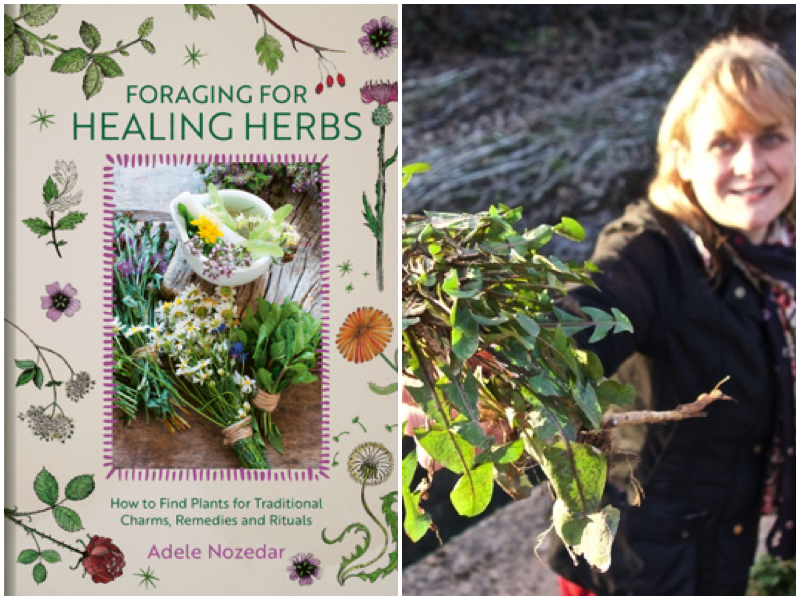
A book that begs to be handled
Let’s talk about the physical object first, because a book this well-crafted deserves it. The hardback binding means it will survive muddy trips to the woods, splashes from an elderflower cordial spill, or being lugged around in a backpack. The paper quality is exceptional: heavy, smooth, and packed with full-colour images that make plant identification a genuine pleasure. Each of the 81 featured plants gets its own photographic portrait – no fuzzy, black-and-white line drawings here. You can see the serrated edge of a dandelion leaf, the delicate umbels of yarrow, the cheerful yellow discs of ragwort. This is a book you’ll want to leave on the coffee table, then snatch up again for a dog-eared field trip.
And gift it? Absolutely. For anyone who has ever eyed a patch of nettles with suspicion or wished they knew what that fragrant purple flower in the park was, this book lands like a pocket-sized herbarium and a good friend rolled into one. National herb day is the perfect excuse to wrap one up for a fellow nature-lover – or to treat yourself.
From the nine plants spell to lemon balm-ade
The genius of Nozedar’s approach lies in her structure. Rather than an alphabetical slog, she organises plants by habitat: shady plants of the meadows, secret plants of the town, plashy (wonderful word!) plants of the wetlands, bracing plants of the sea, scorned seeds of the wastelands, and more. There are nine habitats in total, nodding to the ancient “nine plants spell” – a real early medieval charm that Nozedar weaves throughout the book like a golden thread.
You’ll learn that the nine herbs charm from the 10th-century Lacnunga manuscript wasn’t just superstition; it was a sophisticated blend of practical remedies, spiritual protection, and seasonal awareness. Nozedar doesn’t mock the old ways. Instead, she invites you to try your own version: create a charm from nine local plants, use them in a simple ritual, or just sit with the knowledge that people have been doing exactly this for over a thousand years.
But the book is far from academic. It’s bubbling over with recipes that demand to be made. Andy’s lemon balm-ade (described as a non-alcoholic mint julep) sounds like the drink of summer – cooling, gentle, and ridiculously easy if you have a patch of lemon balm. Elderflower marmalade cake? Yes please. There are also syrups, salves, infused honeys, and the kind of comfort-food recipes that make you wonder why you’ve been ignoring those “weeds” at the bottom of the garden.
Urban foraging: yes, you can
One of the most delightful chapters tackles the sceptic’s question: Forage in a city? Really? Nozedar admits she once thought the same, until she was tasked with leading an urban foraging walk and had to eat humble pie – or rather, humble chickweed. She discovered that towns and cities are surprisingly rich in edible and medicinal plants, thanks to centuries of humans shedding seeds from boots, birds scattering berries, and wind carrying pollen over concrete. Her advice is practical: forage at dog-mess height, avoid busy roads, and don’t strip the hotel’s flowerbeds (though grand hotels often love the novelty of a polite forager). It’s funny, encouraging, and liberating. You don’t need a countryside cottage to be a herbalist.
How to eat a dandelion (and why you should)
Nozedar doesn’t shy away from the wild flavours that might frighten a supermarket palate. Take the humble dandelion. She warns that the taste isn’t for everyone – “we are generally not used to such wildness” – but then offers a brilliant gateway: chop the leaves and wilt them with oven-roasted garlic, butter, and seasoning. The petals, she notes, make surprisingly sweet tea if picked in full sun (rain washes away the pollen’s natural sugars). This kind of detailed, experience-based wisdom is gold. It’s not just “dandelions are edible”; it’s when and how and why you might actually enjoy them.
Magic without woo-woo
The book’s subtitle mentions “charms, remedies and rituals”, and for readers wary of fluff, Nozedar strikes a perfect balance. She respects folklore – the stories of fairies, protection spells, and old wives’ cures – without demanding you believe in any of it. Instead, she frames “magic” as mindful attention: slowing down, noticing the seasons, and engaging with plants as living allies rather than commodities. A charm might be as simple as hanging a bundle of mugwort by the door for restful sleep, or steeping feverfew leaves for a headache tea. The rituals are gentle, personal, and grounded in botanical reality.
Who is this book for?
For the absolute beginner: the photographs and clear plant profiles (lookalikes, dangerous plants to avoid, harvest times) make it safe and unintimidating.
For the seasoned forager: the recipes, charms, and historical deep-dives offer fresh inspiration.
For the armchair herbalist: the prose is so warm and witty that you’ll read it cover to cover, even if you never leave your sofa.
For the gift-giver: this is the kind of object that says “I see your love of nature, and I want to feed it.” National herb day, a birthday, the winter solstice – it’s a year-round treasure.
A few gentle warnings
No responsible foraging book would skip safety, and Nozedar delivers. She repeatedly reminds readers to be 100% certain of identification, to avoid polluted areas, and to never over-harvest. There’s no reckless romanticism here. She’s been running a foraging school in the Brecon Beacons for years; she knows what she’s talking about.
The verdict
Foraging for Healing Herbs is a rich, joyful, and deeply useful book. It earns its place on the shelf alongside wild-food classics, but it’s warmer and more personal than most. The hardback quality, the generous illustrations, the sheer number of plants (81) and recipes (30+) make it excellent value. And on national herb day 2026, it feels almost fated to be opened.
So brew a cup of dandelion petal tea, find a sunny spot by a window (or better, a park bench), and let Adele Nozedar be your guide. You’ll never look at a patch of “weeds” the same way again.
Rating: five wild-harvested stars
Foraging for Healing Herbs is available to purchase from Waterstones.

Monica Costa founded London Mums in September 2006 after her son Diego’s birth together with a group of mothers who felt the need of meeting up regularly to share the challenges and joys of motherhood in metropolitan and multicultural London. London Mums is the FREE and independent peer support group for mums and mumpreneurs based in London https://www.londonmumsmagazine.com and you can connect on Twitter @londonmums
