

A week before meeting Italy’s most famous contemporary film director Ferzan Özpetek, I wrote my review of Diamanti and I gave it a rating of ten out of ten stars.
For me, it is the most beautiful film of the past decade. It moved me deeply. On impulse, I wrote to him on Instagram. And he replied with a humility you do not expect from someone of his stature. With gratitude. With warmth.
From that moment, something started to grow on social media too. Today, around sixty thousand people have watched, commented, shared. All in admiration of Ferzan. One fan even suggested him for the Nobel Peace Prize, for the way his work inspires respect, peace and universal love. And not only through cinema.
This article is available in Italian at the bottom of this page. – L’articolo è disponibile in italiano in fondo a questa pagina.
Every day he posts beautiful reflections online – small gestures that feel like quiet caresses for the soul.
Just minutes before the interview, another piece of news arrives: The Guardian awards Diamanti four out of five stars. A rare achievement, given how exacting the newspaper is. I smile. My magazine, London Mums Magazine, is in English, and we often find ourselves aligned with their judgement. But this time I went further: ten out of ten.
The director of the distributor Vision once told me something I’ve never forgotten:
“You have an English pen, but an Italian heart.”
And that is exactly it.
To truly understand Ferzan Özpetek’s films, you need a sensitive soul. The finest Italian actors and artists, sooner or later, pass through his hands, his gaze, his quiet grace.
Watch the live interview:
The meeting in London: an elegant salon, a Rossana sweet, and a gentle gaze
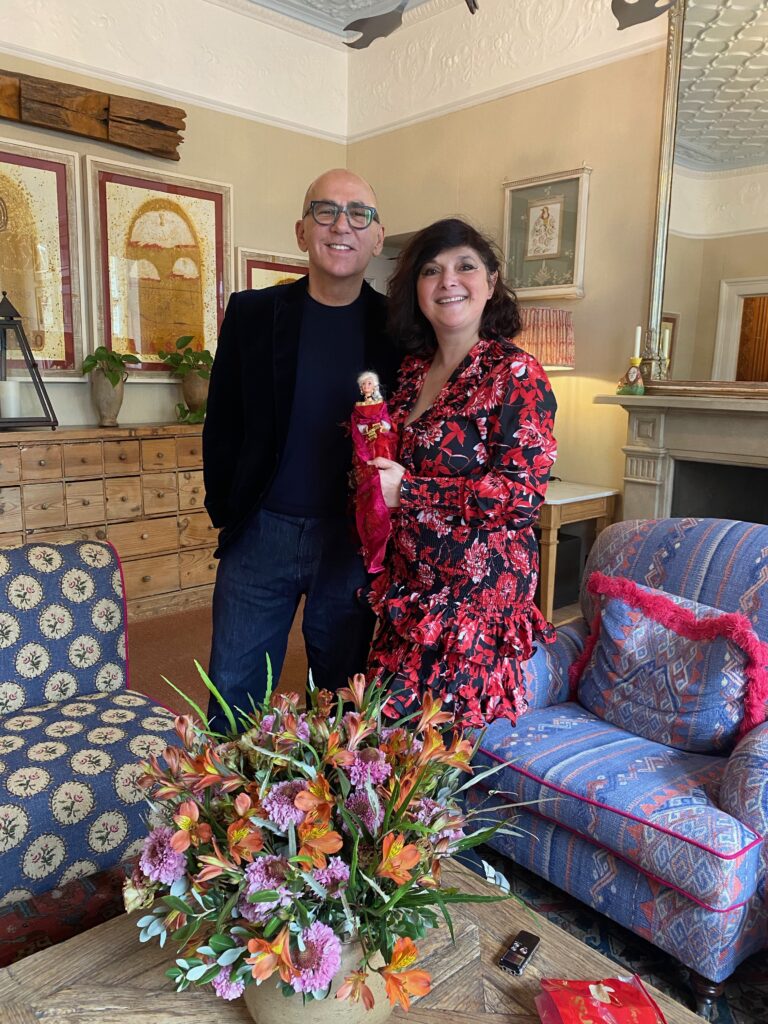
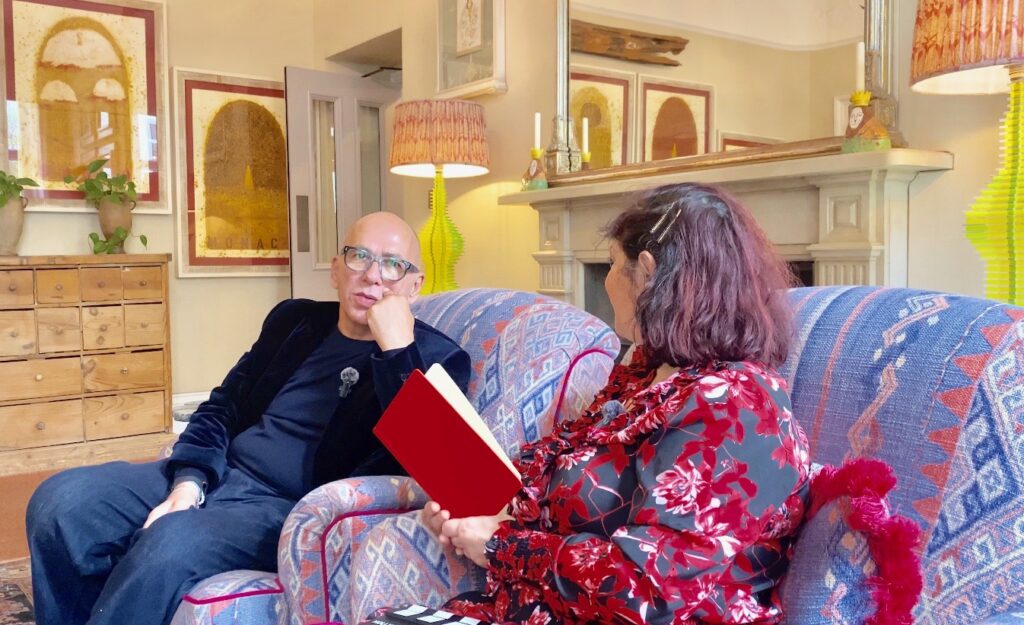
We meet in a boutique hotel in South Kensington. An elegant sitting room, old-world atmosphere, soft light. Ferzan is sitting next to me with that smile that feels as if it already knows you.
Before we begin, I offer him a Rossana sweet.
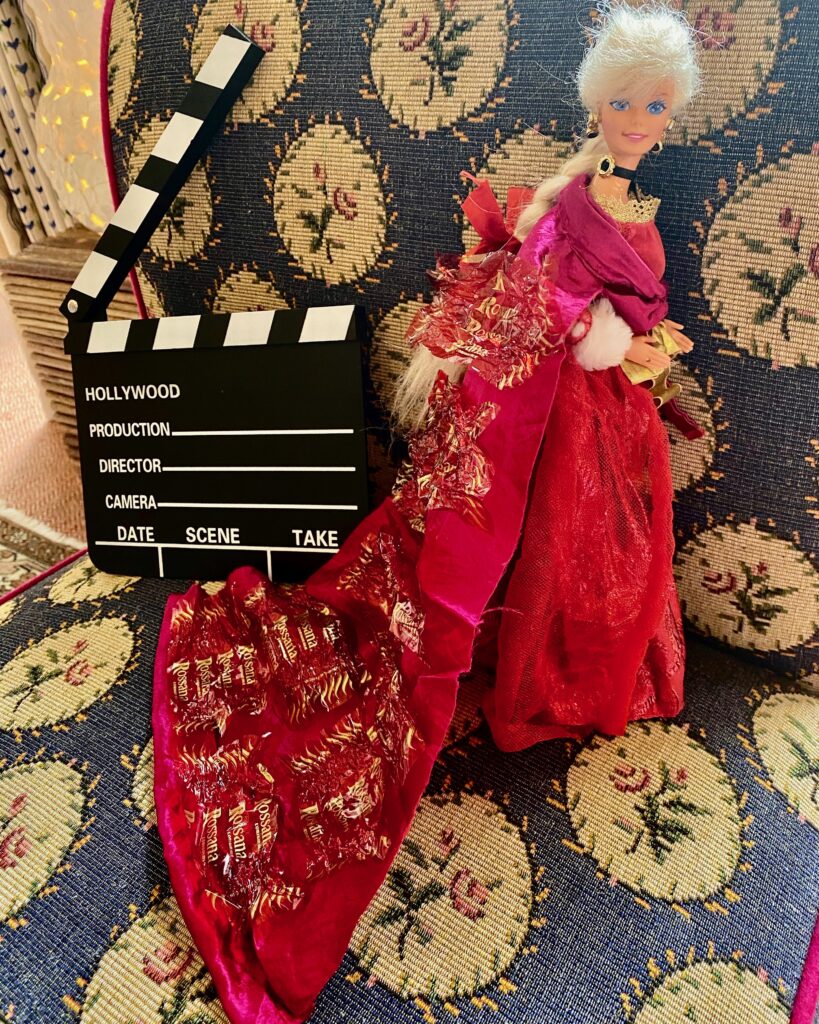
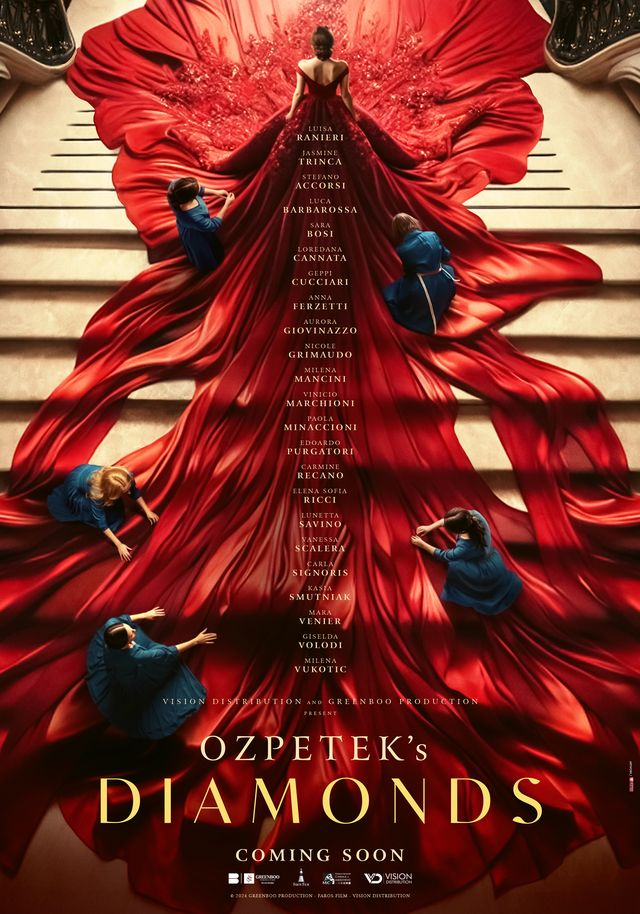
In the film, it has a special role: the test version of the leading dress is decorated with the iconic red and gold wrappers of these vintage sweets, first created in 1926 and beloved across Italy in the 1960s and 1970s. I found them by chance in a small shop in London.
He refuses.
So I say, teasing him slightly:
“Don’t worry, we are sweet enough already.”
He smiles.
A truly human expression. Gentle.
Then comes a second surprise. Using the same wrappers, I have made a tiny dress for a vintage Barbie from the 1970s – one of three hundred dolls in my collection, which became known after an interview I did with The Telegraph.
He looks at it, intrigued.
I have written my questions in a small red notebook, a little like Francesca Fagnani on Belve.
He says:
“We go to the same gym, you know?”
It is a perfect start.
We relax immediately. We switch to “tu”, because the great artists are often the simplest people. Just before we begin, he tells me he has been speaking to Mina.
My heart skips.
But let us take it step by step.
The Tirelli Atelier: scent, elegance and unforgettable women
I go straight into the heart of Diamanti, a film that breathes fabric, memory and femininity.
“So, you worked at the Tirelli Atelier.”
“Yes. From when I was an assistant director. I used to go to various ateliers, but Tirelli was the most important. I would accompany actors and directors, I spent a lot of time there. That period has stayed with me.”
As he speaks, it becomes clear that certain places never really leave you. They remain, like something worn close to the skin.
I ask him what that world felt like. Its sound. Its scent.
“What did that world smell like? What did it sound like?”
“There was a special atmosphere… Above all, good taste in everything. In the details, in the objects. A beautiful atmosphere. The greatest costume designers passed through, also from abroad. They would send assistants to Paris, London, even India to find period fabrics. For my second film, ‘Harem Suare’, the costume designer went to India to source the fabrics.”
Good taste in everything. In the details, in the objects.
It is a phrase that also defines his cinema.
Nothing in Ferzan Özpetek’s films feels accidental. Every object seems to carry a soul, every room holds a memory, every garment speaks about the person wearing it.
I ask him whether there was a real woman from those years who ended up almost intact inside Diamanti.
“No, all the characters are a mix of people I have known. For example, the costume designer played by Vanessa Scalera in Diamanti resembles two costume designers I knew there, both Oscar winners. They were quite unusual. One of them – a great one, I cannot name her – would arrive at four in the afternoon. Normally you finish at six-thirty, seven at most. She would say ‘just five minutes’ and then keep everyone there until midnight. She was very strong.”
He laughs as he recalls it. And you can hear the affection for those eccentric, intense, unforgettable personalities.
Then he adds something that feels like the key to that entire world:
“They were people who really cared about their work, about detail, about colour. They started from something real and then drifted into imagination.”
Perhaps that is also the definition of cinema itself.
Start from reality. Then drift into imagination.
And that is exactly what Diamanti does: it begins with the concrete material of women, labour, hands, wounds — and becomes visual poetry.
Real women, never caricatures
One of the rarest qualities of Ferzan Özpetek’s cinema is the way he portrays women. Not as symbols, not as decorative figures, but as complex, ironic, fragile and immensely powerful human beings.
His female protagonists are never caricatures. They feel real. They live.
I point this out to him.
“You make character-driven films rather than plot-driven ones. How do you manage to portray women in such an authentic way without falling into stereotypes?”
“I work very closely with actors. On my new film, when I go back on Tuesday, I’ve got a script reading. I always try to bring the character as close as possible to the actress. It’s the opposite approach, really, but it works very well.”
It’s a valuable answer.
Many directors impose. He listens. He shapes the character around the performer, not the other way round. Perhaps that is why his films feel so alive: because before being characters, they remain human beings.
Mara Venier, lasagne and domestic truth
I tell him how struck I was by the opening of Diamanti. That warm, familiar setting, with Mara Venier cooking, has something instantly authentic about it.
“I loved the opening of Diamanti, with Mara Venier cooking. Did she actually cook?”
“Yes, she’s brilliant, Mara. That day she fed everyone. But that’s just how she is: even if there are four or five of us, she cooks for twenty, just like in the film. Lasagne, fried food…”
He laughs.
And in that laughter, there is the joy of simple things: a table full of food, the sound of cutlery, abundance as an expression of love.
In Özpetek’s cinema, food is never just set dressing. It is emotional language.
Gricia, Ugo Tognazzi and the myth of simplicity
I admit something to him: his films always make people hungry.
“I’ve watched all your films, even The Turkish Bath. I love how there are always big tables of friends and wonderful dishes. It makes me hungry. What is your favourite Italian dish?”
“I cook all Italian dishes very well. On the 5th of September I’ll celebrate 50 years of living in Italy – and I’ve been cooking all my life. Pasta is my speciality.”
I completely agree.
“Same for me. Cooking pasta properly is essential.”
“Al dente, of course.”
No discussion there.
So I ask him about the one dish he could eat forever.
“Which dish could you eat endlessly?”
“Gricia. For me it’s gricia. I love its flavour. And then… many years ago Ugo Tognazzi taught me a trick: aglio (garlic), olio (olive oil) e peperoncino (chilli). You take stale bread, toast it into little pieces, and add it at the end. It becomes crunchy in the pasta.”
I mentally take note of everything.
Then I push a little further.
“What is the biggest myth about Italian cooking you would confirm or debunk?”
“I really like Tuscan food. It’s so simple: bread, garlic, tomato. The simplest things are the best. French cuisine is excellent too, but I always prefer simplicity.”
There it is again. The key word.
Simplicity.
In food, in emotion, in art. A simplicity that only appears effortless, but in fact requires taste, balance and experience.
I tell him I felt strangely at home in Turkey.
“So did I. I’ve been to Turkey a couple of times and I felt at home. Strange, isn’t it? I thought there must be a strong Roman foundation there.”
He smiles.
As if some cultural connections simply don’t need explaining.
The courage to go against the tide
There is a quality increasingly rare in Ferzan Özpetek’s cinema: time.
His films do not rush. They do not shout. They do not chase effect. They breathe. They linger on faces, silences, rooms, small gestures. They allow you to grow fond of characters as you would with real friends.
In an age of superheroes, algorithms and frantic editing, choosing emotional slowness feels almost like an act of rebellion.
I point this out.
“Your films have a human rhythm: slow, sensual, fluid. They give you time to grow attached to the characters as if they were friends. In a world of superheroes and fast cuts, what are the challenges for an artist like you who goes against the grain?”
“I believe you should always make the films you feel. I’ve always done what I personally like. Producers or distributors often told me: ‘Maybe you should do things differently.’ I never listened to anyone. I’ve always followed my instinct.”
It’s an answer that applies not only to cinema, but perhaps to life.
Following instinct when everyone suggests otherwise requires a quiet kind of strength.
I tell him so.
“You’re very brave.”
“You can’t really call it bravery. You simply can’t do otherwise. That’s just how I work. And I enjoy it… I’m almost starting to like it more and more.”
He smiles. And in that lightness, there is the freedom of someone who no longer needs to prove anything.
Mina, fifteen years of friendship and music without borders
In Ferzan Özpetek’s films, music never simply accompanies a scene: it moves through it. It illuminates it. It turns it into memory.
I mention Mina, who also features in Diamanti, where L’amore vero is heard.
“You’ve worked with Mina for a long time. How did your collaboration begin?”
“We’ve been in touch for more than fifteen years, exchanging things. It happened naturally. Even today, just before coming here, I spoke to her. I told her I was in London and sent her photos.”
I think of friendships like that: discreet, steady, never performed.
Half-jokingly, I ask if he would ever put her in a film.
“How wonderful would it be to have Mina in a film… Would you like that?”
“No, it wouldn’t be right.”
A brief answer. Firm. Elegant. Just mysterious enough.
Then I move to a recurring impression in his work: those sounds that feel like they come from elsewhere, from a shifting border between cultures.
“And then there’s that music with an Eastern feel that runs through your films. What does it represent for you?”
“I don’t choose music thinking East or West. I choose it because it attracts me, because I like it. It’s never a deliberate choice. Never. And even there: you must always do what you like, without thinking ‘if I use this, what will it create?’”
Once again, it comes back to the same point: taste, instinct, honesty of feeling.
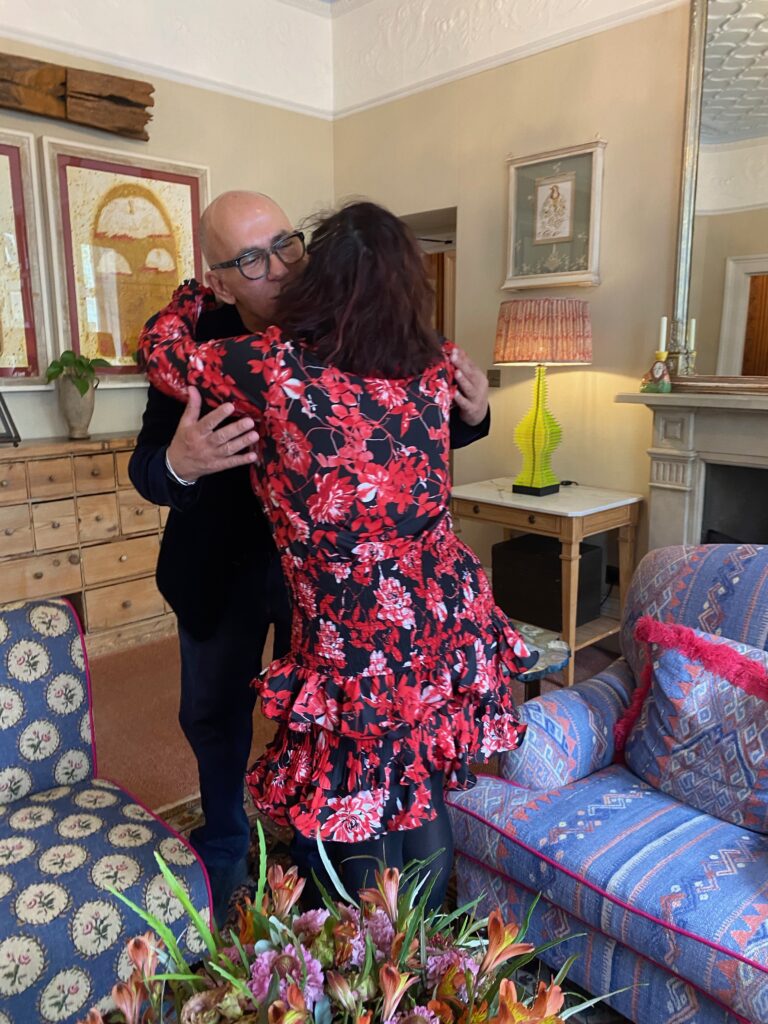
The final hug
The questions are over. I know he still has commitments, but I ask for a photo together.
We stand up. Natural light. The Rossana sweets still on the table. We take the picture. Then I hug him.
“Let me give you another hug. It’s been such a pleasure. Enjoy London and all these wonderful people.”
“Thank you, thank you very much.”
“Thank you. Beautiful film. Good luck. I hope to see you again with your next one.”
“Thank you so much. Bye.”
I leave the hotel smiling. And with the feeling that simplicity, instinct, and a good plate of gricia – three things Ferzan Özpetek deeply loves – might just also be a small recipe for a good life.
Diamanti is out in selected UK cinemas from today 17th April 2026.
Diamanti e caramelle Rossana: la mia intervista intima a Ferzan Özpetek, maestro di umanità
Una settimana prima di incontrarlo, ho scritto la mia recensione di Diamanti e gli ho conferito dieci stelline su dieci.
Per me è il film più bello degli ultimi dieci anni. Mi ha commossa profondamente. Così, d’impulso, gli ho scritto su Instagram. E lui, con un’umiltà che non ti aspetti da un Maestro, mi ha risposto. Con gratitudine. Con calore.
Da lì è nata anche una collaborazione sui social. Oggi circa sessantamila persone hanno visto, commentato, condiviso. Tutti in adorazione di Ferzan. Una fan ha persino proposto per lui il Nobel per la Pace, perché con le sue opere ispira rispetto, pace, amore universale.
E non soltanto attraverso il cinema.
Ogni giorno pubblica citazioni bellissime, piccole carezze per l’anima.
Pochi minuti prima dell’intervista arriva un’altra notizia: The Guardian assegna quattro stelle su cinque a Diamanti. Un risultato raro: il giornale britannico è severissimo. Io sorrido. La mia rivista, London Mums Magazine, è in inglese e spesso ci troviamo in sintonia con il loro giudizio. Ma questa volta io sono andata oltre: dieci stelline su dieci.
Il direttore del distributore Vision mi ha detto una frase perfetta:
«Tu hai la penna inglese, ma il cuore italiano».
Ed è esattamente così.
Per comprendere davvero i film di Ferzan Özpetek bisogna avere un’anima sensibile. I migliori attori e artisti italiani, prima o poi, passano dalle sue mani, dal suo sguardo, dalla sua grazia.
L’incontro a Londra: un salottino elegante, una Rossana e uno sguardo tenero
Ci incontriamo in un boutique hotel di South Kensington. Un salottino elegante, atmosfera d’altri tempi, luci morbide. Ferzan è seduto accanto a me con quel sorriso che sembra già conoscerti.
Prima di iniziare gli offro una caramella Rossana.
Nel film ha un ruolo speciale: la versione di prova dell’abito protagonista viene decorata con le iconiche cartine rosse e oro di queste caramelle vintage, nate nel 1926 e amatissime nell’Italia degli anni Sessanta e Settanta. Le ho trovate per caso in un piccolo negozio di Londra.
Lui non la prende.
Allora gli dico, ammiccando:
«Tranquillo, siamo già abbastanza dolci noi».
Sorride.
Uno sguardo davvero umano. Tenero.
Poi arriva la seconda sorpresa. Con le stesse cartine ho confezionato un vestitino per una Barbie vintage degli anni Settanta — una delle trecento bambole della mia collezione, diventata famosa dopo una mia intervista per The Telegraph.
Lui guarda. Si incuriosisce.
Ho scritto le domande in un libricino rosso, un po’ come Francesca Fagnani a Belve.
Mi dice:
«Sai che andiamo nella stessa palestra?»
È un ottimo inizio.
Ci rilassiamo subito. Ci diamo del tu, perché i grandi artisti sono quasi sempre i più semplici. Poco prima mi confida di aver appena parlato con Mina.
Il cuore mi fa un salto.
Ma andiamo con ordine.
La Sartoria Tirelli: profumo, eleganza e donne irripetibili
Entro subito nel cuore di Diamanti, film che profuma di stoffe, memoria e femminilità.
«Allora, tu hai lavorato nella Sartoria Tirelli.»
«Sì. Da quando facevo l’aiuto regista. Andavo in varie sartorie, ma la Tirelli era la più importante. Accompagnavo attori e registi, passavo tanto tempo lì. Poi quel periodo mi è rimasto dentro.»
Mentre parla, si capisce che certi luoghi non si lasciano mai davvero. Restano addosso come un tessuto prezioso.
Gli chiedo che atmosfera avesse quel mondo. Che suono. Che odore.
«Che profumo, che rumore aveva quel mondo?»
«Guarda, c’era un’atmosfera speciale… Intanto il buon gusto in tutto. Nei dettagli, nelle cose. Un’atmosfera bellissima. Passavano i più grandi costumisti, anche dall’estero. Loro erano capaci di mandare assistenti a Parigi, a Londra, persino in India a cercare stoffe d’epoca. Per il mio secondo film, “Harem Suare”, la costumista andò in India a prendere le stoffe.»
Il buon gusto in tutto. Nei dettagli, nelle cose. È una frase che racconta molto anche del suo cinema.
Nulla nei film di Ferzan Özpetek è casuale. Ogni oggetto sembra avere un’anima, ogni stanza custodisce una storia, ogni abito dice qualcosa di chi lo indossa.
Gli domando allora se esista una donna reale, tra quelle conosciute in quegli anni, finita quasi intatta dentro Diamanti.
«C’era una donna, in particolare, in quel mondo che hai messo nel film così com’era?»
«No, tutti i personaggi sono un misto di persone che ho conosciuto. Per esempio, la costumista interpretata da Vanessa Scalera in Diamanti assomiglia a due costumiste che conoscevo lì, entrambe Premio Oscar. Erano abbastanza strane. Una di loro – una grandissima, non posso fare il nome – arrivava alle quattro del pomeriggio. Di solito si finisce alle sei e mezza, sette massimo. Lei diceva “solo cinque minuti” e poi teneva tutti fino a mezzanotte. Era molto forte.»
Ride mentre lo racconta. E si sente l’affetto per quei caratteri eccentrici, intensi, irripetibili.
Poi aggiunge una riflessione che sembra la chiave di tutto quel mondo:
«Erano persone che ci tenevano molto al loro lavoro, al dettaglio, al colore. Partivano da una cosa reale e poi scivolavano sulla fantasia.»
È forse la definizione più bella anche del cinema.
Partire dal reale. E poi scivolare sulla fantasia.
Ed è esattamente ciò che accade in Diamanti: un film che nasce dalla materia concreta delle donne, del lavoro, delle mani, delle ferite, e diventa poesia visiva.
Donne vere, mai caricature
Una delle qualità più rare del cinema di Ferzan Özpetek è il modo in cui racconta le donne. Non come simboli, non come figure decorative, ma come esseri umani complessi, ironici, fragili, potentissimi.
Le sue protagoniste non sono mai caricature. Vivono davvero.
Glielo faccio notare.
«I tuoi film sono cinema di personaggi, non di trama. Come fai a raccontare donne così vere senza cadere nello stereotipo?»
«Collaboro molto con gli attori. Nel nuovo film, quando rientro martedì, ho una lettura del copione. Cerco sempre di avvicinare il più possibile il personaggio all’attrice. È l’opposto, ma rende la cosa molto buona.»
È una risposta preziosa.
Molti registi impongono. Lui ascolta. Modella il personaggio sulla persona, e non il contrario. Forse è anche per questo che nei suoi film tutti sembrano così autentici: perché prima di essere personaggi restano esseri umani.
Mara Venier, lasagne e verità domestica
Gli dico quanto mi abbia colpito l’inizio di Diamanti. Quel setting caldo, familiare, con Mara Venier che cucina, ha qualcosa di immediatamente vero.
«Mi è piaciuto tantissimo il setting iniziale di “Diamanti”, con Mara Venier che cucina. Ha cucinato veramente?»
«Sì, è bravissima, Mara. Quel giorno ha fatto mangiare tutti. Ma lei è così: anche se siamo in quattro o cinque, lei cucina per venti, come nel film. Tra lasagne e fritture…»
Ride.
E in quella risata c’è tutto il piacere delle cose semplici: una tavola piena, il rumore delle stoviglie, l’abbondanza come gesto d’amore.
Nel cinema di Özpetek il cibo non è mai scenografia. È linguaggio affettivo.
La gricia, Ugo Tognazzi e il mito della semplicità
Gli confesso una cosa: nei suoi film si mangia sempre benissimo. Guardandoli viene fame.
«Ho visto tutti i tuoi film, anche “Il bagno turco”. Mi piace che in ogni film ci siano tavolate di amici con piatti meravigliosi. Mi viene fame. Qual è il tuo piatto italiano preferito?»
«Io cucino molto bene tutti i piatti italiani. Il 5 settembre festeggio 50 di vita in Italia – e ho cucinato per tutta la vita. I primi piatti sono il mio forte.»
Mi trova perfettamente d’accordo.
«Anche per me. La cottura della pasta è importantissima.»
«Al dente, chiaro.»
Su questo non si transige.
Gli chiedo allora il piatto del cuore, quello che potrebbe mangiare sempre.
«Qual è quel piatto che potresti mangiare sempre?»
«La gricia. Per me è la gricia. Ha un sapore che mi piace tantissimo. E poi… tanti anni fa Ugo Tognazzi mi ha insegnato un segreto: l’aglio, olio e peperoncino. Prendi del pane raffermo, lo fai abbrustolire a pezzettini e lo mischi all’ultimo. Diventa croccante nella pasta.»
Segno mentalmente tutto.
Poi provo a stuzzicarlo ancora.
«Buonissimo. E già che ci siamo, qual è il più grande mito della cucina italiana che vorresti sfatare o confermare?»
«A me piace molto la cucina toscana. È semplicissima: pane, aglio, pomodoro. Le cose semplici sono le più buone. La cucina francese è anche ottima, ma io preferisco sempre la semplicità.»
Eccola di nuovo, la parola chiave.
Semplicità.
Nel cibo, nei sentimenti, nell’arte. Una semplicità solo apparente, che in realtà richiede gusto, misura, esperienza.
Gli racconto che in Turchia mi sono sentita stranamente a casa.
«Anch’io. Io sono stata in Turchia un paio di volte e mi sono sentita a casa. Strano, no? Ho pensato: c’è un forte fondamento romanico lì.»
Sorride.
Come se certi legami culturali non avessero bisogno di spiegazioni.
Il coraggio di andare controcorrente
C’è una qualità sempre più rara nel cinema di Ferzan Özpetek: il tempo.
I suoi film non corrono. Non urlano. Non inseguono l’effetto facile. Respirano. Si soffermano sui volti, sui silenzi, sulle stanze, sui gesti minimi. Ti permettono di affezionarti ai personaggi come accade con gli amici veri.
In un’epoca dominata da supereroi, algoritmi e montaggi frenetici, scegliere la lentezza emotiva è quasi un atto di ribellione.
Glielo faccio notare.
«I tuoi film hanno un ritmo umano, lento, sensuale, fluido. Danno il tempo di affezionarsi ai personaggi come se fossero amici. In un mondo di supereroi e montaggi frenetici, quali sono le sfide per un artista come te che va controcorrente?»
«Io sono del parere che uno debba fare sempre i film che sente. Ho sempre fatto le cose che piacciono a me. Tante volte il produttore o la distribuzione mi dicevano: “Guarda che forse bisognerebbe fare diversamente”. Non ho mai dato retta a nessuno. Ho sempre seguito il mio istinto.»
È una risposta che vale per il cinema, ma forse anche per la vita.
Seguire l’istinto quando tutti suggeriscono altro richiede una forma silenziosa di forza.
Glielo dico.
«Sei molto coraggioso.»
«Non si può chiamare coraggio. Semplicemente non puoi fare altrimenti. E faccio così. Mi piace, quasi ci sto prendendo gusto.»
Sorride. E in quella leggerezza c’è la libertà di chi non deve dimostrare nulla.
Mina, quindici anni di amicizia e la musica che non cerca l’Oriente
Con Ferzan Özpetek la musica non accompagna mai soltanto una scena: la attraversa. La illumina. La rende memoria.
Gli parlo di Mina, presenza importante anche in Diamanti, dove risuona L’amore vero.
«Con Mina collabori da tempo. In “Diamanti” c’è “L’amore vero”. Com’è nato il vostro sodalizio?»
«Sono più di quindici anni che ci sentiamo, ci scambiamo le cose. È stato naturale. Oggi, prima di scendere, l’ho sentita. Le ho detto che ero a Londra, le ho mandato le foto.»
Penso che esistano amicizie così: discrete, solide, senza bisogno di esibirsi.
Gli chiedo, quasi per gioco, se la vorrebbe mai in un film.
«Che bello sarebbe avere Mina in un film… Tu la vorresti?»
«No, non sarebbe giusto.»
Risposta secca. Elegante. Misteriosa quanto basta.
Poi arrivo a una suggestione che accompagna molti dei suoi lavori: quelle sonorità che sembrano arrivare da altrove, da un confine mobile tra culture.
«E poi c’è quella musica che profuma d’Oriente, che aleggia in tutti i tuoi film. Cosa rappresenta per te?»
«Le musiche non le metto pensando da Oriente o Occidente. Le metto perché mi attirano, perché mi piacciono. Non è una scelta voluta. Mai. Anche in questo: devi fare sempre le cose che piacciono a te, senza pensare “se metto questo, cosa creerò?”.»
Ancora una volta torna lì: al gusto, all’istinto, alla sincerità del sentire.
L’abbraccio finale
Le domande sono finite. So che ha ancora molti impegni, ma gli chiedo una foto insieme.
Ci alziamo. Luce naturale. Le caramelle Rossana ancora sul tavolo.
Scattiamo.
Poi lo abbraccio.
«Ti do un abbraccio di nuovo. Mi ha fatto tanto piacere. Goditi Londra e queste belle persone.»
«Grazie, grazie mille.»
«Grazie a te. Bellissimo film. In bocca al lupo. Spero di rivederti con il nuovo film.»
«Grazie mille. Ciao.»
Esco dall’hotel con il sorriso.
E con la sensazione che semplicità, istinto e una buona gricia – tre cose che Ferzan Özpetek ama profondamente – siano forse anche una piccola ricetta per vivere felici.
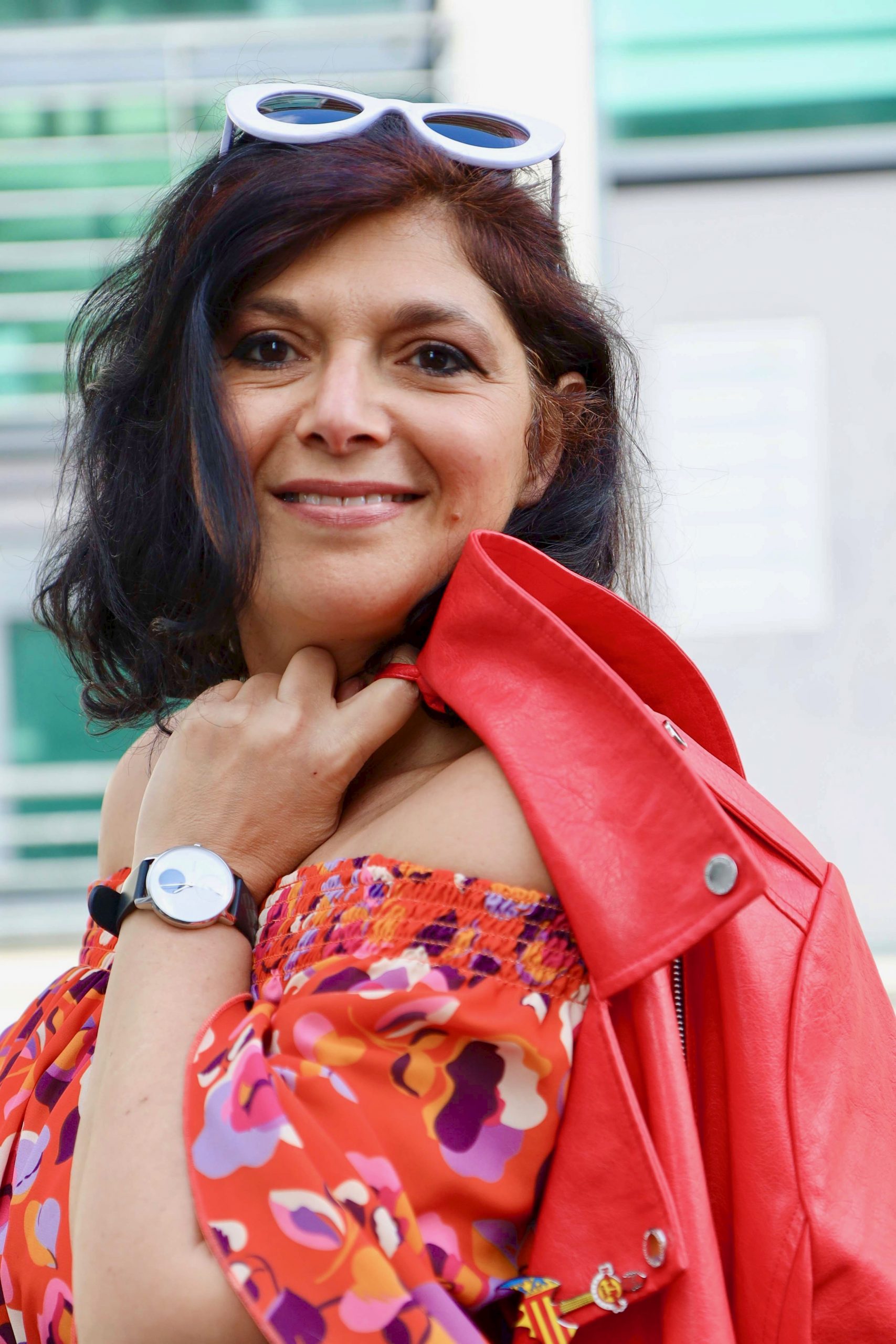
Monica Costa founded London Mums in September 2006 after her son Diego’s birth together with a group of mothers who felt the need of meeting up regularly to share the challenges and joys of motherhood in metropolitan and multicultural London. London Mums is the FREE and independent peer support group for mums and mumpreneurs based in London https://www.londonmumsmagazine.com and you can connect on Twitter @londonmums
