

Family photographs rarely show what happened just before the shutter was pressed. Someone had to find the phone, unlock it, open the camera and ask everybody to look in the same direction. By then, the toddler may have wandered away, the joke is over, or the parent taking the picture is missing from the moment altogether.
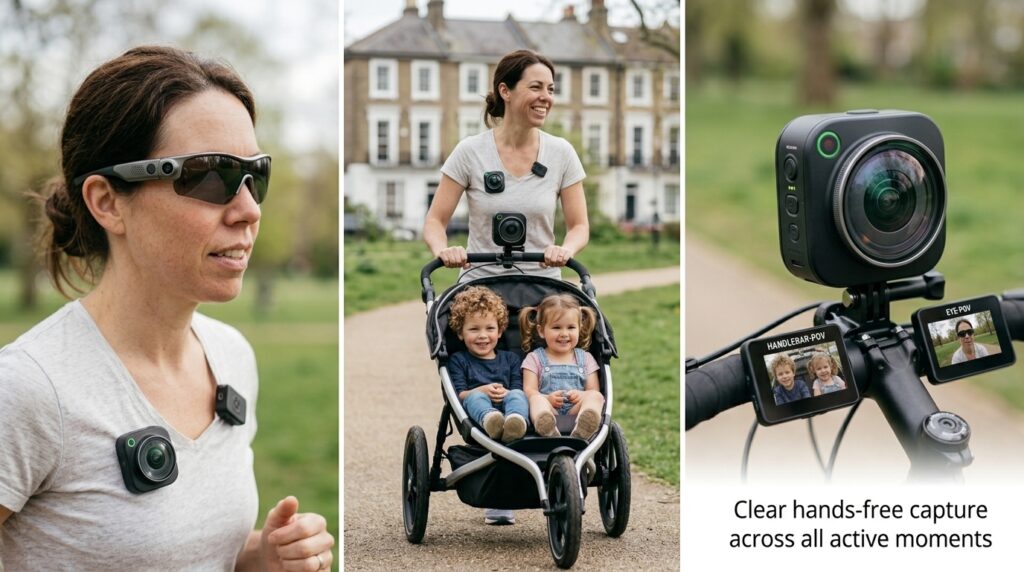
Hands-free technology cannot make family life less chaotic, but it can make some memories easier to save. Wearable cameras and voice-controlled devices allow parents to record short pieces of everyday life while continuing to hold a hand, push a buggy, carry a bag or join the activity. Used thoughtfully, they can complement traditional family photos rather than turning every outing into a recording session.
Why the Small Moments Matter
The photographs families treasure are not always the formal ones. A child concentrating on tying their shoes, a grandparent telling the same funny story, or siblings laughing on the walk home can become more meaningful with time. These moments are difficult to plan because they happen in the middle of ordinary routines.
A phone is excellent when there is time to frame a photograph. It is less convenient when a parent is already involved in what is happening. Hands-free capture can preserve the parent’s own view of an experience, including the sound and movement that a still image may miss.
That perspective is especially appealing during firsts: a bicycle ride, a school performance, a swimming lesson or a family recipe made together. The recording does not need to be long. A few seconds can be enough to bring back the feeling of the day.
Being in the Memory, Not Behind the Camera
Parents often become the unofficial family photographer. They document birthdays, holidays and days out, then discover that they appear in very few of the pictures. A wearable device can capture the scene from their viewpoint while allowing them to remain part of the conversation or activity.
This can be useful when both hands are occupied. Think of helping a child decorate a cake, building a sandcastle, opening presents or walking through a busy attraction. The parent does not have to choose between participating and holding a phone at arm’s length.
It is still worth taking conventional photographs. A hands-free clip records movement and atmosphere, while a phone or camera usually produces the carefully composed picture that belongs in a frame. The two approaches serve different purposes and work well together.
Useful Situations for Busy Families
Family travel is an obvious use case because parents are often carrying tickets, luggage, snacks and several layers of clothing nobody wants to wear. Short voice-controlled recordings can document the first sight of the sea, a train journey or a child’s reaction to a new place without adding another object to hold.
At home, hands-free capture can work well for crafts, cooking and games. A parent can record a child explaining their creation in their own words, which may be more memorable than a photograph of the finished result. Outdoor activities are another possibility, provided the device is appropriate for the conditions and the parent remains focused on safety.
Some parents comparing wearable options may look at this version of Meta glasses as an example of how familiar eyewear can include camera, audio and voice features. Whatever model a family considers, comfort, battery life, controls and the way recordings are transferred should matter more than novelty.
Keeping Recording Simple
The easiest way to create too much footage is to record without a purpose. Long, continuous videos are difficult to watch and even harder to organise. Short clips tend to be more useful because they capture a clear moment and do not create hours of editing.
Parents can choose a few types of memories they want to save. These might include funny conversations, family traditions, first attempts and short views from days out. A simple intention makes it easier to recognise when recording adds something and when it is better to leave the device off.
Voice notes can also help. After a special day, a parent might record the child’s favourite part or a detail that photographs do not explain. These small pieces of context become valuable later, particularly when several years of family media begin to look similar.
Privacy Is Part of Family Photography
Wearable cameras are less obvious than a phone held up for a picture, so families need clear boundaries. Other parents may not want their children recorded, and some schools, clubs, performances or attractions have rules about photography. Asking before filming is the safest habit.
Children should also have a say when they are old enough to express a preference. A funny moment at home may not be something they want shared with relatives or posted online. Capturing a memory and publishing it are separate decisions. Keeping a clip private can still make it valuable to the family.
Before sharing, check the background for school names, house numbers, travel documents, computer screens or other personal details. Parents should also review account security and understand whether recordings are stored on the device, on a phone or online. Convenience should not replace the privacy checks already used for ordinary family photos.
Organising the Memories before They Disappear
Capturing a moment is only the first step. Family photos and videos often remain in a camera roll until storage runs out, then become difficult to find. A simple monthly routine can prevent that problem.
Delete accidental recordings, keep the best version and add clips to folders for the year, child or event. Back up the files in at least one additional place and make sure another trusted adult knows how to access important family archives. Short captions or dates can provide useful context without requiring a complicated system.
Families may also enjoy turning digital clips into something more deliberate: a short annual film, a private album for grandparents or a small collection from a holiday. Editing everything is unnecessary. Selecting a few moments often tells the story better than saving every minute.
Remembering to Put the Camera Away
The best feature of hands-free technology can also become its biggest drawback. Because recording requires less effort, it is easy to capture too much or to think about the future video instead of the present experience.
Parents can protect their attention by setting simple limits. Record one short clip, then return to the activity. Keep devices off during private conversations, difficult moments and any situation in which a child needs full attention. If recording affects safety, comfort or connection, the memory is better left uncaptured.
Hands-free devices offer another way to preserve family life, particularly the lively moments that disappear while someone reaches for a phone. Their real value is not in documenting everything. It is in helping parents save a few honest pieces of family life while still remaining fully part of it.

Monica Costa founded London Mums in September 2006 after her son Diego’s birth together with a group of mothers who felt the need of meeting up regularly to share the challenges and joys of motherhood in metropolitan and multicultural London. London Mums is the FREE and independent peer support group for mums and mumpreneurs based in London https://www.londonmumsmagazine.com and you can connect on Twitter @londonmums
