

After my last piece on Rock London where I dragged you through the capital’s musical landmarks and probably made you crave a leather jacket, I thought I’d swap the guitar picks for library cards. Now it’s time to show you literary London, London for literature lovers, my very own guide of locations made famous in novels.
So grab your Oyster card, a paperback, and a sense of dramatic irony. Here are the literary routes worth walking, no book club membership required.
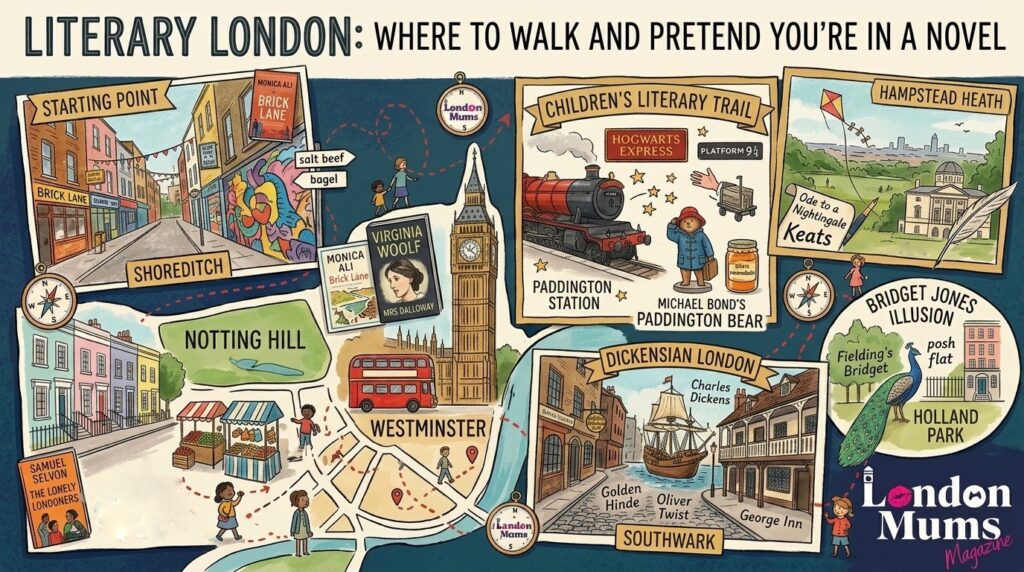
Route 1: East London – Brick Lane, London Fields, and the Spirit of Immigrant London
Start your journey in Shoreditch, where Monica Ali’s Brick Lane (2003) unfolds. The novel follows Nazneen, a Bangladeshi woman navigating arranged marriage, motherhood, and identity in a rapidly changing London.
The real Brick Lane is still a sensory assault in the best possible way: curry houses, vintage shops, bagel bakeries, and street art that changes with the seasons. Grab a salt beef beigel from the famous Beigel Bake (open 24 hours), then wander slowly, letting the layers of history settle around you.
A short walk away sits London Fields, immortalised by Martin Amis in London Fields (1989). The park itself is lovely, all lido swims, picnics, and joggers, but Amis’s novel is a dark, cynical murder mystery that makes the area feel deliciously sinister. Read a chapter on a park bench and watch the world go by, wondering who’s secretly plotting.
Peter Ackroyd’s The Clerkenwell Tales (2003) takes you further west, into the medieval heart of London. Clerkenwell’s narrow streets, old churches, and hidden courtyards feel unchanged from the world Ackroyd conjures, a place of relics, secrets, and shadowy dealings. Pop into St John’s Gate or wander around Smithfield Market early in the morning for the full effect.
Family stop: The Museum of London Docklands is nearby and offers a fascinating, child-friendly look at the real history behind London’s immigrant communities, a perfect companion to Brick Lane.
Route 2: West London – Notting Hill, Holland Park, and the Bridget Jones Illusion
Notting Hill’s literary pedigree stretches far beyond Hugh Grant’s floppy fringe. Samuel Selvon’s The Lonely Londoners (1956) is the essential read here, a novel that captures the West Indian immigrant experience in a Notting Hill of cheap lodgings, casual racism, and hard-won community.

Today’s Notting Hill is all pastel houses, Portobello Road antiques, and eye-watering property prices, but the novel’s spirit lingers if you know where to look. Walk down Portobello Road on a busy market day and listen for the echoes.

Meanwhile, Helen Fielding’s Bridget Jones, who began life in a newspaper column before becoming a book and film phenomenon, actually lived in Holland Park in the original columns, not Borough as the films suggest. Holland Park is a different kind of literary landscape: leafy, refined, and quietly glamorous. Take a stroll through the Kyoto Garden, spot a peacock or two, and try to picture Bridget in a very posh flat, still worrying about her love life. The best part? The park is free.
Family stop: The Diana Memorial Playground in Kensington Gardens is a short walk away, a Peter Pan-themed wonderland with a pirate ship, sensory play areas, and enough magic to tire out even the most energetic small reader.
Route 3: Central London – Virginia Woolf, Graham Greene, and the Weight of History
Virginia Woolf’s Mrs Dalloway (1925) is the definitive London novel. It follows Clarissa Dalloway as she walks through Westminster and Bond Street preparing for a party, while Septimus Smith, a shell-shocked war veteran, spirals in the same streets. Woolf’s London is elegant, anxious, and alive and you can still trace Clarissa’s footsteps today.
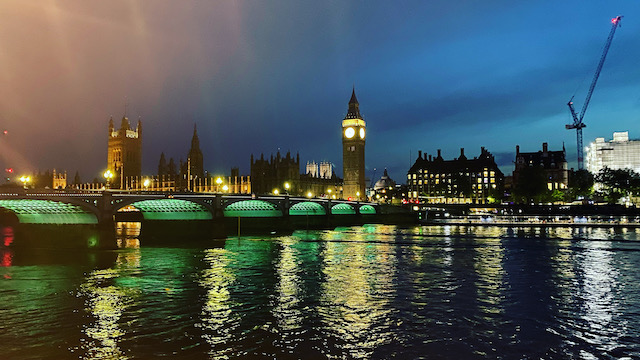
Start at Westminster Bridge, gaze at the Houses of Parliament, then walk up through St James’s Park towards Bond Street. Stop at a florist if the mood takes you (Clarissa would approve). The entire route is free, though the existential weight of Woolf’s prose may slow you down.
Graham Greene’s The End of the Affair (1951) takes you south of the river to Clapham. The novel is all obsession, faith, and rain-soaked London streets. Clapham Common remains a beautiful, melancholy place for a brood. Bring coffee. Avoid falling in love with anyone inappropriate.
Ian McEwan’s Atonement (2001) gives us Balham and the famous fountain scene, though most of the novel’s wartime London sequences take place in hospitals and streets further north. Still, Balham’s leafy residential charm is worth a wander, especially if you’re already on the Northern Line.
Family stop: The Southbank Centre is a short walk from Westminster and regularly hosts free exhibitions, family workshops, and performances. Even without an event on, the riverside walk is pure London magic.
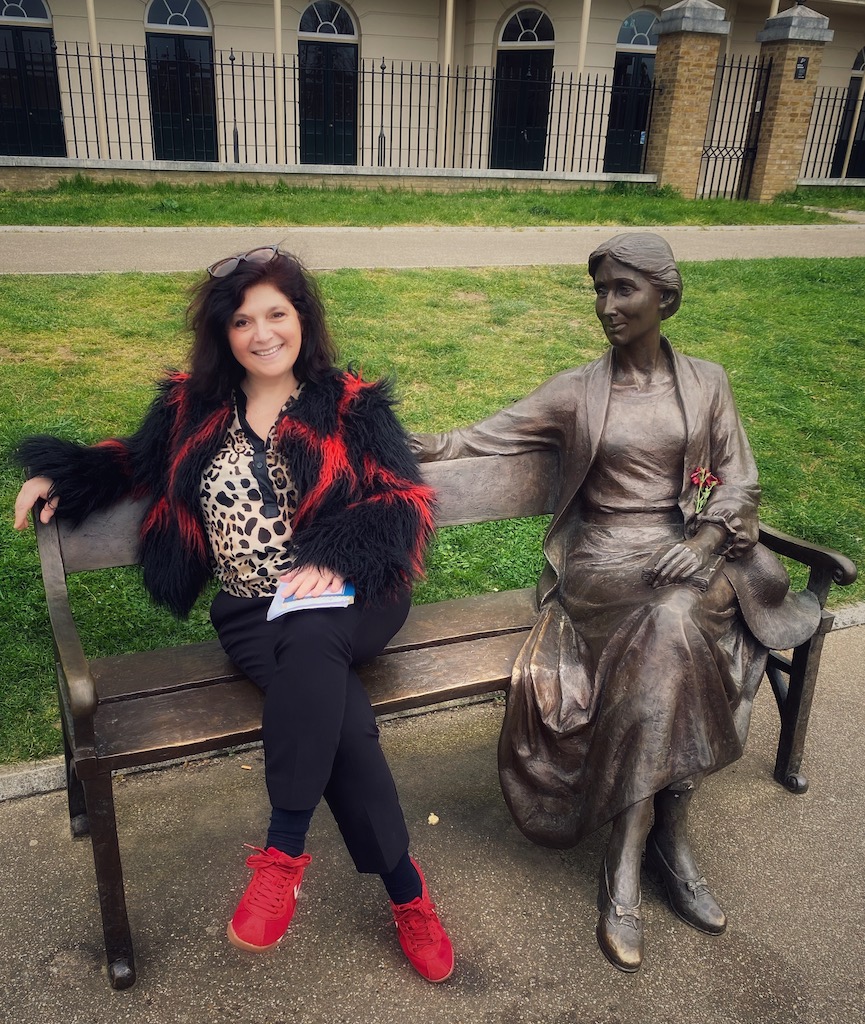
Route 4: The Children’s Literary Trail – Paddington, Kings Cross, and a Bear Called Marmalade
For little ones, London’s stations are practically theme parks.
Paddington Station gave us Paddington Bear, the marmalade-loving Peruvian immigrant who has charmed generations with his politeness, his duffel coat, and his unshakeable decency. There’s a bronze statue of the bear himself on Platform 1, a dedicated Paddington shop, and more photo opportunities than you can shake a marmalade sandwich at. The books (by Michael Bond, who found inspiration after buying a lone teddy bear on Christmas Eve) are still the perfect introduction to London for young readers.
Kings Cross Station is home to Platform 9¾, the portal to Hogwarts. Yes, it’s touristy. Yes, there’s a queue. But watching your child pose with the luggage trolley, half-disappearing through the wall, is pure magic. Just don’t try to actually run through the barrier. I’ve seen people try. It doesn’t end well.
Bonus stop: The British Library, a short walk from Kings Cross, houses everything from Shakespeare’s First Folio to handwritten Beatles lyrics. It’s free, it’s quiet, and it’s the closest thing London has to a literary cathedral.
Route 5: The Dark Academia Detour – Hampstead, Highgate, and the Gothic Imagination
For older teens and grown-ups who like their literature with a side of fog and foreboding, head north.
Hampstead has long been a haven for writers, Keats, Orwell, and countless others lived and worked here. Visit Keats House in Hampstead Heath, where the poet wrote “Ode to a Nightingale” in the garden. The house is modest, beautiful, and deeply moving. The Heath itself is wild, windswept, and perfect for a brooding walk.
Highgate Cemetery is nearby, a Victorian Gothic wonderland of overgrown graves, winding paths, and more atmosphere than any novel could invent. It’s the final resting place of George Eliot, Douglas Adams, and (perhaps most fittingly) Karl Marx. Book a tour if you can; the stories are extraordinary.
Family stop: Hampstead Heath’s Parliament Hill offers one of the best free views of London. Fly a kite, roll down the hill, and let the kids run wild. Then reward yourself with a hot chocolate in Hampstead Village.
Route 6: The Dickensian Wander, Southwark, Borough, and the Ghost of Victorian London
No literary tour of London is complete without Charles Dickens, the man who turned the city itself into a character.
Head to Borough Market, which appears in several of Dickens’s novels and still thrums with life, noise, and the smell of roasting chestnuts in winter. Then wander towards the Thames and cross London Bridge, where Oliver Twist famously first arrived in London. The riverside paths around Southwark Cathedral feel unchanged from the world of Little Dorrit and Bleak House, all cobbles, church bells, and the constant presence of the river.
The George Inn on Borough High Street is London’s last surviving galleried coaching inn, dating back to the 17th century. Dickens drank here, and it shows. Order a pint of something local and soak up the history.
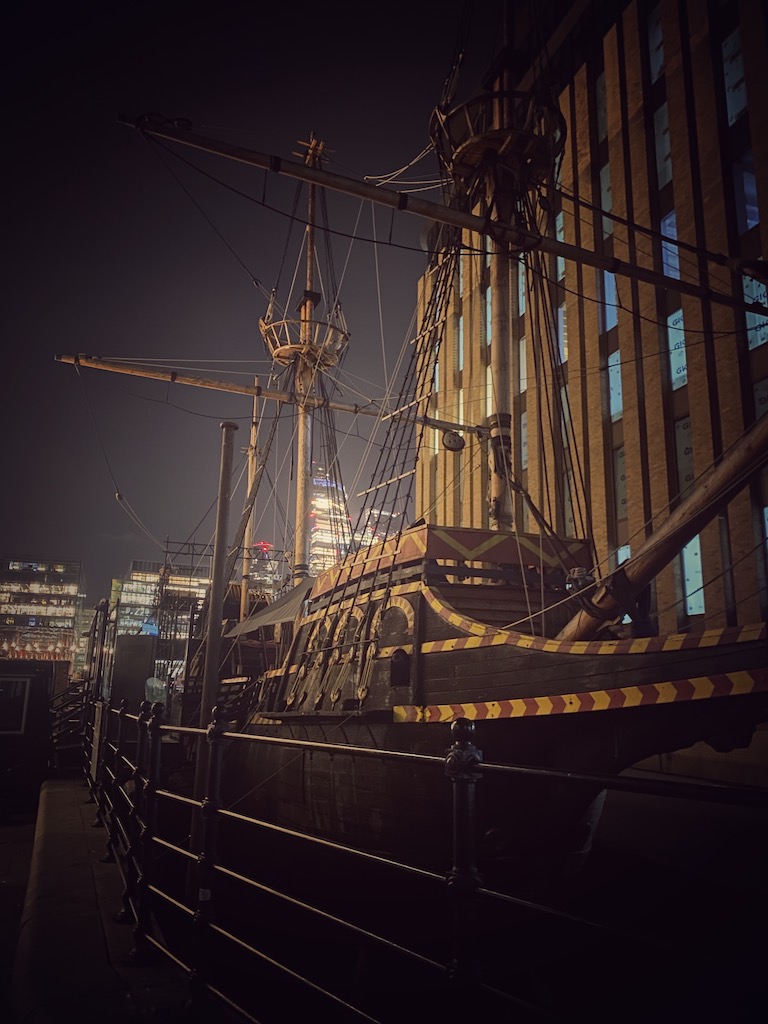
Family stop: The Golden Hinde, a full-size reconstruction of Sir Francis Drake’s ship, is moored nearby and offers hands-on family tours that make history feel properly adventurous.
The Free Literary Tour: Because the Best Stories Don’t Cost a Thing
You don’t need a property portfolio to live the literary London dream. You need a library card, a pair of decent shoes, and a willingness to stand in the rain reading passages aloud while your children beg you to stop.
Wander along the Thames with Mrs Dalloway. Eat a bagel on Brick Lane with Brick Lane in your bag. Pose at Platform 9¾ with a grin that says “I still believe.” London is a city of a thousand stories, and the best part is that most of them are free.
The houses might cost millions. The magic is open to everyone.
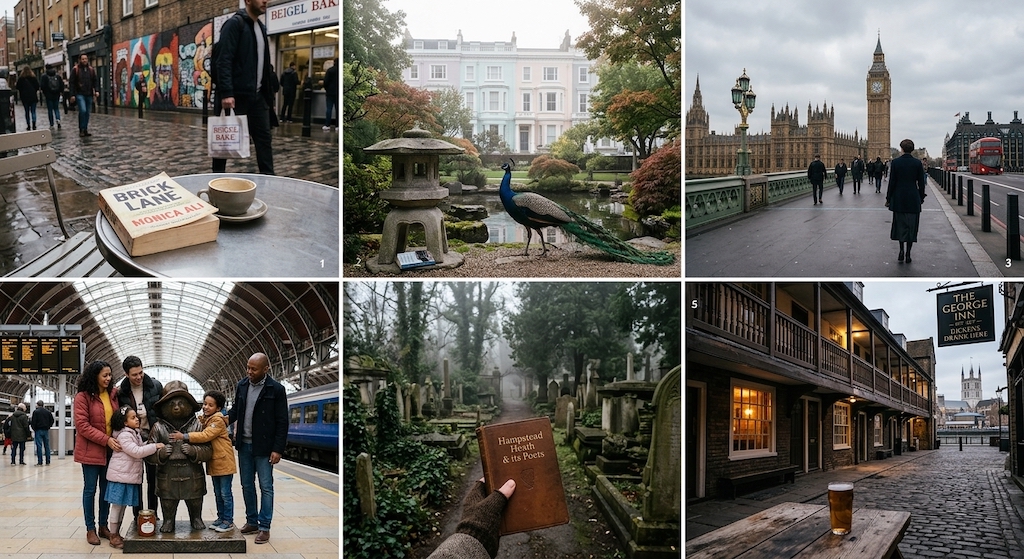
Quick Literary London checklist for families
Paddington Station – Bronze bear statue, marmalade shop, pure joy
Kings Cross Platform 9¾ – Harry Potter photo op (queue early or embrace the wait)
Brick Lane, Shoreditch – Curry, vintage shops, and a copy of Monica Ali’s novel
Borough Market & The George Inn – Dickensian vibes and excellent street food
Holland Park & Kyoto Garden – Posh stroll, peacocks, and “spot Bridget’s flat”
Keats House & Hampstead Heath – Poetry, park life, and Parliament Hill views
Highgate Cemetery – Gothic atmosphere and literary ghosts
Westminster Bridge & St James’s Park – Channel your inner Clarissa Dalloway
The British Library – Free, magnificent, and full of treasures.
Happy reading, happy wandering, and remember: the best stories are the ones you walk through yourself. Even if you can’t afford to live in them.

Monica Costa founded London Mums in September 2006 after her son Diego’s birth together with a group of mothers who felt the need of meeting up regularly to share the challenges and joys of motherhood in metropolitan and multicultural London. London Mums is the FREE and independent peer support group for mums and mumpreneurs based in London https://www.londonmumsmagazine.com and you can connect on Twitter @londonmums
