

You don’t get to sit down with the world’s most celebrated pastry chef every day. Iginio Massari – undisputed master, crowned best pâtissier in the world in 2017, and again last year in Paris – says with ironic modesty: «We can say that’s how it is.» But behind the legend lurks a man who, at four years old, fell into a bowl of cream – and never really got out. A proper Obelix, but of the pastry world: instead of strength, he came away with sweetness.
This article is available in Italian at the bottom of this page. – L’articolo è disponibile in italiano in fondo a questa pagina.
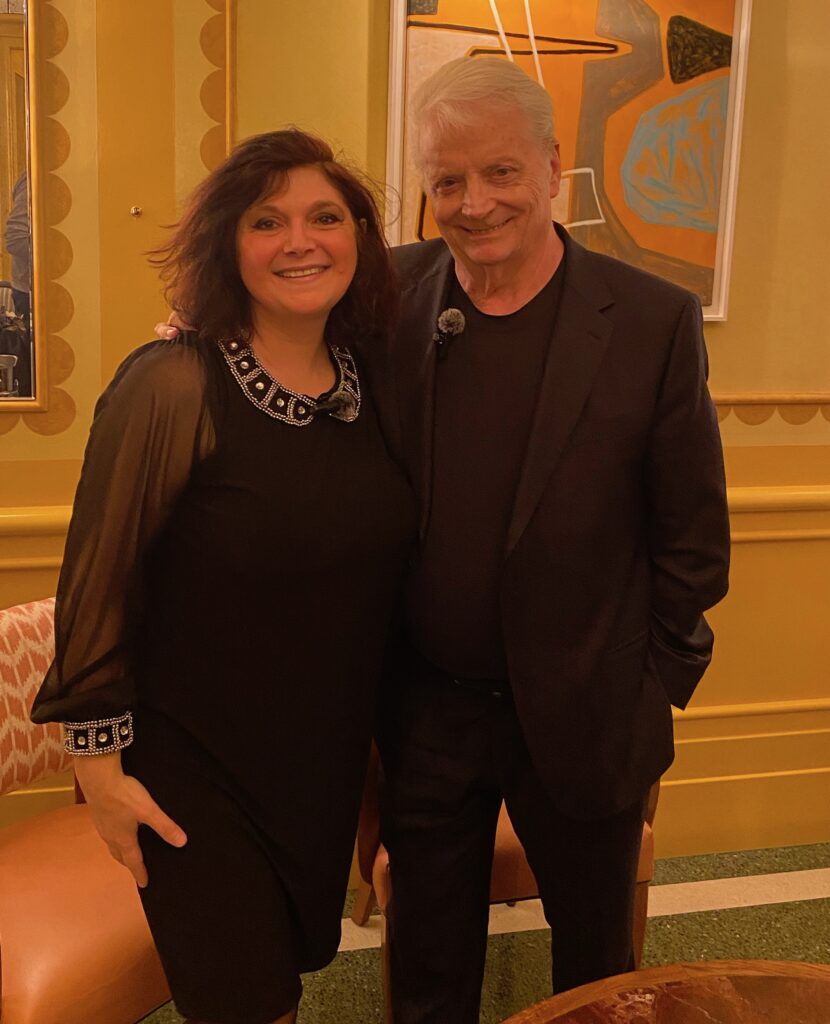
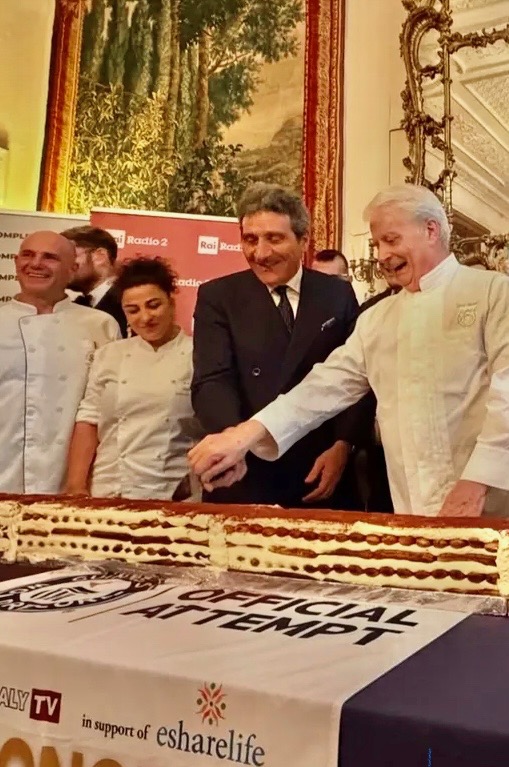
We meet at Cicchetti near Piccadilly in London, and tiramisù is obviously on the agenda. This Sunday, they’re trying to break the Guinness World record for the longest tiramisù in the world. But for Massari, tiramisù is no joke: it’s an Italian heritage.
Tiramisù: tradition and provocation
«Tiramisù is the most reinterpreted Italian dessert in the world,» Massari begins. «Everyone does their own version. But where do the variations start and end? You can renew it, but without forgetting what it was yesterday. To renew while respecting tradition, you need skill – and no rushing.»
And provocations? «We could make fish tiramisù, but that’s a provocation. It’s not tiramisù. I make it classic.»
Massari fiercely claims the name’s family roots: «Tiramisù belongs to the Italian family. There was mum and grandma beating egg yolks with sugar, adding coffee and Savoiardi biscuits, and saying: “Eat this before school, it’ll pick you up.” They did the same for someone leaving hospital. Tiramisù was born in Treviso between 1960 and 1962 – no fixed date – with the addition of mascarpone. But they didn’t invent the name. It belongs to what UNESCO recognised for Italy.»
And innovation? «First, you follow the supply chain and use good ingredients. Fresh mascarpone, because UHT has cooked proteins – you only taste the aroma of cooked protein. You can’t make good tiramisù without good coffee and good Savoiardi. Want it lighter? Add whipped cream. But mascarpone isn’t just for tiramisù: it goes beautifully with vegetables, even in first courses. The problem is finding someone who can actually do it.»
Panettone vs pandoro: a (good) war is over
Massari is the absolute reference point for panettone. I ask him what the most common mistake is that ruins it. «There’s not just one mistake. If both are made correctly, panettone and pandoro are good. But they’re different: panettone has a citrusy aromatic taste, pandoro has butter and vanilla. Made well, both are good.»
And what about people who want panettone without candied fruit? «You can’t call it panettone. The specification requires it. I don’t like the one without either, because they still use low?quality candied fruit. You can’t sell panettone for €3 a kilo when bread costs €14. Jesus Christ worked miracles, and they crucified him.»
At this point I confess: I’ve tried his panettone, bought at a pop?up shop in Rome Termini. I couldn’t believe my taste buds – it melted in my mouth. The best panettone I’ve ever had.
Massari smiles and tells the story: «Panettone was born in the 1500s. Colomba was born in 1930, almost 500 years later. The earliest evidence isn’t the tall panettone we see now – it was low and shapeless. A painting by Brueghel the Elder shows raisins and fruit with symbolism: raisins represented wealth, orange peel candied with honey – because sugar was as valuable as silver – represented love, and citron represented eternity. When you gave panettone, you were saying: “I wish you wealth, love and eternity.”» A sweet love letter. «Dessert humbles you and reminds you of the common folk.»
The Obelix of pastry (he finally says it himself)
I ask him about the childhood anecdote. «I was 4. My mother ran a tavern and an ice?cream parlour. She made ice?cream custards on the stove – just after the war, times were hard – then she’d put them in glazed terracotta bowls that looked huge to me. I was playing and fell into one. My mother got scared, thought it was boiling hot, but it was just warm. Growing up, I always joked: I’m like Obelix. He became the strongest man in the world, I became the sweetest.» So there’s the secret: from that fall into cream came the king of world pastry.
After a lifetime dedicated to pastry, which dessert still moves him? «We care for all our desserts the same way. I’m never satisfied with the result – there’s always room for improvement. Every six months, I have my team taste the products, using score sheets: positive points, negative points, improvements. I don’t want them talking to each other so they don’t influence one another. Every six months we make our desserts better. Because moving forward doesn’t mean adding more, it means adding what’s necessary. For example, with whipped cream, almost everyone uses 100g of sugar per litre of cream. We found that to taste the sweetness and the cream itself, 15g maximum is enough. It’s engineering. Engineering precision.»
The maritozzo story and the origin of ‘panna’
«I changed maritozzo in Rome in 2017, without realising it. Before, it was vertical; now it has a smiling face. Maritozzo means “to marry” – bread with cream. But maritozzo was originally made with olive oil cream. They say it was born in the late Middle Ages, after the discovery of America (1492). Only François Vatel, who invented whipped cream, lived 171 years later, at the Château de Saint?Elisa. So what? Everywhere else it’s called “cream of milk” – crème de lait. In Italy we call it panna. Why? Because in the 1200s, when they made the first hard cheese, to keep flies out they’d put a cloth on top – un panno – just like my mother did. That’s where panna comes from.»
Modernity vs tradition: what have we gained and lost?
My final question touches a hot topic: today’s pastry world lives on images and social media. What have we gained and what have we lost compared to the old days?
«Pastry of the past was far too sweet, and too excessively tied to southern Italy. Tradition was anchored unbelievably tightly, especially to sugar. But back then sugar was necessary: it’s a natural antibiotic and a natural antidepressant. Today we have fridges and air conditioning. The first thing I did in my lab 50 years ago was install air conditioning so we could work properly even in summer.»
Today’s desserts are less sweet. «A dessert must be thought through, not thrown together. I’ve written 198 pastry books for those who don’t want to think. I’ve written three books on desserts: there are plated desserts, and desserts in the plate.»
The final question – “What dessert do you feel like?”
I take out my little red notebook – it’s my trademark, like Francesca Fagnani with her Belve – and ask him: «What dessert do you feel like?»
Iginio Massari looks at me, smiles, and answers without hesitation: «I just feel sweet – full stop.»
Nothing more needs saying. Because a man who fell into a bowl of cream as a child, who has perfected his art with engineering and still, every six months, challenges his own masterpieces – he can only be sweet. But a sweetness that tastes of history, love, eternity. And of that happiness only a true maestro can give.
Da Obelix della pasticceria a pasticcere migliore al mondo:
la mia intervista a Iginio Massari
Non capita tutti i giorni di sedersi davanti al pasticcere più celebrato del mondo. Iginio Massari, maestro indiscusso, ha ricevuto nel 2017 il titolo di miglior pasticcere del mondo, e l’anno scorso, a Parigi, lo stesso riconoscimento dalla comunità internazionale. «Possiamo dire che è così», dice con modestia ironica. Eppure, dietro l’aura di leggenda, c’è un uomo che a quattro anni cadde in una bacinella di crema – e non ne è più uscito. Un vero Obelix, ma della pasticceria: invece della forza, ha preso la dolcezza.
Ci incontriamo da Cicchetti a Piccadilly a Londra, e subito il tiramisù è d’obbligo. Questa domenica si cercherà di battere il record del longest tiramisù. Ma per Massari il tiramisù non è un gioco: è un patrimonio italiano.
Il tiramisù: tradizione e provocazione
«Il tiramisù è il dolce italiano più reinterpretato al mondo», esordisce Massari. «Ognuno fa la sua variante. Ma dove iniziano e dove finiscono le varianti? Si può rinnovare, ma senza dimenticare quello che era ieri. Per rinnovare rispettando la tradizione bisogna avere le competenze, non bisogna avere fretta».
E le provocazioni? «Possiamo fare il tiramisù al pesce, ma è una provocazione. Non è un tiramisù. Io lo faccio classico».
Massari rivendica con forza l’origine familiare del nome: «Tiramisù appartiene alla famiglia italiana. C’è stata mamma e nonna che sbattevano il tuorlo d’uovo con lo zucchero, mettevano caffè e savoiardi e dicevano: “Mangia questo prima di andare a scuola che ti tira su”. All’uomo o alla donna che uscivano dall’ospedale facevano la stessa cosa. Il tiramisù è nato a Treviso tra il 1960 e il 1962 – data non certa – con l’aggiunta del mascarpone. Ma il nome non l’hanno inventato loro. Appartiene a ciò che l’UNESCO ha riconosciuto all’Italia».
E l’innovazione? «Prima di tutto bisogna andare dietro alla filiera, usare prodotti buoni. Mascarpone fresco, perché l’UHT ha le proteine cotte e si sente solo il gusto aromatico della proteina cotta. Non puoi fare un buon tiramisù senza un buon caffè e senza buoni savoiardi. Vuoi farlo più leggero? Puoi mettere la panna montata. Ma il mascarpone non va bene solo per il tiramisù: si sposa benissimo con le verdure, e persino con i primi piatti. Il problema è chi è capace di farlo».
Panettone vs pandoro: guerra (buona) finita
Massari è un un riferimento assoluto del panettone. Gli chiedo qual è l’errore più comune che lo rovina. «Non c’è un errore solo. Se tecnicamente vengono fatti corretti, sia panettone che pandoro sono buoni. Ma sono due cose diverse: il panettone ha un gusto aromatico agrumato, il pandoro aroma di burro e vaniglia. Se fatti bene, sono tutti e due buoni».
E chi vuole il panettone senza canditi? «Non lo puoi chiamare panettone. Il disciplinare ti obbliga. A me non piace neanche quello senza, perché ancora oggi usano canditi di sola qualità. Non puoi vendere il panettone a 3 euro al chilo quando il pane costa 14 euro. I miracoli li ha fatti Gesù Cristo, ma lo hanno messo in croce».
A questo punto confesso: ho assaggiato il suo panettone, comprato in un pop-up store a Roma Termini. Non potevo credere alle mie papille: si scioglieva in bocca. Il più buon panettone che abbia mai assaggiato.
Massari sorride e racconta la storia: «Il panettone nasce nel 1500. La colomba è nata nel 1930, quasi 500 anni dopo. La prima testimonianza non è il panettone alto che vediamo ora: era basso e senza forma. Un quadro di Brueghelil Vecchio mostra uvetta e frutta con simbolismi: l’uva passa rappresentava la ricchezza, le scorze d’arancia candite con il miele – perché lo zucchero valeva quanto l’argento – rappresentavano l’amore, il cedro l’eternità. Quando regalavi il panettone dicevi: “Ti auguro di essere ricco, di avere tanto amore e di essere eterno”». Un dolce messaggio d’amore. «Il dolce umilia e ti fa ricordare il popolare».
L’Obelix della pasticceria (finalmente lo dice lui)
Gli chiedo dell’aneddoto che lo vede protagonista da bambino. «Avevo 4 anni. Mia madre aveva un’osteria e una gelateria. Faceva le creme di gelato sulla stufa – appena passata la guerra c’era difficoltà – poi le metteva nelle bacinelle di terracotta smaltata che a me sembravano grandi. Io giocavo e sono caduto dentro. Mia madre si spaventò, pensava fosse bollente, invece era calda. Diventando grande ho sempre scherzato: io sono come l’Obelix. Lui è diventato l’uomo più forte del mondo, io sono diventato quello più dolce». Ecco svelato il segreto: da quella caduta nella crema è nato il re della pasticceria mondiale.
Dopo una vita dedicata alla pasticceria, quale dolce riesce ancora a emozionarlo? «Tutti i dolci che facciamo li curiamo allo stesso modo. Io non mi accontento dell’obiettivo: ci sono sempre parti da migliorare. Ogni sei mesi, a turno con le mie maestranze, faccio assaggi con schede: parte positiva, parte negativa, miglioramento. Non voglio che si parlino tra loro per non influenzarsi. Ogni sei mesi miglioriamo i nostri dolci. Perché andare avanti non significa mettere di più, ma mettere il necessario. Esempio: nella panna montata quasi tutti mettono 100 grammi di zucchero per litro di panna. Noi abbiamo visto che per sentire il dolce e il gusto della panna bastano massimo 15 grammi. È ingegneria. Precisione ingegneristica».
L’aneddoto del maritozzo e della panna
«Il maritozzo l’ho cambiato io a Roma nel 2017, senza saperlo. Prima era verticale, ora ha una faccia che ride. Maritozzo vuol dire “maritare” pane con la panna. Ma il maritozzo è nato con panna d’olio d’oliva. Dicono che sia nato a fine Medioevo, dopo la scoperta dell’America (1492). Solo che François Vatel, che ha inventato la panna montata, è vissuto 171 anni dopo, nel castello di Sant’Elisa. E allora? In tutto il mondo si chiama “crema di latte”, crème de lait. In Italia si chiama “panna”. Perché nel 1200, quando facevano il primo formaggio di grana, per non far entrare le mosche mettevano sopra un panno – come faceva mia madre. Da lì “panna”».
Modernita’ e tradizione: cosa abbiamo guadagnato e perso?
La mia ultima domanda tocca un tema scottante: la pasticceria di oggi vive di immagini e social. Cosa abbiamo guadagnato e cosa abbiamo perso rispetto a quella di una volta?
«La pasticceria di una volta era troppo dolce e legata al sud Italia in modo eccessivo. La tradizione era ancorata all’inverosimile, specialmente nello zucchero. Ma una volta lo zucchero era necessario: è un antibiotico naturale e un antidepressivo naturale. Oggi abbiamo frigoriferi e aria condizionata. La prima cosa che ho fatto nel mio laboratorio 50 anni fa è stata mettere l’aria condizionata per lavorare bene anche d’estate».
Oggi i dolci sono meno dolci. «Il dolce deve essere pensato, non fatto a caso. Io ho scritto 198 libri di pasticceria per quelli che non vogliono pensare. Ho scritto tre libri sui dolci: ci sono i dolci al piatto e i dolci nel piatto».
La domanda finale – «Lei che dolce si sente?»
Prendo il mio quaderno rosso – è il mio marchio, come Francesca Fagnani con le sue Belve – e gli chiedo: «Lei che dolce si sente?».
Iginio Massari mi guarda, sorride e risponde senza esitazione: «Mi sento dolce e basta!».
Non serve aggiungere altro. Perché un uomo che è caduto da bambino in una bacinella di crema, che ha perfezionato l’arte con l’ingegneria e che ancora oggi, ogni sei mesi, rimette in discussione i suoi capolavori, può essere solo dolce. Ma un dolce che sa di storia, di amore, di eternità. E di quella felicità che solo un vero maestro sa regalare.
Monica Costa founded London Mums in September 2006 after her son Diego’s birth together with a group of mothers who felt the need of meeting up regularly to share the challenges and joys of motherhood in metropolitan and multicultural London. London Mums is the FREE and independent peer support group for mums and mumpreneurs based in London https://www.londonmumsmagazine.com and you can connect on Twitter @londonmums
