

In 28 years of living in London and dragging myself to countless theatre shows, I had never seen War Horse. I read the book by Michael Morpurgo its my son Diego when he was at primary school. We did not love it. I watched the film. I was not a fan. So when the National Theatre invited me to the opening night of its return to the Olivier stage, I went with mild curiosity rather than burning excitement. Well. I was an idiot. What I saw on that stage was not magic. It was engineering. Pure, brilliant, painstaking engineering. And it left me a weepy, converted mess.
The engineering that will blow your mind
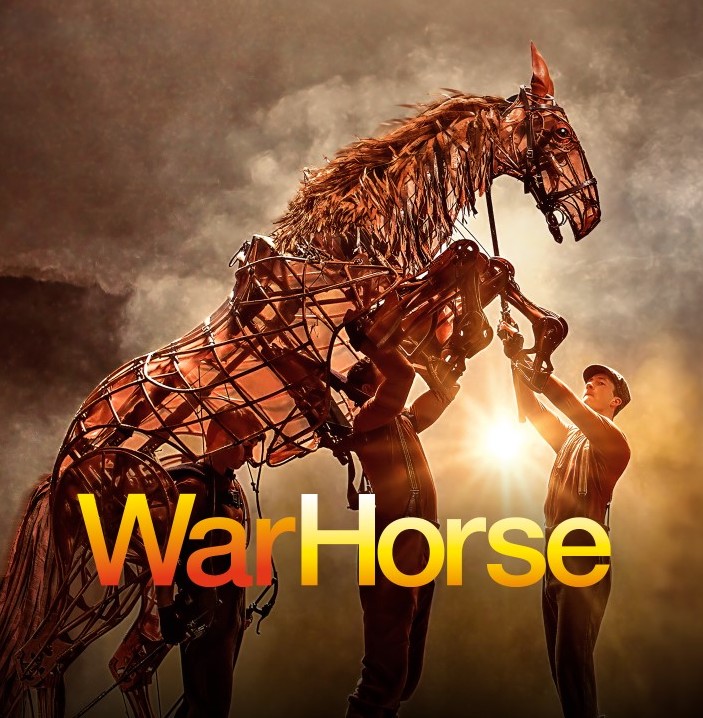
Let me start with the horses. Because they are the stars, and they are not real. Each horse is built from cane, leather, and metal. They are life sized. Each one is operated by three puppeteers who stand in full view. You can see their arms moving, their hands twisting, their bodies leaning into the gallop. You know exactly how the trick works. There is no hidden mechanism. No invisibility cloak.
And yet, within about ninety seconds, your brain simply gives up. The puppeteers fade away. The creatures take over. Joey, the main horse, breathes. I swear I saw his ribs expand. He flicks an ear toward a voice. He swishes his tail. He nuzzles the other horses. He lowers his head to graze. He gallops across the stage with such weight and momentum that you feel the thud of his hooves in your chest. Yet he seems floating across the stage. When he gets tangled in barbed wire in no man’s land, the entire audience held its breath. That is the power of good engineering.
The detail is extraordinary. The way the horses’ legs fold and extend mimics real equine anatomy. The way their heads turn and their eyes (simple painted eyes) somehow convey fear, curiosity, exhaustion. I have no idea how the Handspring Puppet Company achieved this, but I suspect they sold their souls to a very talented carpenter. Or perhaps they just spent twenty years obsessing over horse joints. Either way, I am grateful.
There is also Topthorn, the powerful black stallion who becomes Joey’s companion. Their relationship is wordless but utterly convincing. You see them groom each other, lean on each other in times of stress, and when Topthorn eventually collapses from exhaustion, the grief is real. I saw grown men wiping their eyes. I was one of them.

The goose. Oh, the goose.
And then there is the goose. A small puppet goose that spends the first half of the show trying to get into the farmhouse door. It is operated by one puppeteer (I think) who gives it the personality of a grumpy, determined little menace. The goose flaps its wings, pecks at the door, and gets shooed away repeatedly. It is cheeky, relentless, and brilliantly funny. The audience chuckled every time it appeared.
At the curtain call, the goose got a standing ovation. Not a polite clap. A real, cheering, foot?stamping ovation. The cast took their bows, and then they brought the goose back for a second bow. The audience went wild again. I have the video on my Instagram. Go and see it for yourself. A puppet goose, people. That is when you know the puppetry team has done something special.
The story (still heartbreaking, still beautiful)
For those who have been living under a rock, War Horse follows Albert and his beloved horse Joey. They grow up together on a Devon farm. Albert trains Joey to work the land, and they develop a bond so strong that Albert has a special hand whistle that only Joey responds to. The first ten minutes of the play are pastoral charm. The geese, the starlings (projected as a murmuration across the stage), the idyllic English countryside. It is lovely.
Then the First World War breaks out. Albert’s father, a struggling farmer with a drink problem, sells Joey to the cavalry. Albert is devastated. He is too young to enlist, but he refuses to forget his horse. He lies about his age, joins the army, and sets off to find Joey in the trenches of France.
It’s a story about love, loss, and the innocent creatures who get dragged into human madness. It is also about the men who die alongside the horses. The play does not shy away from the brutality. There are scenes of cavalry charges that end in bloody chaos. Soldiers get shell-shocked. Bodies lie strewn across the stage. It is intense, and it is appropriate for ages 10 and up.
The performances that hold it together
Tom Sturgess plays Albert, and he is superb. He starts as a naive, gentle teenager and grows into a determined, haunted young man. His love for Joey is palpable, and his single minded quest to find him drives the entire second half.
Stephen Beckett plays Albert’s father, a man torn between love for his son and his own weaknesses. Jo Castleton plays the mother, who quietly holds the family together. They are both excellent.
But the supporting cast also shines. Manuel Klein plays a German cavalry captain, Friedrich, who is drawn with such decency that you cannot hate him. He saves a French girl (Anita Adam Gabay’s Emilie) and later helps free Joey from the wire. It is a quiet reminder that there are no real enemies here, just frightened people on opposite sides of the same hell.
Sally Swanson plays a folksinger who wanders through the action, singing mournful ballads and playing the accordion. Her voice is like honey and heartbreak. She carries the emotional weight of the show without ever becoming schmaltzy.
The design that does more with less
The Olivier stage is bare. There are no elaborate sets. Instead, the design by Rae Smith uses a torn strip of sketchbook paper suspended above the action. Onto it, 59 Studio projects charcoal animations: clouds, dates, birds, the slow scrawl of a frontline map. It is simple, evocative, and beautiful. A few strokes of light, and you are in a Devon meadow. A cold sidelight, and you are in a frozen French field. A stutter of white, and the air itself seems to detonate.
This is theatre at its most resourceful. No walls, no furniture, no clutter. Just the actors, the puppets, and the audience’s imagination. And it works perfectly.
The sound design by Christopher Shutt is also worth mentioning. The gunfire stitches across the room. You flinch. You duck. That is how effective it is.
The music that will stay with you
Adrian Sutton’s score is lush and cinematic. It swells when it needs to, but it also knows when to be quiet. There are live folk songs performed by Sally Swanson and John Tams (who appears as a singer on stage). The songs feel ancient and timeless. One of them, “Only Remembered”, had me tearing up before the interval. The lyrics go something like: “We’re only remembered for what we’ve done.” It lands like a punch.
Better than the book and the film
I said it before and I will say it again. This play is better than the book and the film. The book is fine but it is a children’s novel. The film is okay but the stage production is something else entirely. The live music, the visible puppeteers, the bare stage, the collective gasp of a thousand people holding their breath. You cannot replicate that on a screen.
Queen Elizabeth II reportedly saw this play multiple times. It was her favourite. The late Queen knew a thing or two about quality. And about horses.
Practical details for London Mums
If you are thinking of taking the family, here is what you need to know.
Age recommendation: 10 and over. There are loud gunshots, flashing lights, haze, strobe effects, and scenes of soldiers dying. But for teenagers studying WWI, it is unmissable. I saw many children around 12 who were completely absorbed. One boy near me was crying openly during the barbed wire scene. His mother was crying too. It was fine.
Running time: 2 hours 45 minutes including one interval. Bring a cushion if your back is fussy. The Olivier seats are not the most generous.
Ticket prices: Start at £30. That is a bargain for this quality. Premium seats are more, but honestly, the view from the upper circle is still excellent.
Where: Olivier Theatre at the National Theatre, South Bank, London, SE1 9PX. Easy to reach by tube (Waterloo or Embankment) or bus.
When: Until 30 July 2026. It is selling fast. Do not leave it too late.
Book tickets: nationaltheatre.org.uk .
The verdict
I went in mildly curious. I came out a convert. I will go again. Possibly twice.
War Horse is not magic. It is better than magic. It is skilled people making you believe something that is not there. That is the essence of theatre. That is why we still gather in dark rooms to watch strangers pretend to be other people. When it works, it works better than any film or television show. This works. Go see it. Bring tissues. You will cry. I certainly did. And for goodness’ sake, stay for the curtain call and give the goose a cheer. It deserves it.
Rating: five stars.
War Horse runs at the National Theatre’s Olivier stage until 30 July 2026. Recommended for ages 10 and up. Book at nationaltheatre.org.uk. And go watch my Instagram video of the goose taking its second bow. You are welcome.

Monica Costa founded London Mums in September 2006 after her son Diego’s birth together with a group of mothers who felt the need of meeting up regularly to share the challenges and joys of motherhood in metropolitan and multicultural London. London Mums is the FREE and independent peer support group for mums and mumpreneurs based in London https://www.londonmumsmagazine.com and you can connect on Twitter @londonmums
