

The research on what a dog adds to a child’s development is more nuanced than the cheerful headlines suggest, but a consistent thread runs through decades of work: the depth of the bond a child forms with the family dog tends to predict the developmental benefits more reliably than the simple fact of ownership.
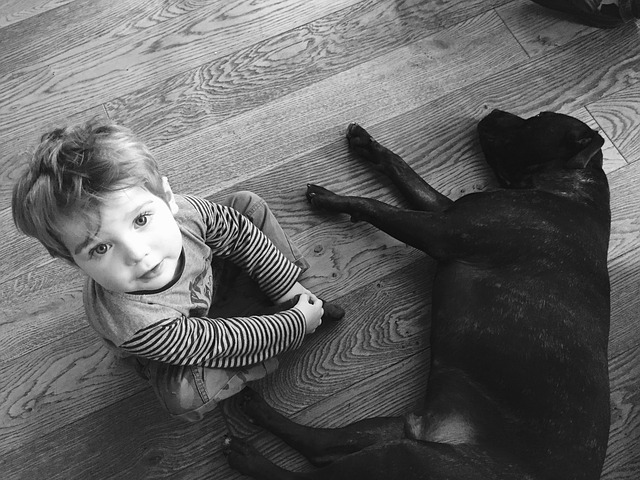
The research on what a dog adds to a child’s development is more nuanced than the cheerful headlines suggest, but a consistent thread runs through decades of work: the depth of the bond a child forms with the family dog tends to predict the developmental benefits more reliably than the simple fact of ownership.
Daily Care Builds Responsibility Through Repetition, Not Lectures
Responsibility is one of those traits parents hope their children absorb, but it rarely transfers through conversation alone. Dogs are living beings whose wellbeing depends on consistent action. Food bowls need to be filled at roughly the same time each day. Water needs changing. Coats need brushing. A dog that is not walked in the morning becomes restless, and the child who skipped that walk sees the consequence within hours.
Younger children can take on age-appropriate tasks like refilling the water bowl or helping measure out food. Older children can manage walks, basic grooming, and the calendar of vet visits and flea treatments. The point isn’t to offload parental duties onto a seven-year-old; it’s to give children ownership of tasks that genuinely affect another creature’s day. That feedback loop, where effort produces visible welfare and neglect produces visible discomfort, teaches accountability.
Routine Becomes a Shared Family Rhythm
Dogs thrive on predictability, and children often do too. Children who participate in these routines learn time management almost by osmosis. They understand that the dog needs to be walked before football practice, not after, and that leaving feeding until later means a hungry, anxious animal. This kind of planning, rehearsed daily across years, builds executive function skills that transfer to schoolwork, friendships and eventually adult life.
Empathy Grows From Attachment, Not Exposure
This is where the research becomes interesting. A study of 826 Croatian children aged 10 to 15 found that pet ownership alone didn’t predict higher empathy. What predicted it was the strength of the child’s attachment to the pet (Vidovi?, Šteti? & Bratko, 1999). A more recent analysis of American youth came to a similar conclusion: attitudes toward pets, rather than ownership itself, were significantly associated with empathy and prosocial behavior, even after controlling for demographic factors (Jacobson & Chang, 2018).
The nature of caring for a dog is instructive in itself. Every dog, no matter where it comes from, depends entirely on the humans around it. Even Cavapoo puppies from trusted breeders who arrive home well-socialized and healthy will still feel the effects of inconsistent care or rough handling. A puppy that is ignored becomes withdrawn. A puppy that is treated harshly becomes fearful. Children who see this connection between their behavior and the dog’s wellbeing begin to understand that other beings have inner lives that respond to how they are treated. That is the foundation of empathy, and HonestPet’s emphasis on matching families with healthy, socialized puppies gives them the best possible starting point.
Parents can support this by talking with children about what the dog might be feeling and why. Why is she hiding under the table? Why does he flinch when the door slams? These conversations, repeated over the years, train children to look beyond their own perspective.
The Social and Cognitive Ripple Effects
Beyond responsibility and empathy, behavioral interactions with dogs have been linked to broader developmental gains. A 2024 review noted improvements in social competence, reading skills, and motivation to learn, with researchers pointing to attachment and social buffering as likely mechanisms (Gillet & Kubinyi, 2024). Children who read aloud to a calm, non-judgmental dog often gain confidence that they struggle to find in front of teachers or classmates. A dog that is walked through the neighborhood becomes a social bridge, prompting conversations with neighbors and other dog owners that a child might otherwise avoid.
The same review is honest about the limits of this evidence. Most studies are correlational, sample sizes are often modest, and factors like family environment and parental involvement almost certainly play a role. Dogs are not magic, and they come with real costs: bites, allergies, financial strain, and the stress of behavioral problems. Going in with realistic expectations protects both the child and the dog.
Setting Up the Relationship for Success
The developmental benefits aren’t automatic. They depend on parents creating conditions in which the child can actually engage in the dog’s care, in which the bond has room to deepen, and in which the dog itself is well-suited to family life. Choosing a temperamentally appropriate breed, working with reputable sources, and committing to proper socialization in the first months all influence what the relationship becomes.
Families who treat the decision as a multi-year commitment, rather than a seasonal purchase, tend to see the developmental returns the research describes. That means budgeting for veterinary care, planning for the dog’s needs during holidays, and accepting that the first year will demand significant adult involvement before children can take on meaningful responsibility.
A dog will not single-handedly raise a more responsible, empathetic, or organized child. But for families willing to invest in the relationship, the daily presence of a dog creates countless small opportunities for children to practice the habits and attitudes that parents hope to cultivate. The morning walk, the gentle hand on a nervous puppy, the moment a child notices the dog is thirsty before being asked: these are the building blocks. Over the course of childhood, they add up to something meaningful.
References
- Gillet, L., & Kubinyi, E. (2024). Children and dogs: Exploring the impact of canine interaction on socio-cognitive development. Gyermeknevelés Tudományos Folyóirat, 12(2), 45–62.
- Jacobson, K. C., & Chang, L. (2018). Associations between pet ownership and attitudes toward pets with youth socioemotional outcomes. Frontiers in Psychology, 9, 2304.
- Vidovi?, V. V., Šteti?, V. V., & Bratko, D. (1999). Pet ownership, type of pet and socio-emotional development of school children. Anthrozoös, 12(4), 211–217.

Monica Costa founded London Mums in September 2006 after her son Diego’s birth together with a group of mothers who felt the need of meeting up regularly to share the challenges and joys of motherhood in metropolitan and multicultural London. London Mums is the FREE and independent peer support group for mums and mumpreneurs based in London https://www.londonmumsmagazine.com and you can connect on Twitter @londonmums
