

In an education landscape increasingly shaped by debates over financial literacy, civics, media influence, and real-world preparedness, Tuttle Twins has emerged as a notable participant in the growing market for supplemental educational content. Founded in the United States by Connor Boyack, president of the Libertas Institute, the brand was launched in 2014 with the aim of helping parents introduce complex social, economic, and historical ideas to children through storytelling. Since releasing its first books, the company reports that it has sold more than seven million copies.
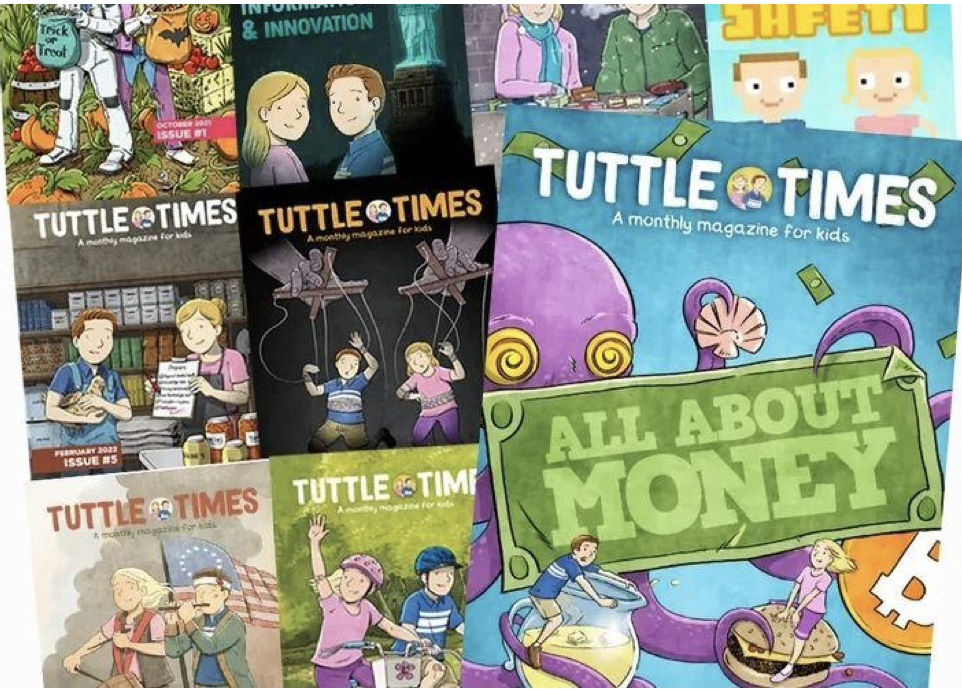
Photo Credit: Tuttle Twins
Rather than functioning as a traditional curriculum provider, Tuttle Twins positions itself as a family-focused educational resource. Its catalog includes illustrated storybooks for children, toddler books, workbooks, audiobooks, parent guides, and entrepreneurship-focused titles for teenagers. The brand has attracted attention not only within homeschooling communities but also among mainstream families seeking educational materials that extend beyond classroom instruction.
Making Complex Ideas Accessible Through Storytelling
One of the defining characteristics of Tuttle Twins is its effort to simplify concepts that are often considered difficult for children to understand. The series draws inspiration from economic, political, and philosophical works by thinkers such as Ludwig von Mises, F.A. Hayek, and Frédéric Bastiat. Rather than presenting these ideas in academic language, the books translate them into age-appropriate stories featuring recurring characters Ethan and Emily.
This approach reflects a broader trend in educational publishing, where narrative-based learning is increasingly used to improve engagement and retention. Research on educational storytelling has consistently found that stories can help learners remember information more effectively than isolated facts. Tuttle Twins has incorporated this principle into its publishing strategy, arguing that children are more likely to grasp concepts such as inflation, property rights, entrepreneurship, and personal responsibility when they are embedded in relatable adventures.
Reviews from homeschool-focused publications including Homeschool.com, Maestra Mom, and Teacher Tutor Mom frequently highlight the accessibility of the books and their ability to introduce advanced topics without overwhelming younger readers. These assessments often point to the series’ practical use in family learning environments.
Addressing Demand for Financial Literacy and Real-World Skills
Financial literacy remains one of the most frequently requested educational subjects among parents. Tuttle Twins has built a significant portion of its product line around this demand, offering books that explain money, markets, entrepreneurship, and economic decision-making in language designed for children.
The brand’s positioning aligns with wider concerns about educational outcomes. According to data cited by the company, 90% of parents do not feel confident that schools are adequately preparing children for real-world success. In response, Tuttle Twins focuses on topics that many families perceive as under-represented in traditional education, including personal finance, critical thinking, problem-solving, and business creation.
Its teen-focused materials expand on these themes by introducing entrepreneurship and decision-making through interactive formats, including narrative guides and choose-your-own-adventure-style books. These resources are intended to help older students engage with practical scenarios that connect economic concepts to everyday life.
The company’s educational philosophy has been discussed in interviews with founder Connor Boyack and in publications associated with liberty-orientated education. While supporters view the materials as a useful supplement to conventional schooling, some critics argue that the books reflect a specific ideological perspective. Such critiques generally focus on the presentation of economic and political ideas through a classical liberal or libertarian framework. The existence of these debates has contributed to the brand’s visibility within discussions about alternative education.
A Resource for Both Homeschool and Mainstream Families
Although Tuttle Twins is often associated with homeschooling, company data suggests its audience is more diverse than commonly assumed. The brand reports that approximately 78% of its customers send their children to public schools, indicating that many families use the materials as a supplement rather than a replacement for formal education.
This broader appeal has become an important aspect of the company’s growth strategy. Leadership has stated that while homeschool families remain an important customer segment, they are expected to represent a smaller share of overall revenue as the brand expands into mainstream markets.
The audience is predominantly composed of mothers between the ages of 24 and 54, who account for roughly 78% to 80% of purchases. Grandmothers represent another significant customer group, often purchasing books as gifts. Families with multiple children also form a substantial portion of the customer base, creating demand for products that span different developmental stages.
For parents seeking age-specific educational resources, The Tuttle Twins offers collections tailored to various reading levels, including elementary-age children who are beginning to engage with more advanced topics.
Encouraging Family Discussion Beyond the Classroom
Another distinctive aspect of the brand is its emphasis on parent-child engagement. Tuttle Twins frequently describes its desired outcome as creating a “Dinner Table Moment” – a conversation sparked by ideas introduced in the books.
This focus reflects a wider movement toward family-centered learning. Educational researchers and homeschooling advocates have increasingly emphasized the role of discussion in helping children process complex information. By pairing storybooks with workbooks, parent guides, and discussion materials, Tuttle Twins aims to support conversations that continue after reading sessions end.
Parent reviews often cite these discussions as a key benefit. Rather than treating educational content as a standalone activity, families use the materials as prompts for broader conversations about history, economics, ethics, and civic responsibility. This model positions parents as active participants in the learning process rather than passive observers.
Position Within a Growing Alternative Education Market
Tuttle Twins operates within a rapidly expanding ecosystem of educational alternatives that includes organizations such as PragerU Kids, Hillsdale K-12, Classical Conversations, Khan Academy Kids, Schoolhouse Rock, and Liberty’s Kids. While these organizations vary significantly in philosophy and format, they share a common goal of providing educational content outside traditional institutional channels.
What distinguishes Tuttle Twins is its focus on combining economics, civics, entrepreneurship, and storytelling within a single children’s publishing brand. Industry observers note that few competitors occupy the specific niche of introducing free-market and liberty-orientated concepts to younger audiences through illustrated fiction.
As debates about education continue to evolve, Tuttle Twins represents a broader shift toward parent-directed learning resources. Its growth since 2014 suggests sustained demand for educational materials that address financial literacy, civic understanding, and critical thinking through family-centred storytelling. Whether viewed as a supplemental learning tool, a values-based educational resource, or part of the wider alternative education movement, the brand has established a visible presence in a changing educational marketplace.

Monica Costa founded London Mums in September 2006 after her son Diego’s birth together with a group of mothers who felt the need of meeting up regularly to share the challenges and joys of motherhood in metropolitan and multicultural London. London Mums is the FREE and independent peer support group for mums and mumpreneurs based in London https://www.londonmumsmagazine.com and you can connect on Twitter @londonmums
