

Skagway packs more history and wilderness into its half-mile-wide downtown than almost any other Alaska port town. With a year-round population under 1,200, this former gold rush boomtown swells with cruise ship visitors each summer, yet it still manages to feel like a real place rather than a tourist set piece. Knowing what to expect before you arrive makes the difference between a rushed afternoon and a day that actually shows you why prospectors and adventurers alike have been drawn here for more than a century.
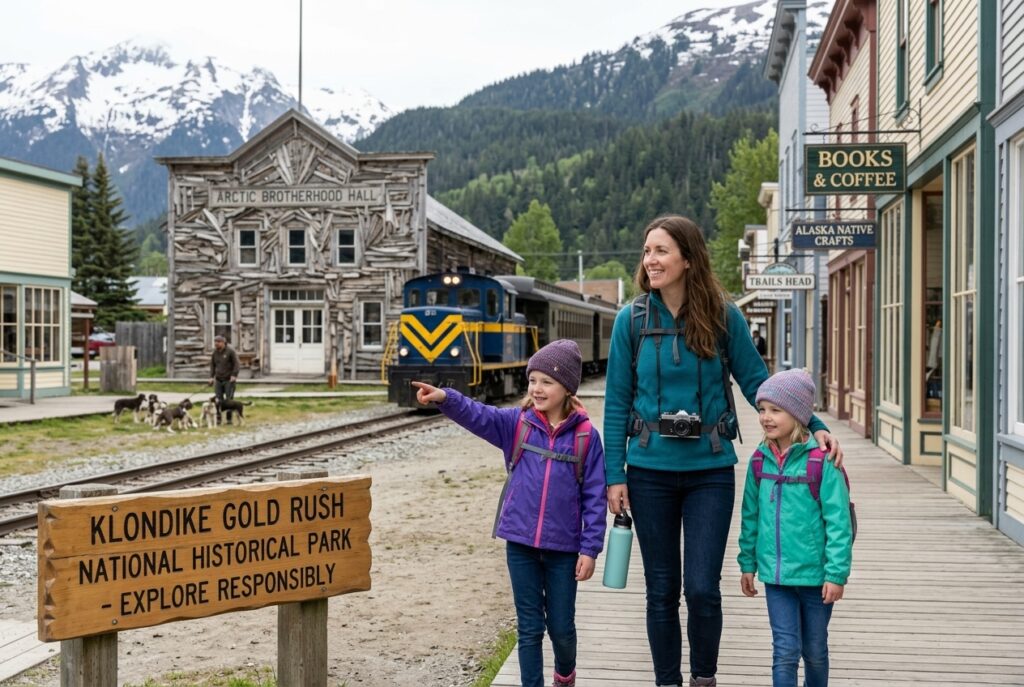
Get Oriented in the Historic District
Skagway’s downtown sits within the Klondike Gold Rush National Historical Park, and most of the wooden storefronts along Broadway date back to the late 1890s. Start at the visitor center inside the old White Pass and Yukon Route depot, where rangers give short talks on the town’s gold rush origins and can point you toward trailheads and current conditions. Walking the full historic district takes under an hour, but budget more time if you want to duck into the small museums tucked along the way.
The Arctic Brotherhood Hall, with its facade covered in over 8,000 pieces of driftwood, is one of the most photographed buildings in Alaska and worth a stop even if you skip everything else. A few blocks over, the Skagway Museum in the old McCabe College building holds Tlingit artifacts and gold rush relics that give context to what the town looked like before tourism took over.
Ride the White Pass and Yukon Route Railway
Built in 1898 to haul prospectors and supplies over the mountains toward the Klondike goldfields, this narrow-gauge railway is now Skagway’s signature excursion. The standard summit excursion climbs nearly 3,000 feet in nowhere near 21 miles, passing Bridal Veil Falls, Dead Horse Gulch, and the U.S.-Canada border before turning back. Trains run several times daily during the summer season, and reservations fill up fast, so book ahead rather than assuming you can walk up same-day.
Seats on the left side of the train generally offer better views on the way up, though the route switches back enough that most passengers get a look at the gorge either way. Bring a jacket even in July, since temperatures at the summit run noticeably cooler than at sea level in town.
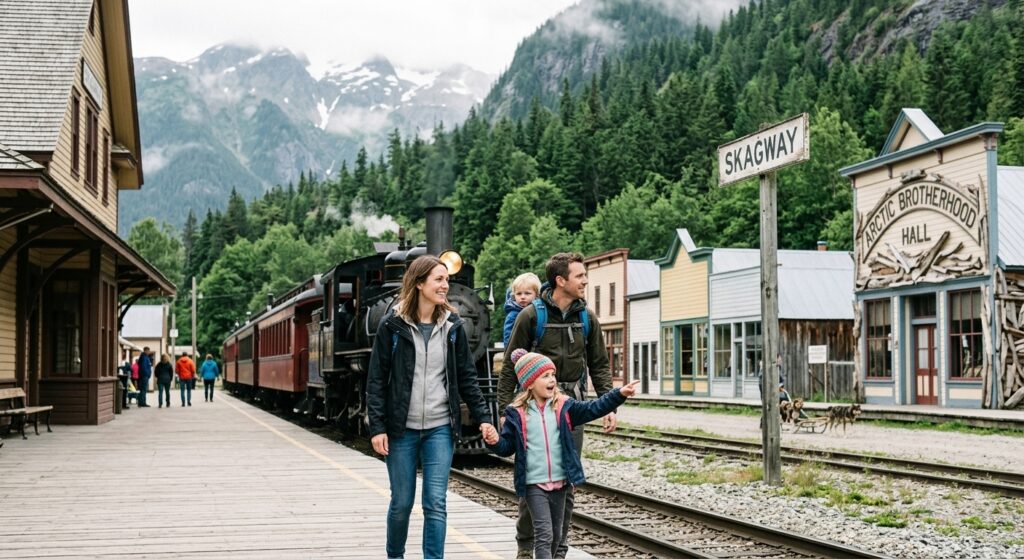
Hike the Chilkoot Trail or a Shorter Local Trail
The full Chilkoot Trail, the actual route stampeders walked toward the Yukon in 1897 and 1898, stretches 33 miles and typically takes three to five days, requiring permits from Parks Canada. That’s a serious backcountry trip, not a casual outing, and it demands proper gear and planning. For visitors with less time, the first few miles out of Dyea offer a taste of the same terrain without the multi-day commitment.
Closer to town, the Lower Dewey Lake Trail climbs through Sitka spruce and hemlock forest to a small alpine lake, making a round trip of about 4 miles that most reasonably fit hikers can finish in two to three hours. It’s steep in sections but well maintained, and it delivers a quiet contrast to the bustle of Broadway.
Try Skagway Dog Sledding
Alaska’s sled dog heritage runs deep, and Skagway is one of the more accessible places to see it firsthand without heading deep into the Interior. Several operators run tours that let visitors meet the dogs, learn about training and breeding, and either ride a wheeled cart version of a sled or, on glacier-based tours, an actual sled on snow reached by helicopter. For a straightforward, well-run introduction, skagway dog sledding tours give you real contact with working huskies and the mushers who care for them, which tends to be a highlight for families and dog lovers alike.
Visit Dyea and the Slide Cemetery
Nine miles outside Skagway, Dyea was once a rival boomtown that rivaled Skagway in size during the gold rush, with a population estimated near 8,000 at its peak. Almost nothing remains today except scattered pilings and building foundations reclaimed by the tide flats, which makes it an oddly haunting stop for anyone interested in how quickly a boomtown can vanish. The nearby Slide Cemetery holds the graves of dozens of stampeders killed in a 1898 avalanche on the Chilkoot Trail, and it’s a quiet, sobering counterpoint to the gold rush romance sold elsewhere in town.
Plan Around the Cruise Ship Schedule
Skagway’s population can multiply several times over on days when multiple large ships are in port, typically between May and September. Checking the daily ship schedule, posted online and often at the visitor center, helps you time visits to popular sites for quieter hours, usually early morning or after 4 p.m. Shops and excursion desks along Broadway cater heavily to ship passengers, so prices and crowd levels shift noticeably depending on how many vessels are docked that day.
Whatever pace you choose, the real value of Skagway comes from treating it as more than a photo stop between excursions. The gold rush history is dense enough to fill a full day on its own, and the surrounding mountains and trails reward anyone willing to walk even a mile past the cruise dock crowds.

Monica Costa founded London Mums in September 2006 after her son Diego’s birth together with a group of mothers who felt the need of meeting up regularly to share the challenges and joys of motherhood in metropolitan and multicultural London. London Mums is the FREE and independent peer support group for mums and mumpreneurs based in London https://www.londonmumsmagazine.com and you can connect on Twitter @londonmums
