

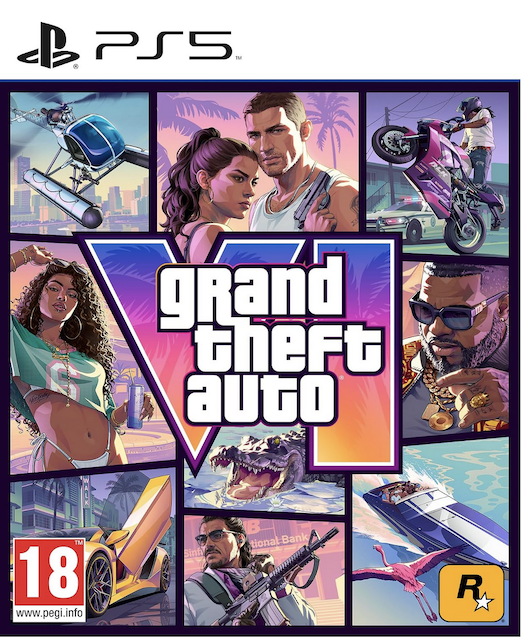
The game of the decade has landed. Grand Theft Auto VI went live at midnight on 19th November 2026, and within 24 hours it had sold an estimated 24.5 million copies and generated roughly $2.36 billion in revenue. It is, by any measure, a cultural event. It is also a PEGI 18 game, featuring what the ratings board describes as “detailed decapitation and dismemberment,” “frequent and prominent” drug use (including the ability to snort cocaine directly from the player’s hand), and strong sexual content. Schools have already been writing to parents to remind them that this is not a game for children.
But here is the conversation that often gets lost in the hype: what happens when gaming stops being fun and starts being something your child cannot stop doing?
Gaming disorder is formally recognised by the World Health Organization in its ICD-11 classification. It is defined as a pattern of gaming behaviour characterised by impaired control over gaming, increasing priority given to gaming over other interests and daily activities, and continuation or escalation of gaming despite negative consequences. In plain English: it is not about how many hours your child spends in front of a screen. It is about what gaming is doing to their life, and what happens when they try to stop.
The parallel with substance addiction is not an exaggeration. Both involve powerful cravings, compulsive behaviour, and an increasing reliance on something to change how you feel. Video games are brilliantly, deliberately designed to hook the brain’s reward system, offering a constant stream of challenges, achievements, and rewards that keep players coming back. The pleasure and the compulsion eventually separate: the enjoyment fades, but the urge to keep playing remains. The wanting is still there, but the liking isn’t. At that point, gaming is no longer entertainment. It is a way of escaping anxiety, stress, or difficult emotions or simply feeling something when life feels flat.
The stats back up why this matters. Ofcom research shows that 88% of children aged 3–17 in the UK play video games, rising to 96% at ages 10 to 12. And a 2025 survey by Ygam and Mumsnet found that nearly 8 in 10 parents were concerned about how much their children game. The concern is already there. What many parents lack is a clear framework for knowing when to worry.
The signs that gaming has become a problem
The NHS Healthier Together guidance is clear: not every child who games heavily has an addiction, and not every child will show every sign. But these are the red flags worth taking seriously.
1. They struggle to stop playing. They repeatedly play for longer than intended, or they cannot stick to the limits they have set for themselves. Bedtime comes and goes. “One more level” turns into 2am.
2. Gaming takes priority over everyday life. Relationships, schoolwork, sleep, and hobbies they used to love begin to suffer because gaming comes first. They stop seeing friends. They stop washing. They stop eating properly. School becomes something that gets in the way of gaming.
3. They feel worse when they are not playing. They become anxious, irritable, or restless without gaming. They are fidgety, moody, and increasingly reliant on the game to manage difficult emotions. The withdrawal is real.
4. They are no longer enjoying it. Gaming feels less like a pleasurable pastime and more like something they are compelled to do, even when the enjoyment has disappeared. They are chasing a feeling they cannot quite recapture.
Other signs the NHS and NSPCC flag include lying about how much time they spend gaming, playing in secret in the middle of the night, complaining of headaches or hand pain from too much screen time, and becoming unreasonably upset or angry when asked to stop.
If you recognise your child in several of these, it is worth seeking advice. But here is the crucial point: simply taking away the console does not address why your child became dependent on gaming in the first place. The behaviour is doing something for them regulating emotions, providing a sense of achievement, offering escape and that need does not disappear when the console does.
How to keep the balance (without declaring war on the console)
You do not have to ban gaming. You do have to be intentional about it.
Use the parental controls that already exist. PlayStation, Xbox, and Nintendo Switch all have free, built-in tools that let you set daily playtime limits, bedtime cutoffs, content restrictions based on age ratings, and spending caps. The PlayStation Family app, Xbox Family Settings, and Nintendo Switch Parental Controls app all let you manage these from your phone. You can also check how long your child has actually been playing — not what they told you.
Make a family agreement. Sit down together and agree on how much gaming is acceptable, when it happens, and what has to be done first (homework, chores, sleep). The Radio Times spoke to experts who recommend getting involved in the games yourself, so you understand what your child is actually doing and can spot when something changes.
Protect sleep like it is sacred. Devices out of bedrooms at night. No exceptions. The NHS lists sleep disruption as one of the clearest signs that gaming is becoming problematic.
Build offline alternatives that are genuinely appealing. A bored child will default to a screen. A child with a regular football training, a drama club, a weekend walk with friends, or a Saturday morning swimming lesson has somewhere else to put that energy. The aim is not to replace gaming entirely, but to make sure gaming is not the only thing in their life that feels rewarding.
Watch for the emotional shift. If gaming is the only way your child can calm down, feel competent, or escape difficult feelings, that is the signal to pay attention and possibly to seek professional support.
GTA VI is a phenomenon, and it is not going anywhere. Your child will hear about it at school, see it on YouTube, and probably ask for it. That conversation is worth having. But the more important conversation is the one about how gaming fits into a healthy life and what to do when it starts to take over.
Gaming addiction is not a failure of willpower, and it is not something to dismiss as “just a phase.” It deserves the same seriousness we give to other forms of addiction. The goal is not to demonise the games. It is to recognise when the relationship has become harmful, and to help our children regain control.
For support and advice, visit the NHS Healthier Together pages on problematic gaming, YoungMinds, or the NSPCC.

Monica Costa founded London Mums in September 2006 after her son Diego’s birth together with a group of mothers who felt the need of meeting up regularly to share the challenges and joys of motherhood in metropolitan and multicultural London. London Mums is the FREE and independent peer support group for mums and mumpreneurs based in London https://www.londonmumsmagazine.com and you can connect on Twitter @londonmums
