

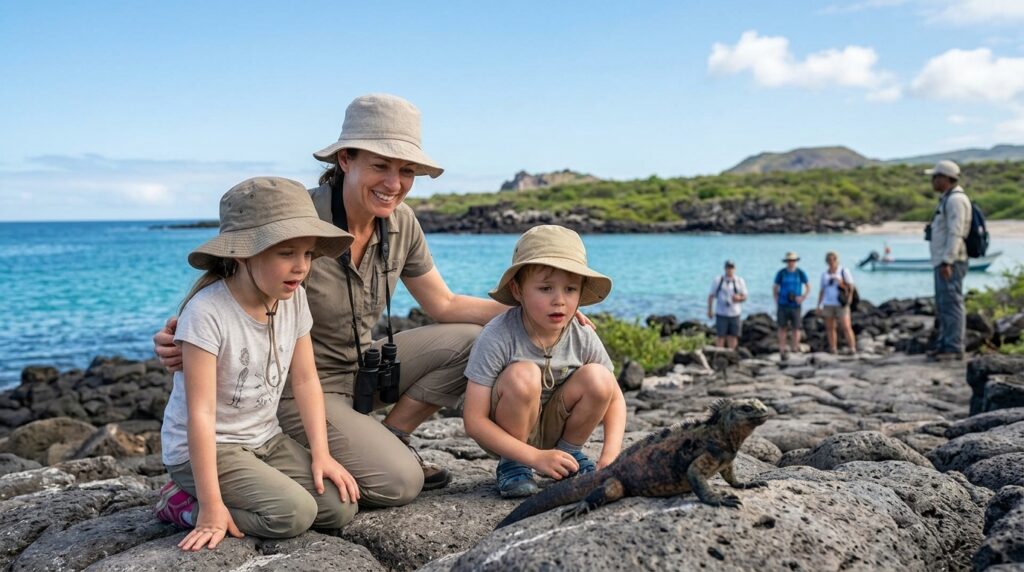
Ecuador’s Galapagos Islands sit nearly 600 miles off the mainland coast, and that isolation is exactly what makes the archipelago one of the few places on earth where wildlife shows almost no fear of people. Marine iguanas bask on lava rocks a few feet from walking paths. Sea lions nap on public benches. Planning a trip here involves a different set of decisions than a typical beach vacation, from choosing the right season to deciding whether a boat or a hotel room makes more sense as a home base.
When to Visit
The Galapagos sits on the equator, so temperature swings less than most destinations, but ocean currents shift the experience dramatically. From June through November, the cool Humboldt Current brings nutrient-rich water that draws in larger numbers of fish, penguins, and seabirds, along with choppier seas and occasional mist called garúa. From December through May, warmer waters make for calmer seas and better snorkeling visibility, plus a higher chance of spotting hatching sea turtles and courting blue-footed boobies.
Neither season is objectively better, but each favors different priorities. Divers and bird photographers often lean toward the cooler months, while families and first-time visitors tend to prefer the warmer, calmer stretch. Whale shark season around Darwin and Wolf islands peaks between June and November, which matters only if diving with them is a specific goal.
Cruise or Land-Based Stay
This is the single biggest decision in Galapagos planning, and it shapes almost everything else about the trip. A land-based stay puts you on Santa Cruz, San Cristóbal, or Isabela, with day trips to nearby sites by boat. It works well for travelers who want flexibility, more time on solid ground, and a lower price point.
A boat-based trip covers far more ground, since many of the archipelago’s best wildlife sites are only reachable by water and require overnight positioning to visit before the day boats arrive. Smaller expedition ships carrying 16 to 100 passengers typically offer better access to remote sites than land tours can manage. For travelers who want private balconies, chef-driven dining, and naturalist guides with decades of field experience, a Galapagos luxury cruise from an operator like Quasar delivers a level of comfort and access that day trips simply cannot match.
Choosing Which Islands to Prioritize
With 13 major islands and dozens of smaller islets, no single trip covers everything, so it helps to prioritize based on interest. Santa Cruz offers giant tortoise reserves and the Charles Darwin Research Station, making it a solid base for first-timers. Isabela, the largest island, has dramatic volcanic landscapes and some of the best snorkeling with penguins and marine iguanas.
Genovesa draws serious birders for its cliffside nesting colonies of red-footed boobies and frigatebirds. Española is known for its waved albatross colony, visible only between April and December. Fernandina remains one of the most pristine islands in the archipelago, with almost no introduced species and dense marine iguana colonies along its shoreline.
Packing for the Islands
Layering matters more than most travelers expect, since mornings can start cool and damp before turning warm and sunny by midday. Reef-safe sunscreen is required in the national park, and standard sunscreens are often confiscated or banned from use in the water. A wide-brimmed hat, quick-dry clothing, and a light rain jacket cover most weather scenarios year-round.
Closed-toe water shoes make wet landings far more comfortable, since many island stops involve stepping directly from a dinghy onto sand or rock. A dry bag protects cameras and phones during snorkeling excursions and panga rides, and a basic pair of binoculars adds a lot to birdwatching stops that would otherwise require a zoom lens.
Understanding Park Rules and Fees
Every visitor pays a Galapagos National Park entrance fee, currently 200 dollars for most foreign adults, payable in cash upon arrival at the airport. A separate Transit Control Card, purchased before departure, costs an additional fee and is required for entry into the islands at all.
Park rules require staying at least six feet from wildlife, though animals frequently close that gap on their own. Visitors cannot bring outside food onto the islands, cannot remove shells, rocks, or plant material, and must stay on marked trails at all sites. Guides are mandatory at most visitor sites, both for safety and to enforce conservation rules that keep the ecosystem intact.
Getting There
Flights to the Galapagos depart from Quito or Guayaquil and land at either Baltra or San Cristóbal airport. Quito flights take about two and a half hours, with an added stop in Guayaquil, while direct flights from Guayaquil run closer to an hour and forty-five minutes. Booking flights in advance matters most during high season, from mid-June through early September and the last two weeks of December.
The most useful thing to keep in mind when planning is that the Galapagos rewards specificity. Decide what wildlife or landscape matters most, match that priority to the right season and islands, and build the logistics around it rather than the other way around.

Monica Costa founded London Mums in September 2006 after her son Diego’s birth together with a group of mothers who felt the need of meeting up regularly to share the challenges and joys of motherhood in metropolitan and multicultural London. London Mums is the FREE and independent peer support group for mums and mumpreneurs based in London https://www.londonmumsmagazine.com and you can connect on Twitter @londonmums
