

The Middle Fork of the Flathead River carves a 106-mile border along the southern edge of Glacier National Park, and its water runs clear enough to see cutthroat trout holding in the current from a bridge deck 20 feet above. This stretch of river sits mostly within a federally designated Wild and Scenic corridor, which means no dams, no development crowding the banks, and long sections where the only sound is water moving over rock. Whether you’re planning a single afternoon or a multi-day trip, the river offers enough variety to fill an itinerary without ever feeling repetitive. Here are seven ways to spend time on it that will stick with you long after the trip ends.
Run the Whitewater Through the Canyon Section
The stretch between Moccasin Creek and West Glacier delivers the river’s most technical whitewater, with rapids like Bonecrusher and Jaws demanding real attention from paddlers. Spring and early summer snowmelt push flows high enough to create standing waves that catch rafts off guard, so this section is best tackled with an experienced guide if it’s your first time on the water. By August, flows typically drop enough that the same stretch becomes manageable for families and less experienced paddlers looking for a milder ride. Either way, the canyon walls rising on both sides make the whole run feel more remote than its proximity to Highway 2 would suggest.
Fish for Westslope Cutthroat in the Upper River
The upper Middle Fork holds one of the last strongholds of genetically pure westslope cutthroat trout in Montana, and catching one here means catching a fish that’s barely changed in thousands of years. Access requires either a floatplane drop, a long horseback ride, or a multi-day hike into the Great Bear Wilderness, which keeps fishing pressure low even during peak season. Barbless hooks and catch-and-release practices are standard and often required by regulation. Anglers who make the effort typically report double-digit days on dry flies during the July and August hopper season.
Float the Lower River at a Slower Pace
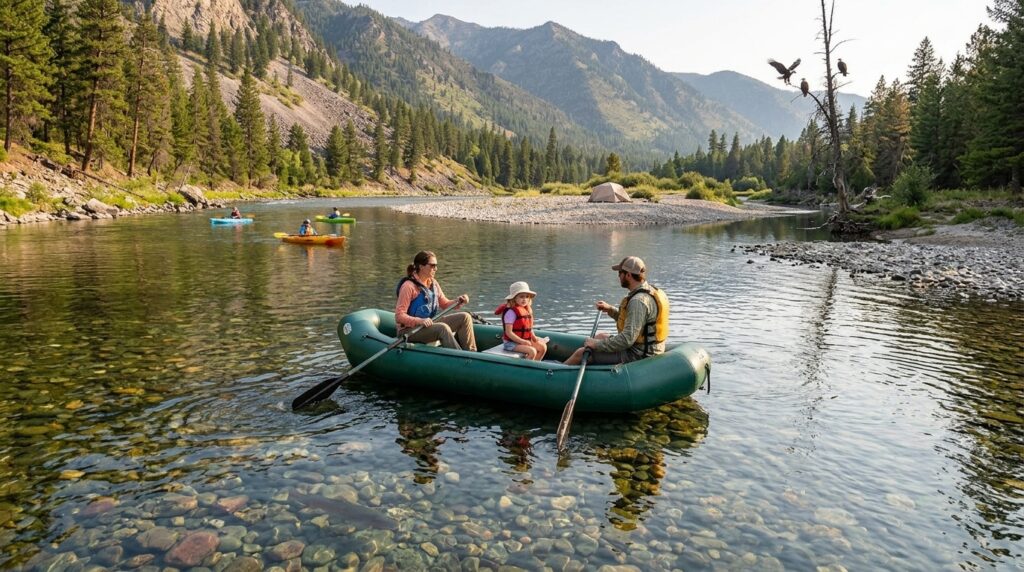
Not every stretch of the Middle Fork demands whitewater skills. The lower sections near West Glacier flatten out into slow-moving pools and gentle riffles, ideal for inflatable kayaks, canoes, or a raft loaded with a cooler and camp chairs. This is where families with young kids or anyone looking for a scenic float rather than an adrenaline hit tends to gather. Bald eagles and osprey are common sightings along this stretch, particularly in the early morning before boat traffic picks up.
Book a Multi-Day Wilderness Trip
For a deeper look at the river, outfitters run multi-day trips that combine whitewater, wilderness camping, and access to sections of the Great Bear Wilderness that most visitors never see. Companies offering guided middle fork flathead river rafting trips typically supply all camping gear, meals, and safety equipment, so the main job is showing up ready to be on the water. These trips usually run three to four days and cover 20 to 30 miles, with camps set on gravel bars beneath peaks that have no maintained trails leading to them. It’s one of the few ways to experience the Bob Marshall–Great Bear complex without carrying a 50-pound pack.
Spot Wildlife from the Water
The river corridor supports a dense population of wildlife that’s often easier to see from a boat than from a trail. Mountain goats work their way along the cliffs near the canyon section, black bears forage on the hillsides above the lower river, and moose wade in the shallows near oxbow bends. Because sound carries differently over water, animals often don’t notice a quiet raft until it’s fairly close, giving paddlers a longer window to watch before the animal moves off. Bring binoculars and keep a telephoto lens handy if photography is part of the plan.
Camp Along the Gravel Bars
Dispersed camping on the river’s gravel bars is legal in many sections and offers a no-frills way to spend a night beside the water without hiking in. These bars shift year to year with spring flooding, so the same spot rarely looks the same twice. Fires are often restricted during dry summer months, so check current regulations with the Flathead National Forest before heading out. A tent pitched on river sand with the sound of moving water all night is reason enough to plan an overnight even on a short trip.
Take the Scenic Train Route Alongside It
Amtrak’s Empire Builder runs directly alongside long stretches of the Middle Fork between Essex and West Glacier, offering a rare chance to see the river’s canyon sections without getting in a boat at all. The route includes views of the Goat Lick Overlook, where mountain goats gather to lick mineral deposits from the cliffside, visible right from the train windows. It’s a practical option for anyone traveling without a vehicle or looking to preview the river before booking a rafting trip.
The Middle Fork rewards visitors who treat it as more than a scenic backdrop. Pick one or two of these activities based on the season and the group’s skill level, then build the rest of the trip around them rather than trying to squeeze everything into a single visit.

Monica Costa founded London Mums in September 2006 after her son Diego’s birth together with a group of mothers who felt the need of meeting up regularly to share the challenges and joys of motherhood in metropolitan and multicultural London. London Mums is the FREE and independent peer support group for mums and mumpreneurs based in London https://www.londonmumsmagazine.com and you can connect on Twitter @londonmums
