

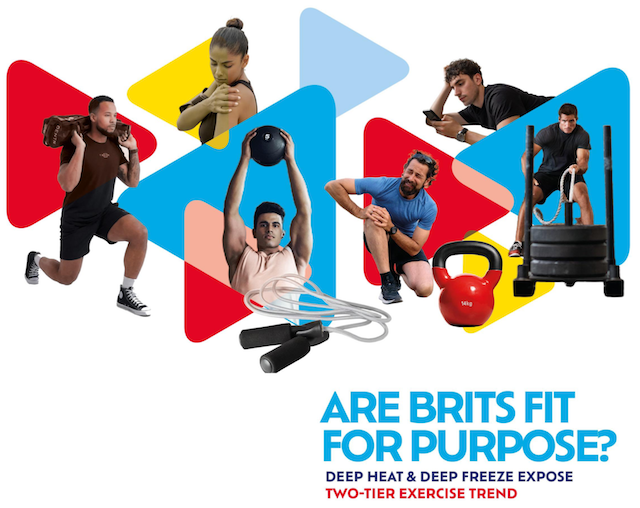
I spent Tuesday 17th November 2026 at a conference that made me stop and think about my own body, my fitness routine, and the way we approach movement as a nation. The focus was the brand new report ‘Are Brits Fit For Purpose?’ from Deep Heat and Deep Freeze, and the findings are, quite frankly, a bit of a wake-up call.
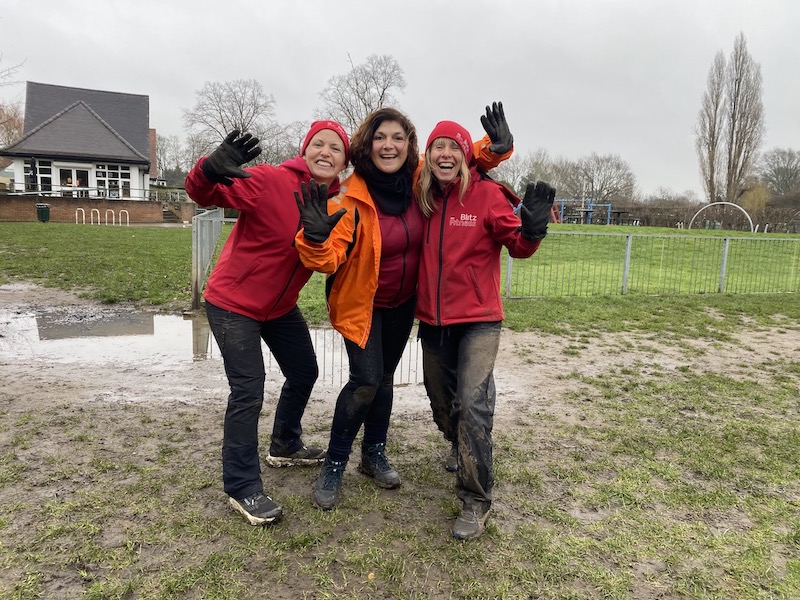
As you know, I’m a woman who literally fell over twice before I realised I needed to strengthen my core and my muscles post-menopause. I found my tribe with the Menopausal Viking Ladies (this is how I call them) at Blitz Fitness in Palewell Park. But what this report has revealed is that there is a worrying, and growing, divide in how we move as a nation.
The number of Brits who exercise every day has stayed the same at 23%. But those of us working out two to three times a week has dropped sharply from 50% to 42%. Worse still, the number of adults who rarely or never exercise has jumped from 14% to a massive 23%.
Why are we moving less? It boils down to one major barrier: pain. A staggering 78% of Brits have been burdened by pain at some point. Back pain (44%), neck and shoulders (32%), knees (24%), and legs (18%).
And here is the part that really shocked me: this isn’t just an “older person” problem. Muscle pain is problematic across all age groups. In fact, 65% of 25 to 34-year-olds report issues.
The vicious cycle (and why we need to keep moving)
The experts at the conference, including physiotherapists Clara Kervyn and Sammy Margo, were clear: discomfort can become a vicious cycle. You move less because you hurt, but moving less makes you weaker, which leads to more pain.
We are also seeing a rise in “extreme fitness” (1 in 5 adults have taken part in an extreme competition), with 67% of those doing intense exercise like Hyrox or CrossFit reporting pain. Meanwhile, the rest of us are gravitating towards low-impact activities like swimming and Pilates to manage our aches and pains.
But here is the crucial takeaway: pain should not be a reason to stop moving. It’s a reason to adapt, manage the pain, and find a way to keep going.
Questions, answered (from the conference floor)
“Should we learn how to run? I see people pounding the pavement.”
Not everyone needs to run, but if you want to, the key is running softly. A heavy, pounding gait sends shockwaves through your joints. Experts suggest cues like “run lightly” or “run softly,” which naturally shorten your stride and increase your cadence, reducing impact forces. Try to land with your foot closer to your body, not way out in front, and avoid overstriding.
“Would you recommend Nordic walking poles?”
The evidence is actually quite mixed. Some studies show they don’t significantly reduce the load on the knee joint compared to normal walking. However, they do improve balance and stability, which is a huge plus. They also add an upper-body workout and can make you feel lighter on your feet, which is brilliant for anyone with joint concerns.
“What about PE in schools? That’s where the love or hatred of exercise begins.”
Hear, hear. The NHS guidelines state that children aged 5 to 18 should aim for an average of at least 60 minutes of moderate-to-vigorous activity a day. The key is variety. It’s not just about football and netball. Gymnastics, martial arts, and even supervised resistance exercises with light weights are recommended. The goal should be helping children find something they actually enjoy.
“The dementia point is scary. I see it in my own family, the movers stay sharp, the sitters decline.”
Your observation is backed by science. Regular movement improves blood flow to the brain and supports the health of the hippocampus. Even as little as 3,800 steps a day has been linked to a 25% reduced risk of dementia over seven years. So, keep moving, mums.
“What are your views on balance training? And hand strength?”
Balance training is non-negotiable. Aim for 60 seconds on each leg (holding onto a worktop for support if needed), building up gradually. Hand grip strength is just as important. A major review of 94 studies found that people with the highest grip strength had a significantly lower risk of cardiovascular disease, disability, cognitive decline, and dementia. Carrying the shopping bags counts!
“Does walking affect knees and ankles as much as running?”
Running places higher loads on the joints, but walking isn’t “free.” The knee flexion moment can actually be higher in walking than in running due to the larger knee extension involved. The takeaway? Both are brilliant, but good form is what protects your joints.
“If we are new to weight training, what’s a good beginner at-home kit?”
Keep it simple. An exercise mat, a set of resistance bands, and a pair of dumbbells (adjustable ones are great if space is tight). Bands are inexpensive and versatile; dumbbells allow you to progressively build strength. You do not need a garage full of equipment.
“Can these products help prevent the need for NHS physio? The wait is 9 months where I am.”
That wait is frustratingly common. The right home equipment, like resistance bands for gentle strengthening, can absolutely help you maintain mobility and build strength while you wait. It’s also worth asking about self-referral; many areas allow you to access NHS physio directly without seeing a GP first. If you can afford it, a one-off private assessment (typically £45–£120) can give you a tailored home programme while you wait.
“I use Deep Heat before a long car journey for my lower back. Is that okay?”
Absolutely. Deep Heat and similar rubs contain ingredients like methyl salicylate and menthol, which provide targeted, temporary relief for muscular aches and lower back pain by stimulating blood flow and creating a warming sensation. It’s a practical tool for managing stiffness on long journeys. Just follow the instructions on the tube and avoid using it on broken skin.
“My wrists are terrible – carpal tunnel, can’t bear much weight. How can I strengthen them?”
First, listen to your body. The goal isn’t to load heavy weights through a painful joint. Try tendon gliding exercises, prayer stretches, and gentle wrist extensions and flexions. Resistance bands can be a brilliant alternative to weights, as you can use very light tension and control the movement through a comfortable range. If the numbness is persistent, do get it assessed.
What’s in my gym bag now?
The conference also introduced me to the new Deep Heat Rapid Gel, which starts working in just 60 seconds to soothe tense, tired muscles. I also love the Deep Heat Magnesium Massage Balm for post-workout aches, and the Deep Freeze Muscle Rescue Cold Spray for an instant burst of targeted cooling relief after exercise (it’s brilliant for hard-to-reach areas like the back and shoulders).
Even elite athletes swear by this stuff. Sprinter Amy Hunt, who won three gold medals at the European Athletics Championships, admitted she ‘slathered’ her legs in Deep Heat during the Commonwealth Games. If it’s good enough for an Olympic sprinter, it’s good enough for my Viking Ladies and me.
The main takeaway from the conference is clear: we need to keep moving, whatever our age, and whatever our aches and pains. As Sammy Margo said: “Caring for muscles and joints allows you to keep moving comfortably, whether that be with extreme fitness or gentle walking.”
So, whether you are a Hyrox warrior, a park walker, or a Menopausal Viking like me, let’s keep moving. Our bodies (and our brains) will thank us for it.

Monica Costa founded London Mums in September 2006 after her son Diego’s birth together with a group of mothers who felt the need of meeting up regularly to share the challenges and joys of motherhood in metropolitan and multicultural London. London Mums is the FREE and independent peer support group for mums and mumpreneurs based in London https://www.londonmumsmagazine.com and you can connect on Twitter @londonmums
