

Choosing the right stainless steel handrails for deck glass balustrades is not only about appearance. The handrail affects how comfortable the balustrade feels in use, how well it suits the style of the decking, and how neatly the whole system comes together.
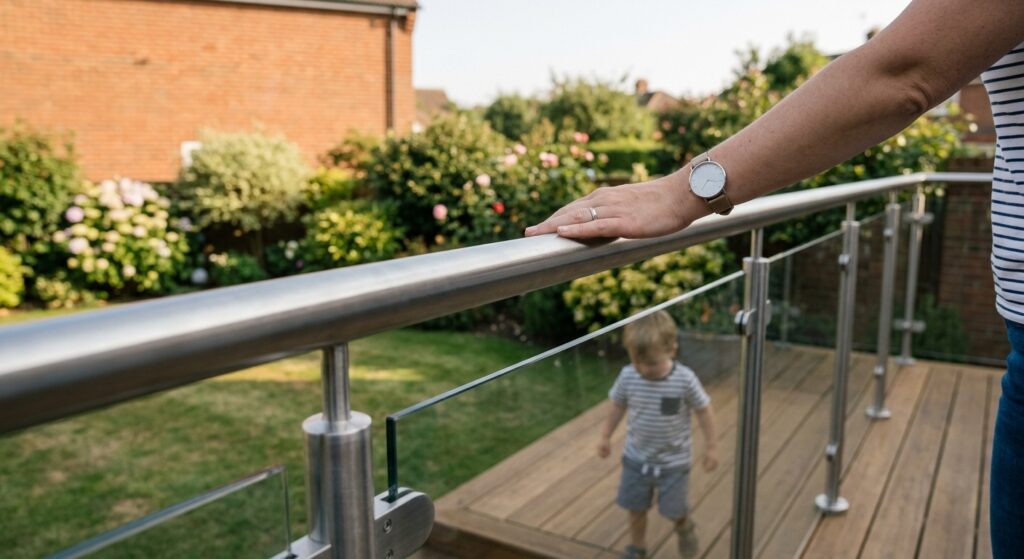
That decision can be harder than it first appears. Some homeowners want the lightest possible look so the view stays open. Others need a sturdier top rail for family use, busy garden spaces or raised decks where a stronger visual edge feels reassuring. Then there is the question of finish, profile and compatibility with the glass system itself.
A good handrail should work with the glass rather than fight against it. Round profiles tend to soften the look, while square designs feel more architectural. Some setups work best with a slotted top rail, while others benefit from a more complete stainless steel handrail system with connectors, corners or matching stair sections.
The guide below focuses on stainless steel handrail styles that are available from Balustrade Superstore and commonly used alongside deck glass balustrades. Rather than treating every option as interchangeable, this ranking looks at where each type fits best, what it adds to the finished deck, and who it is most suitable for.
Comparison Table
| Rank | Name | Best For | Key Features |
| 1 | Round Slotted Stainless Steel Handrail | Most deck glass balustrades | Clean look, comfortable grip, works well with modern and traditional decking |
| 2 | Square Slotted Stainless Steel Handrail | Contemporary decks | Sharper lines, modern appearance, strong visual match for angular decking layouts |
| 3 | Stainless Steel Capping Rail | Minimalist glass designs | Discreet top finish, helps retain a lighter look, good for simple glass runs |
| 4 | Stainless Steel Handrail with Inline Joiners | Long straight deck runs | Easier continuity across longer spans, tidy transitions, consistent finish |
| 5 | Stainless Steel Handrail with Corner Fittings | L-shaped and wraparound decks | Designed for changes in direction, cleaner corner detailing, better finished look |
| 6 | Post-Mounted Stainless Steel Handrail System | Framed glass balustrades | Pairs well with stainless posts, practical for family decks, cohesive appearance |
| 7 | Matching Stainless Steel Stair Handrail | Decks with access steps | Creates a consistent look from landing to stairs, practical for safety and usability |
1. Round Slotted Stainless Steel Handrail
For many deck glass balustrades, a round slotted stainless steel handrail is the easiest recommendation to make. It gives you the polished look people want from glass balustrades without making the installation feel too hard-edged. On outdoor decks, that balance matters. Glass can already look sleek and reflective, so a rounded stainless steel top rail helps make the design feel finished rather than clinical.
This type of handrail is especially useful if you want something versatile. It sits comfortably in both newer garden schemes and more traditional decking projects. If your deck is attached to a brick house, timber-clad extension or rendered garden room, a round profile generally blends in more easily than a sharply angular alternative.
Another advantage is comfort. If the handrail will be used regularly by children, older family members or guests moving around the deck, a round stainless steel handrail tends to feel more natural in the hand. That may sound like a small detail, but it makes a difference on a raised deck or along steps and edge sections.
Balustrade Superstore offers round stainless steel handrail options for glass balustrade systems, which makes this a practical starting point for most buyers looking for a reliable and widely compatible style.
Benefits
- Rounded profile for a softer finish
- Slotted design suited to glass balustrade use
- Works with a wide range of decking styles
- Comfortable to grip in day-to-day use
- Good all-round option for first-time buyers
Why Choose It
Choose a round slotted stainless steel handrail if you want the safest all-purpose option. It is usually the easiest style to live with visually, it suits most deck glass balustrades, and it avoids making the space look overly industrial. If you are unsure where to start, this is often the most dependable choice.
2. Square Slotted Stainless Steel Handrail
If your priority is a crisp, contemporary finish, a square slotted stainless steel handrail is often the better fit. This style works particularly well with modern deck glass balustrades where the layout already includes straight lines, large-format paving, composite decking and minimal planting schemes.
Square profiles create a stronger design statement than round ones. Instead of softening the glass, they emphasise structure. That makes them a good choice for newer homes, roof terraces, raised patios and garden decks where you want the balustrade to look deliberate and architectural rather than purely functional.
They are also worth considering if the rest of the project already features square or rectangular details. For example, if your decking subframe trim, posts, lighting housings or outdoor furniture use similar geometry, a square stainless steel handrail can make the whole outdoor area feel more coordinated.
Benefits
- Modern square profile
- Strong visual match for contemporary outdoor spaces
- Slotted format suited to glass panels
- Works well with angular deck layouts
- Creates a more structured overall appearance
Why Choose It
Choose a square stainless steel handrail if style is high on your list and you want a sharper, more design-led result. It is not always the warmest-looking option, but it can be the most effective when the deck is part of a modern extension or a neatly detailed garden project.
3. Stainless Steel Capping Rail
A stainless steel capping rail is a smart option when you want the glass to remain the star of the show. It gives the top of the panel a neat, finished edge without adding too much visual weight. For many homeowners, this is the middle ground between a completely minimal frameless look and a more obvious handrail-led design.
This type of top rail works well on decks where the view matters. If the balustrade overlooks a garden, countryside view or water, a bulky handrail can feel intrusive. A slimmer stainless steel capping rail helps preserve that open outlook while still making the glass feel properly resolved at the top edge.
It can also be a practical choice for buyers who want a polished finish but do not necessarily need a larger, more dominant handrail. On smaller decks, balconies and seating platforms, keeping the upper line of the balustrade lighter often improves the proportions of the whole space.
Benefits
- Slimmer top finish for glass panels
- Keeps the look light and open
- Well suited to view-focused decking areas
- Adds a finished edge without heavy framing
- Good choice for smaller or simpler deck layouts
Why Choose It
Choose a stainless steel capping rail if you want to retain as much of the open-glass appearance as possible. It is especially appealing when the deck faces a view or when a heavier handrail would visually crowd the design.
4. Stainless Steel Handrail with Inline Joiners
Long deck runs often need more than a standard handrail length. That is where a stainless steel handrail with inline joiners comes into its own. Instead of making the run look broken up or improvised, joiners help create a continuous line across a larger section of glass balustrade.
This matters more than people expect. On a wide deck, every interruption becomes noticeable. A poorly planned top rail can make the balustrade look pieced together, even when the glass itself is high quality. Inline joiners help keep the visual rhythm clean and consistent.
They are especially useful on entertaining decks, large rear garden platforms and commercial-style outdoor spaces where the balustrade runs across a broad edge. If you are building a deck around patio doors, bifolds or a long façade, continuity in the handrail often improves the final result.
Benefits
- Suitable for extended straight runs
- Helps create continuity across multiple sections
- Cleaner appearance than mismatched cut sections
- Useful for wider decks and entertaining spaces
- Pairs well with larger glass balustrade layouts
Why Choose It
Choose this style if your deck is long enough that standard rail lengths will not cover it neatly. A handrail system with inline joiners helps the balustrade look properly planned rather than assembled from whatever lengths happened to fit.
5. Stainless Steel Handrail with Corner Fittings
Not every deck is a simple straight line. Many garden decks wrap around extensions, step out around patio areas or turn at one or more corners. In those cases, stainless steel handrails with dedicated corner fittings are often the best solution.
Using the correct corner components does more than make installation easier. It also improves the finished appearance. Corners are where a balustrade can quickly start to look awkward if the transitions are not handled well. Purpose-made corner fittings keep the line of the handrail deliberate and tidy.
This option suits L-shaped decks, corner viewing platforms, split-level spaces and outdoor seating areas with defined zones. If your glass balustrade needs to change direction, planning the top rail properly is just as important as choosing the glass and posts.
Benefits
- Designed for directional changes
- Ideal for L-shaped or wraparound deck layouts
- Improves corner detailing
- Helps maintain a consistent top line
- Useful for more complex balustrade designs
Why Choose It
Choose a stainless steel handrail with corner fittings if your deck includes turns or multiple edges. It will usually look more professional, fit more cleanly and save you from trying to force a straight-run solution into a more complicated shape.
6. Post-Mounted Stainless Steel Handrail System
If your deck glass balustrade uses stainless steel posts rather than a more minimal frameless setup, a post-mounted stainless steel handrail system is often the most coherent pairing. It creates a fully integrated look, with the posts, rail and glass all speaking the same design language.
This kind of system is a good fit for family decks and practical garden spaces. While it still looks modern, it tends to feel more robust and visually grounded than a lighter capping rail arrangement. That can be reassuring on raised decks, perimeter edges and busier outdoor areas where the balustrade sees regular use.
It is also useful if consistency matters more to you than visual minimalism. Matching stainless steel posts and handrails usually make it easier to achieve a coordinated finish across the whole installation, especially if you are working from one supplier and want compatible components.
Benefits
- Pairs neatly with stainless steel balustrade posts
- Practical for framed glass systems
- Good for family and high-use decks
- More visually robust than ultra-minimal top rail options
- Easier to coordinate across a full balustrade system
Why Choose It
Choose a post-mounted stainless steel handrail system if you prefer a more structured and practical deck balustrade. It is often the better route when durability, consistency and ease of matching matter more than achieving the lightest possible look.
7. Matching Stainless Steel Stair Handrail
If your deck includes steps down to the garden, patio or another level, a matching stainless steel stair handrail deserves serious consideration. Many projects get the main deck edge right and then treat the stair section as an afterthought, which can make the overall installation feel disjointed.
A handrail that matches the deck glass balustrade helps create visual continuity from landing to staircase. That matters aesthetically, but it is also important from a usability point of view. People notice immediately when the stairs feel less secure or less considered than the rest of the deck.
This type of handrail is especially valuable on raised decks, side-return steps, sloped garden layouts and homes where older relatives or children use the outdoor space regularly. A coordinated stair handrail helps turn the balustrade into a complete system rather than just an edge treatment.
Balustrade Superstore offers stainless steel handrail components that can be used to keep stair and deck sections aligned in finish and overall appearance.
Benefits
- Matches the deck balustrade for a consistent look
- Useful for decks with steps or split levels
- Improves day-to-day practicality
- Helps the whole installation feel complete
- Suitable for family homes and raised deck designs
Why Choose It
Choose a matching stainless steel stair handrail if your deck has level changes. It is one of the simplest ways to make the whole project look more joined-up, and it adds a practical benefit at the same time.
What to Consider Before Choosing Stainless Steel Handrails for Deck Glass Balustrades
The first thing to think about is the type of glass balustrade you are building. A framed system with stainless steel posts will usually suit a different handrail style from a more open glass design. If you already know whether you are using posts, clamps, channels or a top-mounted arrangement, that will narrow your handrail choices quickly. It is always easier to choose the rail once the basic balustrade structure is clear.
Profile is the next big decision. Round stainless steel handrails are often the safer option because they look balanced in more settings and tend to feel more comfortable in the hand. Square profiles are more design-led and often look best on modern decks with sharper detailing. Neither is automatically better. The right choice depends on whether you want the balustrade to soften the deck or define it.
You should also think carefully about how much visual weight you want at the top of the glass. A capping rail or slimmer top rail keeps the view more open, while a fuller handrail creates a stronger edge and a more substantial finished look. On a small deck, a heavy rail can dominate. On a large raised deck, a more defined top line can actually improve the sense of balance.
Compatibility matters just as much as appearance. Before ordering from Balustrade Superstore, check the current product details for panel thickness, fitting types, joining pieces, end caps and any corner or stair components you may need. A handrail that looks right in isolation may not be the best fit for your exact glass setup if the connectors or support pieces do not match.
Outdoor exposure is another practical point. If the deck is in an exposed garden or close to the coast, the right stainless steel specification and maintenance routine become more important. Even a good-looking handrail will disappoint if it is not suited to the environment or if you are not prepared for basic cleaning and upkeep.
One common mistake is only buying for the straight run. Many deck balustrade projects also need corners, end caps, joiners or matching stair sections. Missing those details can delay installation and lead to a less polished finish. It is worth mapping the full route of the handrail before placing an order, especially on larger or more complex decks.
Another mistake is choosing purely by appearance and ignoring how the rail will be used. A slim rail can look excellent, but if the deck is heavily used and the top rail will regularly be held, a more substantial handrail may be the smarter option. The best stainless steel handrails are the ones that suit both the design and the way the deck functions in real life.
Frequently Asked Questions
What type of stainless steel handrail works best with deck glass balustrades?
For most homes, a round slotted stainless steel handrail is the easiest all-round choice. It suits a wide range of deck styles, feels comfortable to use, and works well with glass without looking too heavy.
Do deck glass balustrades need a top rail?
Not always, but many installations benefit from one. A top rail or capping rail can improve the finished look, add a more defined edge, and make the balustrade feel more practical in everyday use. The right choice depends on the system design and the look you want.
Is a round or square stainless steel handrail better?
A round handrail is usually better for versatility and comfort. A square handrail is better if you want a sharper, more contemporary appearance. The decision often comes down to the style of the property and deck.
Can I add a stainless steel handrail to an existing glass balustrade?
In many cases, yes, but it depends on the glass system, the panel thickness and the fittings already in place. It is important to check compatibility before ordering any new handrail components.
What should I check before ordering from Balustrade Superstore?
Check the current product specifications for profile, finish, fixing method, compatibility with your glass setup, and whether you also need joiners, corners, end caps or stair components. Planning the full balustrade route in advance usually prevents ordering problems.
Is stainless steel a good choice for outdoor deck handrails?
Yes, stainless steel is a popular choice for outdoor handrails because it offers a clean appearance, works well with glass, and suits modern decking projects. As with any outdoor material, it still needs the right specification for the location and sensible maintenance over time.

Monica Costa founded London Mums in September 2006 after her son Diego’s birth together with a group of mothers who felt the need of meeting up regularly to share the challenges and joys of motherhood in metropolitan and multicultural London. London Mums is the FREE and independent peer support group for mums and mumpreneurs based in London https://www.londonmumsmagazine.com and you can connect on Twitter @londonmums
