

Somewhere in your house, there’s probably a watch that isn’t yours.
Maybe it arrived in a small brown box after a funeral; a father’s Omega Constellation from 1974, scratched crystal, movement that hasn’t run since a battery was changed in 2019.
Maybe it’s the Speedmaster your husband wore every day for a decade, retired to a drawer when the strap frayed and he never got round to replacing it. Maybe it’s a Ladymatic in a satin-lined case from your grandmother, unworn for so long that you’re not entirely sure it still works, and never entirely sure whether it’s supposed to be for you or eventually for your daughter.
Every London mum I know has at least one of these. Almost none of us know what to actually do with them.
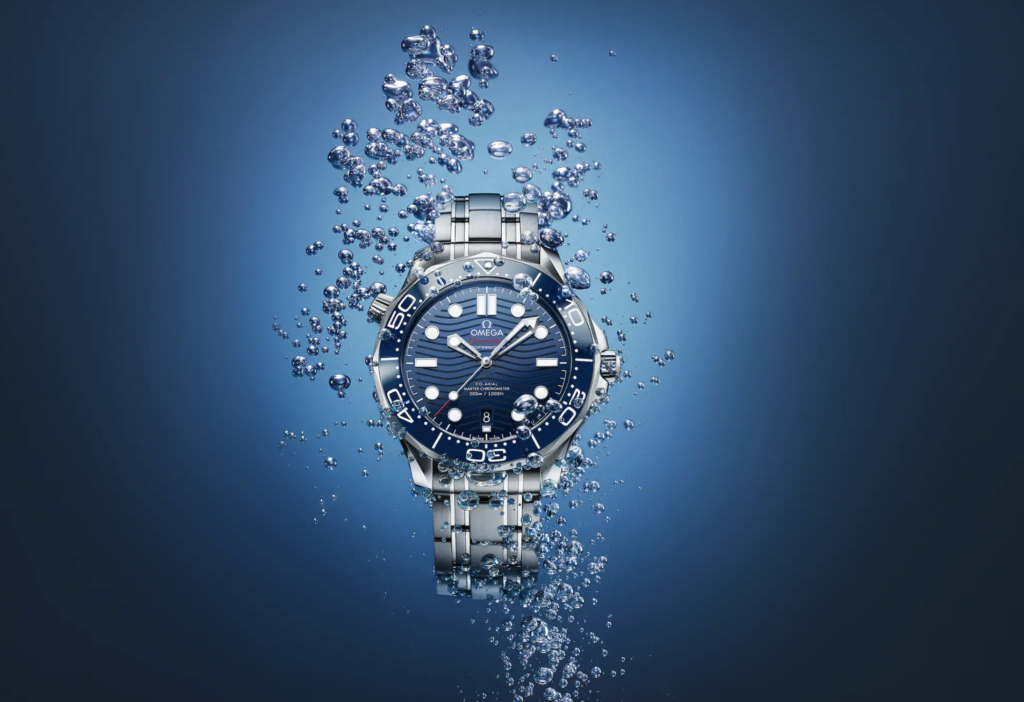
This is a practical guide, written after talking to the London watchmakers who see these pieces daily. It’s focused on Omegas particularly (the brand more Britons inherit than any other luxury Swiss watchmaker) but the logic works for most inherited watches.
It covers what your options actually are, in language that isn’t watchmaker-jargon, and points you toward the people in London who can help you decide.
Why Omegas end up in drawers
The pattern is remarkably consistent. A parent or grandparent wore the watch daily for decades. When they stopped wearing it, it went into a drawer because it needed a service and no one got round to organising one.
A few years later it was inherited. Whoever received it added it to their own drawer, uncertain whether it worked, uncertain whether wearing it might damage it, and largely unsure where in London you actually take an Omega for service.
Multiply that by tens of thousands of households across the capital and you have (quite literally) millions of pounds’ worth of vintage Omega movements stopped in bedside drawers from Chelsea to Muswell Hill.
The good news is that most of these watches can be brought back to daily wearability. Omega movements are among the most robust in Swiss watchmaking; a Constellation from 1968 that has sat unworn for eight years is very rarely mechanically dead.
It is usually just seized with dried lubricant, waiting for a proper service. The process of finding out is more straightforward than most people expect and it doesn’t require a trip into central London with a cared-for young child in tow.
The three questions to ask before you do anything
Before you take a watch anywhere, ask yourself three things:
1. Do you actually want to wear it? Some inherited watches are pieces you’ll wear daily. Others feel more meaningful kept in their box, worn on occasion, or preserved for a specific child on a specific milestone. There’s no wrong answer here but knowing which category the watch falls into shapes what you do next.
2. Do you know when it was last serviced? If it’s been more than five years and for most inherited pieces it will have been much longer — the movement will need work before it’s safe to wear regularly. Old lubricants dry out; over time, running a mechanical watch on dried oils damages the movement.
3. Are you sure it’s authentic? Omega has produced watches for over a century, and vintage examples occasionally turn out to be replica, redialed, or otherwise not-quite-what-they-appear. A proper assessment tells you.
If the answer to the first question is uncertain, that’s fine you don’t have to decide today. But the second and third are worth answering before you incorporate the watch into a daily rotation.
Getting the watch properly assessed in London
The most important thing to know is that not every watchmaker in London can properly service an Omega. Modern Omega movements (the Co-Axial escapements introduced from the late 1990s) require specialist tools and, more critically, factory parts that Swatch Group (Omega’s parent company) only distributes to manufacturer-accredited service centres.
A high street jeweller can replace a battery and might do a rough external clean, but a full mechanical service needs the accreditation.
There are a small number of workshops in London that hold this accreditation. SwissMade, a London Omega service centre based in Hatton Garden, has held it for four decades and handles both modern and vintage Omegas for private clients and for many of the major UK retailers you’d recognise. (Goldsmiths, Watches of Switzerland, H. Samuel and several other high street names quietly send their servicing work there most customers who buy an Omega at a Bond Street boutique have their watch serviced in Hatton Garden without ever knowing it.)
The practical implication for you: an accredited workshop will provide a written assessment before any work starts, use factory-supplied parts, include water-resistance testing, and give you a two-year warranty on the completed service. A non-accredited watchmaker cannot promise any of that on an Omega.
You don’t need to go in person. Most accredited workshops offer a free insured postal service they send you a padded box with pre-paid, tracked postage, you package the watch, and it’s fully insured against loss or damage in transit (typically up to £25,000).
Progress is tracked through an online portal. For most London mums with young children and no easy way to get to Hatton Garden during working hours, this is the sensible route. The watch arrives back via insured next-day delivery when it’s ready.
If the watch is a keeper, vintage restoration
If the watch is a piece of family history you plan to keep, either to wear yourself or to eventually pass on, there’s one principle to understand about vintage restoration that goes against most people’s instinct.
Don’t ask for it to be made to look new.
The value of a vintage Omega (both sentimental and financial) sits substantially in its originality. Original dial (even if lightly aged), original hands, original crown, original case (unpolished or minimally polished).
Vintage watch dealers and collectors will pay significantly more for a piece with its patina intact than for one that has been over-restored to look like it just came out of a display case. The best vintage watchmakers actively turn work down when a client’s requested restoration would damage the piece’s originality.
If you’re commissioning restoration work, the phrase to use is conservation-first. The workshop’s vintage restoration department will work with you on which parts of the movement need attention (they almost all do), which cosmetic elements should be left alone (usually most of them), and what the timeline and cost look like.
Vintage restoration is priced on application because it varies significantly with parts availability and the extent of work, but a written quote should be given before anything starts, no surprises.
If it’s for the children one day: wear it or preserve it?
This is the question I’ve heard most from other London mums. If you’ve inherited an Omega you know you’ll eventually give to a daughter or son, do you wear it in the meantime? Or preserve it untouched?
The honest answer, from every watchmaker I’ve asked, is: wear it, gently.
Watches are made to be worn. A mechanical watch that sits in a drawer for decades is more likely to seize up, develop moisture issues, and require expensive restoration than one worn a few times a month and serviced at recommended intervals.
Wearing it also lets you build the small ritual of it, the choice to wear it on particular days, the way it feels on your wrist, the story you can tell your child when the time eventually comes to hand it on.
The exception is a genuinely rare collector piece where untouched-preserved condition materially affects value. If you have, for example, an unusually early Speedmaster reference in exceptional condition, a collector’s opinion is worth getting before you incorporate it into daily wear.
For 95% of inherited Omegas, though, the answer is straightforward: get it serviced, wear it occasionally, and let it be part of your life until it’s part of your child’s.
If you’re thinking of selling, what to know first
Some inherited watches are pieces you don’t have a personal connection to and would rather realise the value from. That’s completely reasonable and often the right decision.
Before you sell:
- Have the watch assessed by an accredited workshop. A written condition report from a Swatch Group-accredited centre significantly increases what a dealer will pay. It removes uncertainty about mechanical condition, authenticity and originality.
- Locate any original documentation. Original box, papers, receipt, service records, warranty cards — all add material value. A vintage Omega with full “box and papers” typically sells for 30–50% more than the same watch without them.
- Get more than one valuation. Reputable vintage watch dealers in London include the pre-owned divisions of major retailers, specialist independents, and (for higher-value pieces) auction houses like Bonhams, Fellows and Sotheby’s.
- Don’t polish it before selling. Same principle as vintage restoration: a polished vintage case reduces value, sometimes substantially.
The everyday inherited watch
Not every inherited Omega is a rare vintage piece needing specialist restoration. Many are relatively recent pieces (Seamasters from the 2000s, De Villes from the 1990s, Constellations from the last twenty years) that simply need a routine service to be brought back into daily wearability.
For these, a full Omega service starts at £175 and takes four to six weeks. Basic maintenance (cleaning, lubrication, seal replacement without full disassembly) starts at £80. Battery replacement for quartz references is £50 and completed same-day.
Whichever category your watch falls into, the process starts the same way: get it to someone accredited to work on it, and let them tell you honestly what it needs.
What to do this week
If you have a watch in a drawer that has been quietly weighing on you for years, the sensible next step is not to make any decision about it. It’s to send it in for an assessment.
Assessments at an accredited workshop are typically free, you don’t commit to any work until you’ve had a written estimate. The postal service handles the logistics. Two weeks after you post it, you’ll know: what it is, what condition it’s in, whether it’s authentic, whether it’s worth keeping, and what the options are for what happens next.
That’s usually enough to move it from “vaguely weighing on me” to “something I’ve decided about” and that shift, in my experience, is one of the small satisfying acts of adult life.
The watch stops being a slightly weighty question mark. It becomes yours to wear. Yours to pass on. Or yours to convert into something practical for the household.
Any of those beats a drawer.

Monica Costa founded London Mums in September 2006 after her son Diego’s birth together with a group of mothers who felt the need of meeting up regularly to share the challenges and joys of motherhood in metropolitan and multicultural London. London Mums is the FREE and independent peer support group for mums and mumpreneurs based in London https://www.londonmumsmagazine.com and you can connect on Twitter @londonmums
