

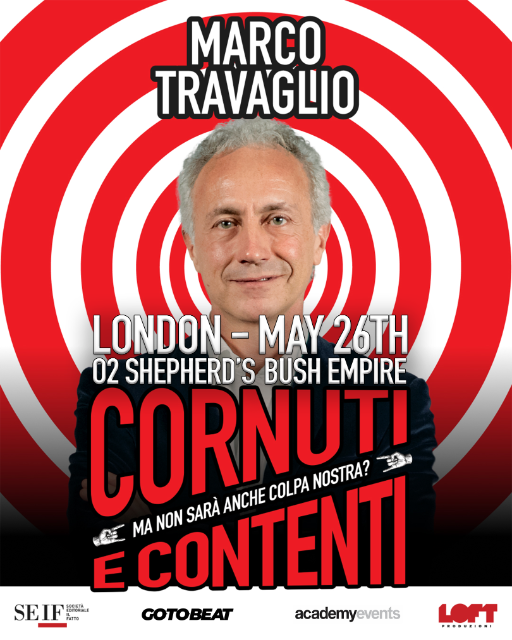
From Italy to London: a one-on-one interview with the editor of Il Fatto Quotidiano, Marco Travaglio, bringing “Cornuti e contenti” to the O2 Shepherd’s Bush Empire. A few days before the show, I caught up with him by phone. I confess: at first I felt a little intimidated. Then I found him wonderfully kind and interesting. He even told me about his passion for karaoke.
When I learned that I would be interviewing Marco Travaglio, I have to admit I felt a certain awe. For anyone who works in independent journalism in Italy, he is something of a highlander of the press: tireless, sharp, and for decades at the front line without ever bending. I have always read him, always followed him. And the thought of speaking to him on the phone made me a bit nervous.
This article is available in Italian at the bottom of this page. – L’articolo è disponibile in italiano in fondo a questa pagina.
Then I dialled the number, he answered, and after ten seconds I was already at ease. Because Travaglio – surprise – is also a normal person: funny, kind, approachable. And when I asked him what he does in his free time (to discover a more human side, away from being the editor of Il Fatto), he told me about tennis, karaoke with friends, restaurants where you can sing, and TV series.
Then, during our chat, I brought up a personal memory: in 2012, Travaglio sang “L’era del cinghiale bianco” with Franco Battiato at the Foro Italico in Rome. An image that had always stayed with me – tender, almost surreal. I mentioned it to him. He smiled (you could hear it in his voice) and told me it had been one of the privileges of his life. That, for me, was the real “behind the scenes” of Marco Travaglio.
But let’s go in order. A few days before his London show “Cornuti e contenti – Ma non sarà anche colpa nostra?” (taking place on 26 May at the O2 Shepherd’s Bush Empire), I interviewed him for London Mums Magazine. Here’s what we talked about.
“London is Italy’s fifth city. But expats aren’t clearer-sighted – just further away”
Monica Costa: You’re bringing your show to London, which is effectively Italy’s fifth city. Do you think Italians abroad see Italy more clearly, or have they built a new identity by putting distance between themselves and the country they left?
Marco Travaglio: I think Italians abroad are always very attentive. But I have to say that my London audience isn’t mostly made up of expats – it’s mostly Italians from Italy. Because those who live abroad don’t come back often, so their chances are limited. And they’re right to come and see me. But I don’t think they’re clearer-sighted. If anything, they’re just further away.
“Theatre gives you the full meal. TV can only give you the starter”
Monica Costa: Today, certain things seem to be said better on stage than on television. Why is that? And what can theatre do that TV no longer can?
Marco Travaglio: It allows you to go deeper. On TV you can only serve the starter. The full meal you can only give in the theatre.
(Short, dry, and perfectly effective – classic Travaglio style.)
“From VIP gossip to live autopsies: Italian TV has become a permanent media trial”
Monica Costa: Today, Italian television has replaced gossip about celebrities with live autopsy-style coverage of murder cases. The Garlasco case even made it into The Guardian. You’ve always analysed the media system: when did this change happen, and why do you think the Italian public has developed this hunger for true crime as entertainment?
Marco Travaglio: It’s a classic preliminary hearing. In the Garlasco case, the murder weapon was missing – the gun – so the trial was built on a mosaic of clues. And clues, as we know, lend themselves to doubts and counter-arguments. But when there’s a confession, there shouldn’t be any doubts. Yet the frenzy before Garlasco was already unleashed during the Erba case, where Rosa Bazzi and Olindo Romano – separately, without any chance to coordinate – confessed to the murders. And yet a whole crowd of fantasists, including some magistrates, continued to have doubts.
Unfortunately, the ugly side of social media is that just as people started improvising as virologists, political scientists, geopolitics experts, military strategists, now they’re also improvising as magistrates and investigators. They read fragments of documents without the legal training to evaluate them, and then they sit in judgment on the work of forensic scientists and magistrates. Who knows what they think will come out of the Garlasco case, when practically nothing has come out at all.
“The Fatto model – zero state funding – isn’t a luxury. It’s dignity”
Monica Costa: The model of Il Fatto Quotidiano – zero public funding – is it the only true press freedom, or just a luxury that few can afford?
Marco Travaglio: If the law entitles you to that money, and we refuse it while others take it, it means those others don’t have the same urgency to make a good product in order to grow their readership and subscribers. Because they know that what doesn’t come from readers will come from the state. So they can pay their contributors better, have more pages, buy up prestigious bylines with money taken from the pockets of Italians who don’t even read those newspapers.
I am in favour of abolishing state funding for publishing altogether. Last December we faced a dilemma: we were entitled to €752,000. In a transitional period – print sales are falling, digital is rising but brings in only a quarter of the revenue – what do you do? Do you risk the newspaper’s continuity for the sake of ethical consistency, or do you apply “as a precaution”? Our directors applied, so as not to rule out the possibility in an emergency. Then we immediately got to work to avoid having to take it: we asked our readers for more subscriptions, more copies. And in March, when they asked if we wanted the money, we said no. Those who were left gobsmacked probably thought we were mad. We’ll see if we can refuse again next year.
This dilemma wouldn’t exist if the funding didn’t exist for anyone. Newspapers must stand on their own legs – not on the legs of people who don’t buy them yet still have to pay for them.
Monica Costa: I have a small, partly bilingual newspaper, and I too have refused public funding. It feels good to be able to say what you want without having to answer to anyone. It makes me happy.
Marco Travaglio: Exactly. The taxpayer pays. But you’ve made the right choice.
“What do I hope the audience takes home? The awareness that we are also the enemy”
Monica Costa: When the curtain closes at Shepherd’s Bush, what do you hope the audience will take home with them?
Marco Travaglio: It’s a satirical show. I project many newspaper front pages and social media posts to show how we are being fooled every day. But this time, unlike my previous shows where I targeted the world of information and politics, the target is the citizens. The voters. Those who love being taken for a ride, being betrayed, being cuckolded. And they want to be told that they are right to make mistakes, so they can keep making them without a second thought or a shred of remorse.
This is why we are a people that grumbles, complains, and then hangs itself with its own hands. I hope the show helps people understand that the real obstacle is ourselves. Take those who think they are rebelling against the system by abstaining from voting – in fact, they strengthen it. Then, at the recent referendum on the justice system, five and a half million young people who had never voted before turned out, and they discovered that voting matters a great deal. Because the majority of citizens voted against the reform of the judiciary. And that overturned the political balance.
“When the curtain falls? I play tennis, sing karaoke, and watch TV series”
Monica Costa: When the curtain falls and you’re at home, what remains of Marco Travaglio? What’s the version of you that isn’t the editor of Il Fatto? I ask because I have a personal memory: in 2012, I saw you sing “L’era del cinghiale bianco” with Franco Battiato at the Foro Italico. It was very moving. It showed a more human, softer side of you.
Marco Travaglio: When I leave work, it’s always hard to switch off. But I try. I play tennis, I sing. I’ve been lucky enough twice to have the privilege of singing on stage with Battiato – once with “L’era del cinghiale bianco” at the Foro Italico. Then I go to concerts, I sing with my friends every week, we go to restaurants that organise karaoke. When I can, I go to the cinema or the theatre. I try to have fun.
Monica Costa: What TV series have you enjoyed recently? Maybe I’ll watch it.
Marco Travaglio: I watch loads. The last one I saw on Netflix was Berlin and the Lady with the Ermine. I look for entertaining things to clear my mind.
Monica Costa: One entertaining thing will certainly be your show in London. I can’t wait. I won’t take up any more of your time. See you on Tuesday at the theatre.
Marco Travaglio: See you on Tuesday at the theatre. Goodbye.
Monica Costa: Bye, Director.
Practical information
Marco Travaglio – “Cornuti e contenti. Ma non sarà anche colpa nostra?”
WHEN: Tuesday 26 May 2026, 7:00pm
WHERE: O2 Shepherd’s Bush Empire, London
Tickets from £36.80 (all fees included) – available at GoToBeat
For London Mums readers: The show is in Italian. Suitable for adults and children aged 8+ (political satire, no explicit content).
Marco Travaglio a Londra: «Il teatro dice ciò che la tv non può più fare.
E nel tempo libero? Karaoke e tennis»
Dall’Italia a Londra: intervista a tu per tu con il direttore del Fatto Quotidiano, Marco Travaglio, in scena all’O2 Shepherd’s Bush Empire con “Cornuti e contenti”. Pochi giorni prima dello show, l’ho raggiunto telefonicamente. Confesso: all’inizio avevo timore reverenziale. Poi mi ho trovato una persona molto gentile e interessante. Mi ha anche parlato della sua passione per il karaoke.
Quando ho saputo che avrei intervistato Marco Travaglio, devo ammettere che ho sentito un certo timore reverenziale. Perché lui, per chi fa informazione indipendente in Italia, è un po’ come un highlander della stampa: instancabile, tagliente, e da decenni in prima linea senza mai piegarsi. L’ho sempre letto, l’ho sempre seguito. E ammetto che l’idea di parlarci al telefono mi metteva un po’ di soggezione.
Poi ho composto il numero, ha risposto, e dopo dieci secondi ero già a mio agio. Perché Travaglio – sorpresa – è anche una persona normale, ironica, disponibile, e quando gli ho chiesto cosa fa nel tempo libero (per scoprire un lato più umano, lontano dal direttore del Fatto), mi ha raccontato di tennis, karaoke con gli amici, ristoranti dove si canta, e serie tv.
E poi c’è stato un momento, durante la chiacchierata, in cui ho tirato fuori un ricordo personale: nel 2012, Travaglio cantò “L’era del cinghiale bianco” con Franco Battiato al Foro Italico. Un’immagine che mi è sempre rimasta impressa, tenera, quasi surreale. Gliel’ho detto. E lui ha sorriso (lo si sentiva dalla voce) e mi ha spiegato che è stato uno dei privilegi della sua vita. Ecco, quello per me è stato il vero “dietro le quinte” di Marco Travaglio.
Ma andiamo con ordine. Pochi giorni prima del suo show londinese “Cornuti e contenti – Ma non sarà anche colpa nostra?” (in scena il 26 maggio all’O2 Shepherd’s Bush Empire), l’ho intervistato per London Mums Magazine. Ecco cosa ci siamo detti.
«Londra è la quinta città italiana. Ma gli expat non sono più lucidi, solo più lontani»
Monica Costa: Direttore, porta il suo spettacolo a Londra, che di fatto è la quinta città italiana. Crede che i connazionali qui vedano l’Italia più chiaramente, o che si siano costruiti una nuova identità prendendo le distanze dal paese che hanno lasciato?
Marco Travaglio: Ma io credo che i connazionali all’estero siano sempre molto attenti. Però devo dire che non ho tanto tra il pubblico londinese gli italiani all’estero, quanto piuttosto gli italiani d’Italia. Perché chi è fuori non ci torna spesso, quindi le occasioni sono ridotte. E fanno benissimo a venire a vedermi. Ma non credo che siano più lucidi. Semmai sono solo più lontani.
«Il teatro dà il pasto completo. La tv può solo l’antipasto»
Monica Costa: Oggi certe cose riescono a essere dette meglio a teatro che in televisione. Secondo lei, perché? E cosa può il teatro che la tv non può più fare?
Marco Travaglio: Per approfondire. In tv puoi dare l’antipasto. Il pasto completo lo puoi dare solo a teatro.
(Nota: breve, secco, e perfettamente efficace – tipico del suo stile.)
«Dai vip ai delitti in diretta: la tv italiana è diventata un processo mediatico permanente»
Monica Costa: Oggi la televisione italiana ha sostituito il gossip sui vip con l’autopsia dei delitti in diretta. Il caso Garlasco è arrivato persino sul Guardian. Lei che ha sempre analizzato il sistema mediatico: quando è avvenuto questo cambiamento, e perché il pubblico italiano ha sviluppato questa fame di cronaca nera come intrattenimento?
Marco Travaglio: È un classico processo iniziatorio. Nel caso Garlasco mancava l’arma del delitto, mancava la pistola, quindi il processo si è svolto mettendo insieme un mosaico di indizi. E gli indizi, si sa, si prestano a dubbi, a controdeduzioni. Invece, quando c’è una confessione, non dovrebbero esserci dubbi. La canea prima di Garlasco era montata sul caso Erba, dove Rosa Bazzi e Olindo Romano – separatamente, senza potersi mettere d’accordo – hanno confessato il delitto. Eppure si è trovato un ampio stuolo di mitomani, compresi alcuni magistrati, che continuano ad avere dubbi.
Purtroppo il brutto dei social è che come ci si improvvisa virologi, politologi, esperti di geopolitica, ora ci si improvvisa anche magistrati e investigatori. Leggono brandelli di carte senza avere gli strumenti giuridici per valutarle, e si mettono a giudicare il lavoro dei RIS e dei magistrati. Chissà cosa pensano che verrà fuori dal caso Garlasco, quando non è venuto fuori praticamente niente.
«Il modello del Fatto – zero finanziamenti pubblici – non è un lusso. È dignità»
Monica Costa: Il modello del Fatto Quotidiano – zero finanziamenti pubblici – è l’unica vera libertà di stampa o solo un lusso che pochi possono permettersi?
Marco Travaglio: Se c’è una legge che ti dà diritto a quei soldi, e noi li rifiutiamo mentre altri li prendono, vuol dire che gli altri non hanno la stessa urgenza di fare un buon prodotto per aumentare i propri lettori e abbonati. Perché tanto sanno che quello che non arriva dai lettori, arriva dallo Stato. Così possono pagare meglio i collaboratori, avere più pagine, comprare firme prestigiose con soldi presi dalle tasche degli italiani che nemmeno leggono quei giornali.
Io sono per abolire i finanziamenti pubblici all’editoria. Noi a dicembre ci siamo trovati davanti a un dilemma: ci spettavano 752 mila euro. In un momento di transizione – le vendite cartacee calano, il digitale sale ma dà un quarto degli introiti – cosa fai? Metti in pericolo la continuità del giornale per coerenza etica, oppure fai domanda “in via cautelativa”? I nostri amministratori hanno fatto domanda per non precluderci la possibilità in caso di emergenza. Poi ci siamo messi subito all’opera per non doverli prendere: abbiamo chiesto ai lettori più abbonamenti, più copie. E a marzo, quando ci hanno chiesto se volevamo i soldi, abbiamo detto no. Quelli che sono rimasti con un palmo di naso ci avranno presi per matti. Ma vedremo se riusciremo a rinunciare anche il prossimo anno.
Questo dilemma non esisterebbe se i finanziamenti non ci fossero per nessuno. I giornali devono reggersi sulle proprie gambe, non sulle gambe di chi non li compra eppure li paga.
Monica Costa: Io ho un piccolo giornale (in parte bilingue), e anch’io ho rinunciato ai finanziamenti pubblici. È bello poter dire quello che si vuole senza dover rendere conto a nessuno. Mi rende felice.
Marco Travaglio: Esatto. Paga Pantalone. Ma appunto, tu hai fatto la scelta giusta.
«Cosa spero che il pubblico si porti a casa? La consapevolezza che il nemico siamo anche noi»
Monica Costa: Quando il sipario si chiuderà a Shepherd’s Bush, cosa spera che il pubblico si porti a casa?
Marco Travaglio: È uno spettacolo satirico. Proietto molte copertine di giornali e social per far vedere come veniamo presi in giro ogni giorno. Ma stavolta, a differenza degli altri spettacoli in cui me la prendevo con il mondo dell’informazione e della politica, il bersaglio sono i cittadini. Gli elettori. Quelli che amano farsi prendere in giro, farsi tradire, farsi cornificare. E vogliono sentirsi dire che fanno bene a sbagliare, per poter continuare a sbagliare senza pensieri e senza rimorsi.
Questa è la ragione per cui siamo un popolo che mugugna, si lamenta, e poi si impicca da solo con le proprie mani. Spero che lo spettacolo aiuti le persone a capire che il vero ostacolo siamo noi. Per esempio, quelli che credono di ribellarsi al sistema astenendosi dal voto, in realtà lo rafforzano. Poi succede che al referendum sulla giustizia vanno a votare 5 milioni e mezzo di giovani che non avevano mai votato, e scoprono che il voto conta eccome. Perché la maggioranza dei cittadini ha votato contro la riforma dei giudici. E ha ribaltato gli equilibri.
«Quando cala il sipario? Gioco a tennis, canto al karaoke e guardo serie tv»
Monica Costa: Quando cala il sipario ed è a casa sua, cosa rimane di Marco Travaglio? Qual è la versione di lei che non è il direttore del Fatto? Faccio questa domanda perché ho un ricordo personale: nel 2012 l’ha vista cantare “L’era del cinghiale bianco” con Franco Battiato al Foro Italico. È stato molto emozionante. Ha mostrato un lato più umano, più tenero.
Marco Travaglio: Quando esco da qui, è sempre difficile staccare la testa dal lavoro. Ma ci provo. Gioco a tennis, canto. E’ successo due volte di aver avuto il privilegio di cantare sul palco con Battiato, una con “L’era del cinghiale bianco” al Foro Italico. Poi vado a concerti, canto insieme ai miei amici tutte le settimane, andiamo in ristorante dove organizziamo il karaoke. Quando posso, vado al cinema o a teatro. Cerco di divertirmi.
Monica Costa: Che serie tv le è piaciuta ultimamente? Magari me la vado a guardare.
Marco Travaglio: Ne vedo una marea. L’ultima che ho visto su Netflix è ‘Berlino e la Dama con l’ermellino’. Cerco cose divertenti per liberare la mente.
Monica Costa: Una cosa piacevole sarà senz’altro il Suo spettacolo a Londra. Non vedo l’ora. Non le rubo altro tempo.
Marco Travaglio: Ci vediamo martedì al teatro. Ciao, arrivederci.
Monica Costa: Ciao, direttore.
Info utili
Marco Travaglio – “Cornuti e contenti. Ma non sarà anche colpa nostra?”?
Martedì 26 maggio 2026, ore 19:00?
O2 Shepherd’s Bush Empire, Londra?
Biglietti a partire da £36,80 (tasse incluse) – disponibili su GoToBeat https://gotobeat.com/gig/marco-travaglio-live-in-london-cornuti-e-contenti-ma-non-sara-anche-colpa-nostra-L6/ .
Per i lettori di London Mums: lo spettacolo è in italiano. Adatto a un pubblico adulto e ragazzi dagli 8 anni in su (satira politica, nessun contenuto esplicito).
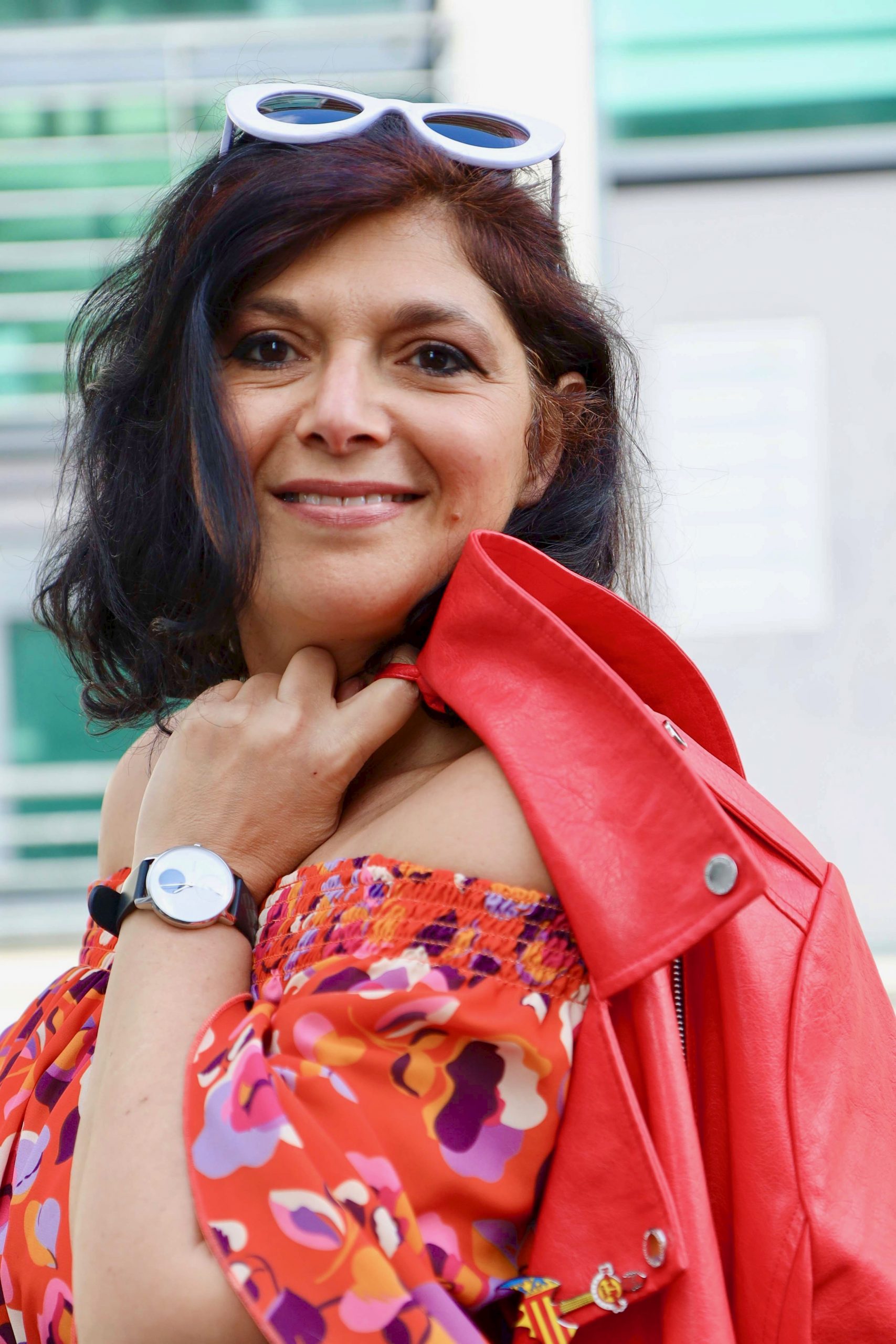
Monica Costa founded London Mums in September 2006 after her son Diego’s birth together with a group of mothers who felt the need of meeting up regularly to share the challenges and joys of motherhood in metropolitan and multicultural London. London Mums is the FREE and independent peer support group for mums and mumpreneurs based in London https://www.londonmumsmagazine.com and you can connect on Twitter @londonmums
