

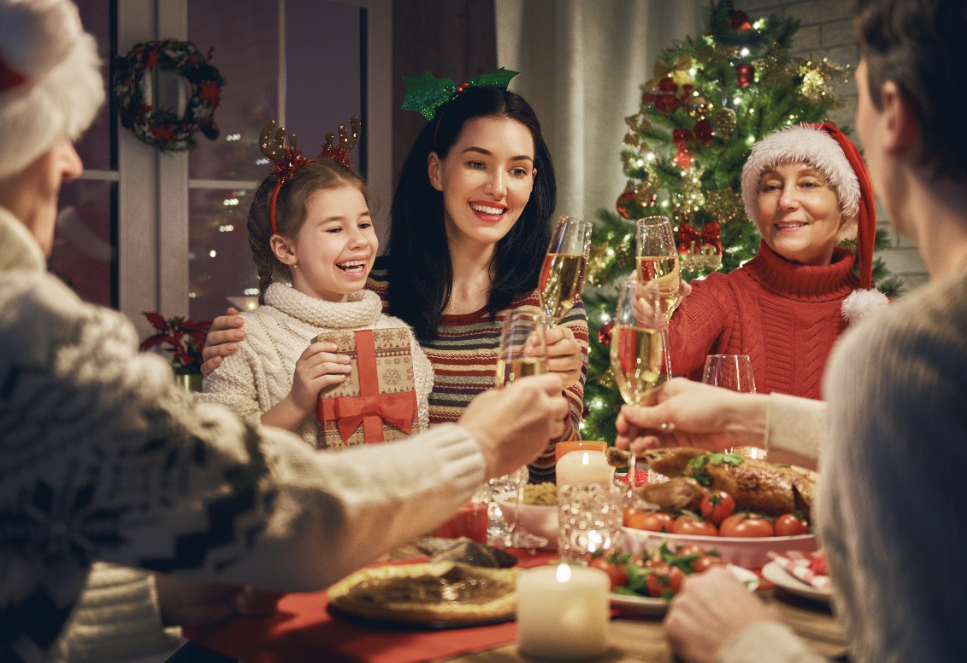
The best Christmas gatherings rarely come down to the biggest budget or the longest guest list. They come down to a handful of details done well: a table that looks considered, a welcome that feels generous, and a flow to the evening that never leaves anyone standing around with an empty glass. Here’s how to bring that kind of polish to your own holiday entertaining this year, without turning the whole thing into a second job.
Start With a Table That Sets the Tone
Guests notice the table before they notice almost anything else, so it’s worth getting right. A neutral base of white or cream linen gives you room to build, while a runner in deep green, burgundy, or gold adds warmth without overwhelming the place settings.
Keep the centerpiece low. Tall arrangements look striking in photos but make conversation across the table awkward. A low cluster of greenery, a few candles at varying heights, and some seasonal fruit (pomegranates and clementines both hold up well under lighting) will do more for the room than one oversized floral piece.
Mismatched vintage glassware, if you have access to it, reads as more considered than a brand-new matching set. It suggests the table was built up over years, which is exactly the feeling most hosts are after at Christmas.
Lighting deserves the same attention as the centerpiece. Overhead lights tend to flatten a room and make even a beautifully set table look like a meeting room with candles on it. Switching to lamps, candlelight, and maybe a string of warm white lights along a mantel or window does more for atmosphere than almost any other single change, and it costs nothing beyond flipping a switch.
Name cards are a small touch that pays off disproportionately at a mixed-age or mixed-group gathering. They take the awkwardness out of seating, and a short, legible script style feels considerably more festive than a printed font.
Make the Welcome Do Some Work
The first five minutes of a party set the mood for the rest of it. A drink in hand within moments of arrival, before coats are even properly off, makes guests feel expected rather than merely admitted.
A single signature drink, pre-mixed in a pitcher or punch bowl, solves two problems at once. It removes the bottleneck of a makeshift bar, and it gives the evening a small, memorable signature of its own. Mulled wine, a spiced gin fizz, or a simple cranberry spritz all work, and all can be made in batches well ahead of time.
Pair the drink with something small to eat immediately on arrival. Guests who are hungry from the moment they walk in tend to drink faster and talk less, which is the opposite of what a relaxed evening needs.
A Few Festive Touches That Earn Their Keep
Small table favors are one of the easiest ways to make a dinner feel like an occasion rather than just another meal. Christmas crackers in particular have stayed part of the British holiday table for a reason: they give guests something to do together before the main course arrives, and the brief ritual of pulling them tends to break the ice faster than small talk alone.
If you’re assembling your own table settings this year, the Robin Reed cracker range is worth a look for anyone wanting that classic snap-and-unwrap moment without having to build the favours from scratch. The appeal is less about the prize inside and more about the shared, slightly silly pause it creates right at the start of a meal.
Whatever you choose, keep the favour proportionate to the rest of the table. A cracker or a small printed name card does the job; anything bulkier starts to compete with the food for space.
Delicious Christmas lunch ideas for the perfect feast
Keep the Menu Relaxed but Deliberate
Elegant doesn’t have to mean elaborate. A menu with two or three dishes done properly will always outperform six dishes rushed. Choose one dish that can sit warm for twenty minutes without suffering (a braise or a roast with a long rest time is ideal) and build the rest of the evening around it.
Serve family-style wherever you can. Passing dishes around the table gives people a natural reason to talk to the person next to them, and it takes pressure off you as the host to plate everything perfectly before it reaches the table.
Think about dietary needs before the day arrives rather than improvising on the spot. A simple vegetarian version of the main dish, prepared alongside the rest of the meal rather than as an afterthought, lets everyone eat from the same table instead of splitting into separate menus.
Save dessert for a short break after the main course rather than rushing straight into it. A twenty-minute pause, with coffee or a digestif, gives the table room to breathe and gives you a moment to reset the kitchen.
Simple tips to avoid festive burnout this Christmas
Give the Evening Its Own Rhythm
A party without a loose structure tends to either stall early or run too long. Plan two or three natural turning points: drinks and arrival, the meal itself, and a slower final stretch with dessert, music, or a game.
Music matters more than most hosts give it credit for. A quiet instrumental playlist during the meal, followed by something livelier once the plates are cleared, helps the room shift gears without anyone having to announce it.
If the group is right for it, a short post-dinner activity, whether that’s a simple card game, a round of charades, or just moving to a different room with better light, gives the evening a second act instead of letting it fade out at the table.
It helps to have a loose end time in mind too, even if you never say it out loud. Knowing roughly when the evening will wind down lets you pace the later courses and the music without the night sprawling past the point where anyone, including the host, is still enjoying it.
Keep What Worked, Drop What Didn’t
The easiest way to improve next year’s gathering is to notice, this year, which small touches actually landed. Write down what guests commented on and what went untouched. Elegant holiday entertaining isn’t about doing more each year; it’s about doing fewer things with more intention, and being honest with yourself about which details were worth the effort.
That kind of attention, more than any single decoration or dish, is what guests actually remember when they talk about a Christmas gathering the following year.

Monica Costa founded London Mums in September 2006 after her son Diego’s birth together with a group of mothers who felt the need of meeting up regularly to share the challenges and joys of motherhood in metropolitan and multicultural London. London Mums is the FREE and independent peer support group for mums and mumpreneurs based in London https://www.londonmumsmagazine.com and you can connect on Twitter @londonmums
