

Critical new advice and a change in the law concerning Anaphylaxis. The tragic death of five year old Benedict Blythe in 2021 and the consequential inquest has resulted in a change in the law concerning Anaphylaxis (Section 34 of the Children’s Wellbeing and Schools Act 2026). As of September 2026, every maintained school, academy and pupil referral unit in England must publish an allergy safety policy and follow new DfE statutory guidance on Allergy Safety in Schools concerning staff training, spare adrenaline devices and incident recording.
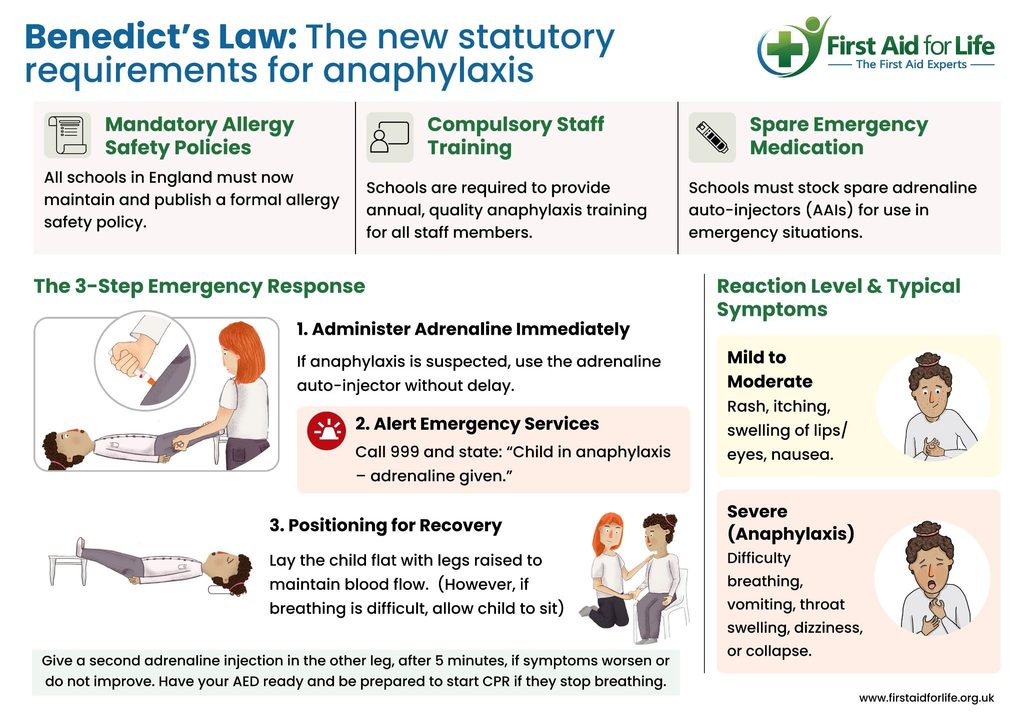
Schools must now:
- name a senior leader responsible for allergy safety
- train all staff in allergy awareness covering the full 12 DfE learning outcomes, at least annually, because covering anaphylaxis on first aid training alone is no longer considered sufficient
- put Individual Healthcare Plans in place
- ensure access to emergency adrenaline devices.
The guidance favours being “nut aware” rather than “nut free”, which creates a false sense of security.
Why this training is so important:
- Up to 30% of anaphylaxis cases have no obvious trigger at all.
- Up to 20% of anaphylaxis reactions in schools happen in children with no previously known allergy.
- Around one in five children and young people with allergy have their first ever reaction at their school, college or early years setting
- One in five anaphylaxis deaths among school-aged children in the UK happen in school
For a child having their first reaction there is no Individual Healthcare Plan, no Allergy Action Plan and no prescribed device. They will need help fast from whoever is in the room, everyone needs training rather than only designated first aiders.
Crucial findings from the Coroners report:
- Vomiting can be an early sign of anaphylaxis. In a child with known severe allergies, sudden vomiting should always raise the possibility of a reaction.
- Never move a child who may be having a reaction. Help and medication must come to the child, not the other way round. Walking a child to the office, or taking them outside, is dangerous.
- Allergy plans must be followed consistently, including during busy periods and when usual staff are not there.
- All staff need training, not just designated first aiders — a reaction can happen in the playground, the dining hall or a corridor.
- Earlier allergic incidents must trigger a procedural review. A near miss that is not learned from is a warning that has been wasted.
- Communication between staff is critical, particularly at handover and at break times.
To help your school meet these new requirements, First Aid for Life is offering free access* for all staff to their Allergy Awareness and First Aid for Anaphylaxis online course that covers all 12 DfE learning outcomes and fulfils the requirements for Benedict’s Law. You can also email emma@firstaidforlife.org.uk to arrange practical training, so your staff are confident and ready to act.
Key lessons for school staff and parents
- Delay in giving adrenaline is the single most dangerous factor. Delays in administration are consistently associated with fatal outcomes.
- Vomiting can be an early sign.
- Anaphylaxis can occur with no rash.
- Never move a child having a reaction. Bring the adrenaline to them.
- Give adrenaline immediately, then call 999. Give a further dose after five minutes if there is no improvement. Give a second adrenaline injection in the other leg.
- Antihistamines are for minor allergic reactions and will not treat anaphylaxis. Do not delay giving adrenaline if you suspect anaphylaxis.
- Don’t give a reliever inhaler to an asthmatic child if you suspect anaphylaxis. Give adrenaline immediately.
- Children at risk should carry two prescribed adrenaline autoinjector devices.
- If they have been prescribed a neffy adrenaline nasal spray, a second dose should be given in the same nostril.
- Schools should now carry emergency adrenaline autoinjector devices for anyone they suspect is experiencing an anaphylactic reaction.
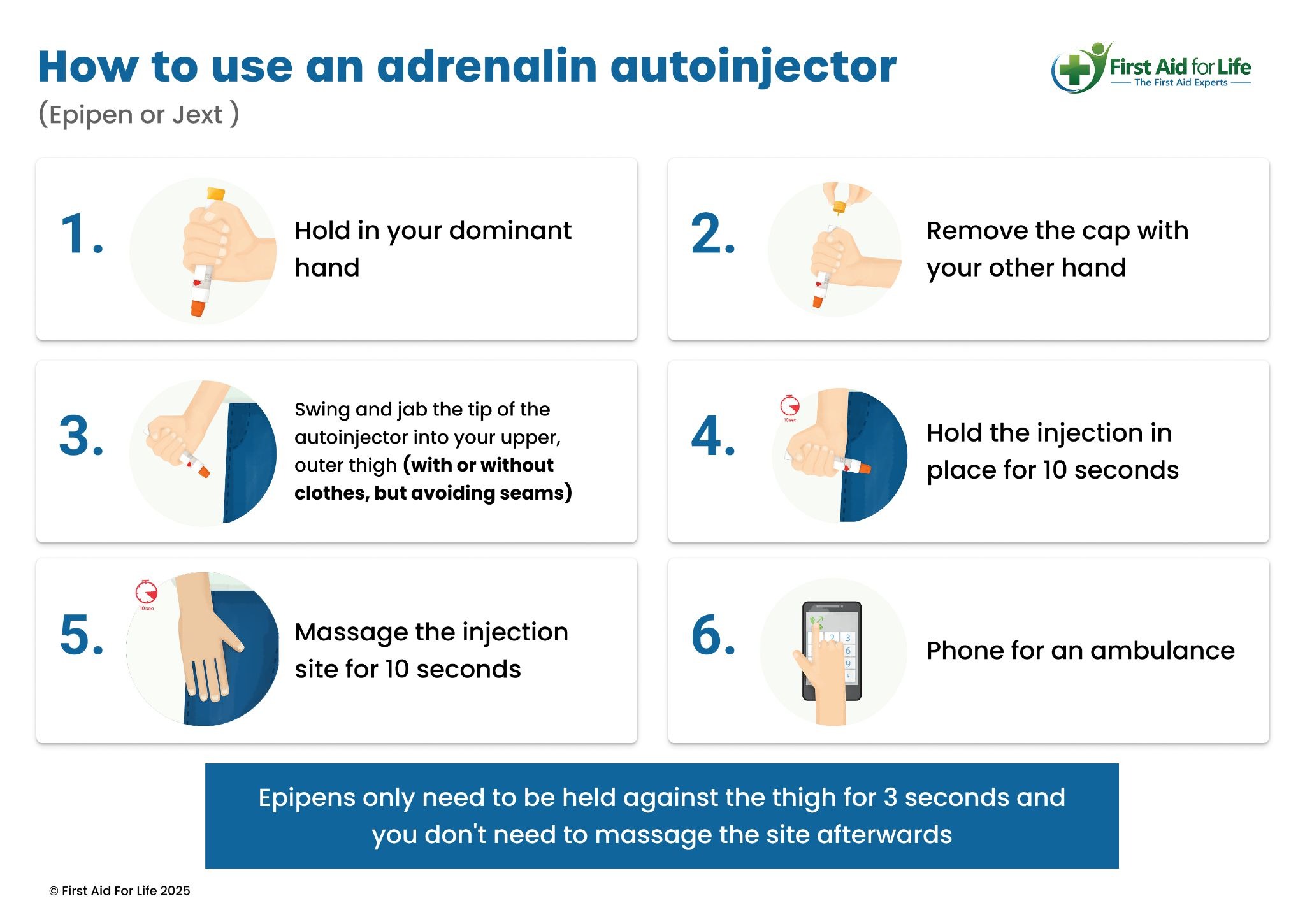
If you suspect anaphylaxis: Give adrenaline immediately, call 999 and position the casualty appropriately according to their symptoms. Be ready to give a second adrenaline autoinjector if they aren’t improving or are getting worse. Notify the call handler and be prepared to start CPR if necessary.
Further useful advice and information can be found at the following link:
- Benedicts Law Findings
- Anaphylaxis: Up to 30% of anaphylaxis cases have no obvious trigger at all
- 13-Myths Facts and Controversies abou Anaphylaxis
*Terms and Conditions apply – free to all schools booking First Aid for Life for regular staff and pupil first aid training.
It is strongly advised that you complete an online or attend a practical first aid course to understand what to do in a medical emergency. Visit FirstAidforLife.org.uk or OnlineFirstAid.com or call 0208675 4036 for more information about our courses.
First Aid for Life provides this information for guidance and it is not in any way a substitute for medical advice. First Aid for Life is not responsible or liable for any diagnosis made, or actions taken based on this information.

Emma Hammett is the CEO and Founder of First Aid for Life. First Aid for Life is an Award Winning fully regulated First Aid Training business, our trainers are extremely experienced medical and emergency services professionals and our training is tailored to your needs.
We give people the skills and confidence to help in an emergency.
Emma Hammett is a First Aid expert and is regularly contacted as a spokesperson for SKY News and the BBC, she is the First Aid expert for Mothercare.
First Aid for life provides this information for guidance and it is not in any way a substitute for medical advice. First Aid for Life is not responsible or liable for any diagnosis made, or actions taken based on this information. The best way to be prepared for action in an emergency is to attend a practical First Aid course.
For more information please visit: www.firstaidforlife.org.uk or contact emma@firstaidforlife.org.uk 0208 675 4036
