

Finland has about three million saunas for 5.5 million people. Do the math, and you’ll get why Finns treat their sauna less like a luxury and more like, well, a kettle sitting on standby; you just use it.
Meanwhile, a spa day in London feels more like a military operation. You need to book ahead, find a babysitter, catch a train, then brace yourself for a bill that’s somehow both eye-watering and soul-crushing. They call it “friction” in marketing, and honestly, it crushes any good intentions.
So lately, families are quietly opting out of the trek and setting up a calm oasis right at the end of their garden.
Why the Nordic Habit Spread So Well
UNESCO added Finnish sauna culture to its intangible heritage list in 2020, not because it’s dazzling, but because it’s ordinary. Families go together; there’s no performing, just a gentle normalcy.
That’s the bit the UK fell for. We talk about slow living all the time, and cold water swimming turned shivering into something social.
Sauna’s the natural partner for that. Swimmers already love that post-dip glow, and a sauna brings the warm, snuggly side of the equation. Warm up, cool down, do it again, chat, repeat.
Here’s what’s funny: the claims about saunas aren’t wild or magical. A Mayo Clinic review describes sauna bathing as mostly for pleasure and relaxation, and notes it’s getting popular elsewhere too.
That’s the honest truth. It’s somewhere to unwind, not a miracle cure. Plenty of folks say it helps them switch off before bed, and honestly, if that works, why ask for more?
Squeezing a Spa Into a Small London Garden
Here’s the misconception that stops most people: “My garden’s the size of a parking space.” Fair enough.
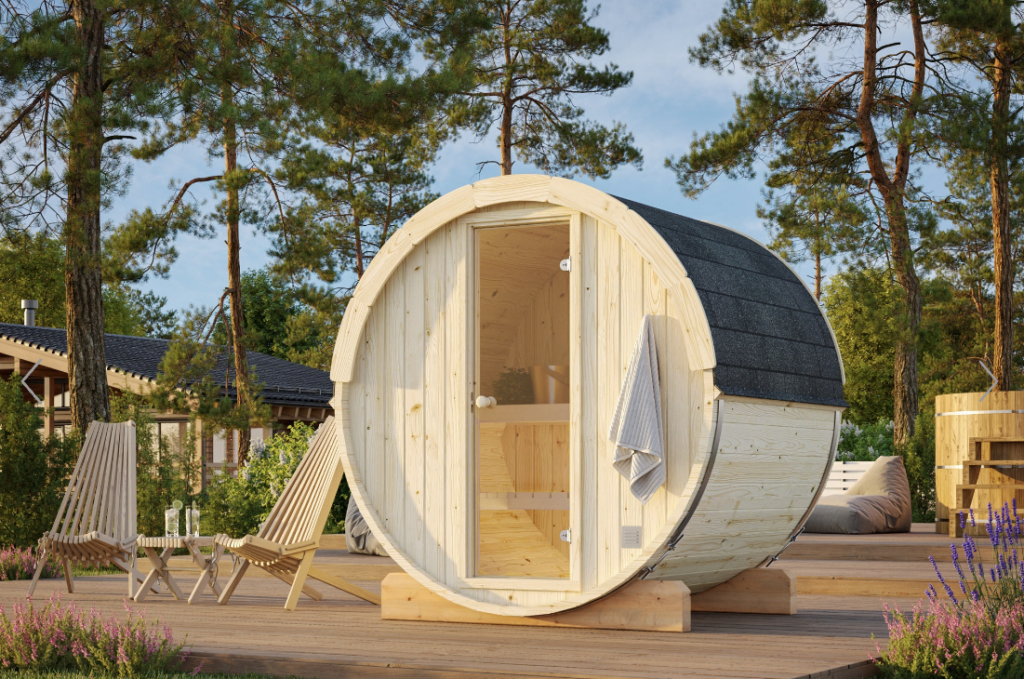
But compact barrel and cabin designs exist precisely for modest plots, so a home spa retreat doesn’t need a country-sized lawn. It needs a level patch, a tape measure and a bit of homework.
Start by checking your access: measure the side passage, because everything needs to fit through it. No one wants to deal with a crane.
Next, sort the base (has to be flat and steady), and figure out power; electric heaters need a proper connection and a qualified electrician.
Now for the fiddly part: boundaries. If you stick your sauna within two meters of your garden’s edge, it shouldn’t be taller than 2.5 meters, according to the Planning Portal.
But rules get trickier if you’re in a flat, a converted place, a listed building, or anywhere with extra restrictions. Call your council before you order anything.
As for electric versus wood-fired: wood-fired gives you crackle and atmosphere, but electric’s easier and won’t make the neighbor’s laundry smell like campfire.
Living in a city, electric is usually my pick. (Whichever way you go, grill the supplier about installation; your heater’s only as good as the wiring.)
Building a Ritual You’ll Actually Keep
Let’s be real: most wellness stuff gathers dust because the routine fizzles, not because the idea was bad. Get your rhythm set before the sauna arrives. Easy routines stick. Keep towels, a mug, and a lantern in one basket by the door.
Picture Sunday evening: roast finished, kids in dressing gowns, quick session in the sauna, then herbal tea on the deck. Or a short cool-down after a run. Or just a parents-only slot once kids are asleep (baby monitor close, obviously).
Want it to work? Leave phones inside. Sweaty thumbs aren’t great for scrolling anyway, and honestly, ten minutes away from a screen is half the magic. Finish with a cold shower or a few minutes in the cool air.
Now, the grown-up rules. Always supervise kids. Keep sessions short and temps lower for younger family members. Bring water, not wine (the Mayo Clinic ties saunas plus alcohol to serious risks). Anyone with health conditions should check with a GP first.
One Building, Many Jobs
A sauna is brilliant at one thing. Gardens, though, work all year. That’s why some families go a different way, and others opt for a garden room for the whole family, used for morning yoga, homework or a teenager’s hangout space.
The trade-off? A flexible room does lots of things decently, instead of one thing perfectly. Still needs planning checks. But a room you can use in February and in July feels pretty worthwhile.
Making the Space Feel Like a Retreat
Design is mostly about privacy. Trellis, tall planters, climbing plants; they all help block out the neighbors. Bamboo’s good; just use a clumping variety in a pot, or it’ll invade.
Lighting trips up a lot of people. Walk your garden at dusk with a torch before you plant anything. Skip the harsh floodlights. Go for warm, low lights along paths and decking; they’ll keep the mood calm and the toes safe.
When planting, lavender and rosemary add scent, while grasses soften things up when the wind’s blowing. Herbs love sun and dry soil, so put them in the brightest spot. And don’t forget a cool-down seat; just one, you don’t need a crowd.
Rest Without the Membership
Rest shouldn’t be some luxury you book weeks ahead. It can be an ordinary Tuesday habit; a few minutes of heat and quiet before everything gets noisy.
So this winter, look at your garden at five o’clock, when it’s dark and the day’s still trailing behind you, and ask yourself what that space could do for your family. You might surprise yourself.

Monica Costa founded London Mums in September 2006 after her son Diego’s birth together with a group of mothers who felt the need of meeting up regularly to share the challenges and joys of motherhood in metropolitan and multicultural London. London Mums is the FREE and independent peer support group for mums and mumpreneurs based in London https://www.londonmumsmagazine.com and you can connect on Twitter @londonmums
