

Thailand’s accommodation options range from 300-baht guesthouses with shared bathrooms to overwater villas in Phuket that cost more per night than a used car. Sorting through that spread takes more than a quick scroll through booking sites. Where you stay shapes your entire trip, from how much time you lose in traffic to whether you wake up to a construction site or a rice paddy.
Decide What Kind of Trip You’re Actually Taking
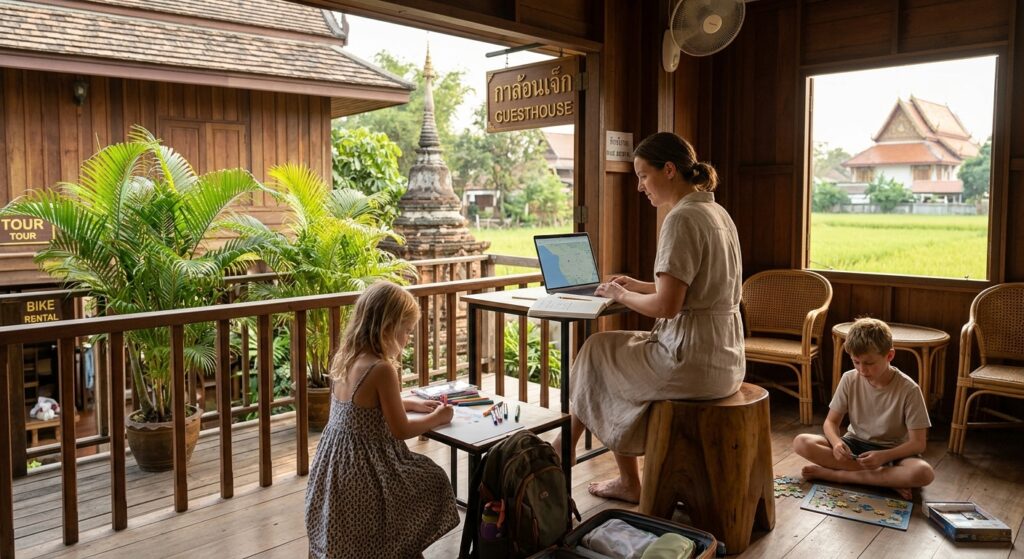
Before searching for hotels, get clear on the trip’s actual purpose. A honeymoon in Krabi calls for something different than a family trip built around Chiang Mai’s temples and cooking classes, and both differ from a business stay in Bangkok’s Sukhumvit district.
Write down three priorities: maybe that’s proximity to nightlife, a pool for kids, or a quiet workspace with reliable Wi-Fi. Those priorities should filter every property you consider, not just the star rating or the photos.
Match the Neighborhood to Your Plans
Thailand is large and diverse, and picking the wrong base within a city can cost hours of travel time each day. In Bangkok, staying near Sukhumvit puts you close to the BTS Skytrain, shopping malls, and a dense restaurant scene, while Old Town neighborhoods like Rattanakosin put you within walking distance of the Grand Palace and Wat Pho but farther from the modern transit network.
In Chiang Mai, the Old City is walkable and packed with temples, but it gets noisy and congested during peak season. Nimmanhaemin, just west of the moat, offers a quieter, more residential feel with better cafes and fewer tour buses.
On the islands, location matters even more because taxis and songthaews aren’t always readily available. Staying in Patong on Phuket puts you in the middle of the action, while Kata and Kamala offer calmer beaches within a short drive.
Learn the Difference Between Accommodation Categories
Thailand’s lodging market uses labels loosely, so it helps to know what you’re actually booking. A “boutique hotel” might mean a converted teak house with six rooms or a 40-room property with a rooftop bar. A “resort” can range from a modest beachfront property with a pool to a five-star complex with multiple restaurants and a private stretch of sand.
Serviced apartments are worth considering for stays longer than five nights, especially in Bangkok and Chiang Mai, since they typically include a kitchenette and washing machine at a lower nightly rate than a comparable hotel room. Homestays, meanwhile, offer a closer look at daily life in rural areas like Isaan or the hill towns near Pai, though they come with fewer amenities and less privacy.
Factor in Season and Weather Before You Book
Thailand runs on three seasons: cool and dry from November through February, hot from March through June, and rainy from July through October. High season prices in tourist hubs like Phuket and Koh Samui can run 30 to 50 percent higher than low season rates for the identical room.
Booking during the rainy season isn’t necessarily a gamble. Rain tends to arrive in short, heavy bursts rather than all-day downpours, and many properties drop rates enough to offset the risk of a few wet afternoons. Check cancellation policies carefully during this period, since some remote island accommodations become harder to reach if storms disrupt ferry schedules.
Read Reviews for Specifics, Not Star Ratings
A 4.5-star average tells you almost nothing useful on its own. Look instead for recurring comments about noise, water pressure, air conditioning reliability, and how far the property actually sits from the beach or attraction it advertises. Photos on booking platforms are sometimes years old or shot with wide-angle lenses that make small rooms look spacious.
Search review text for mentions of construction nearby, since Thailand’s tourist areas are in near-constant development and a quiet street today might have a new building going up next door in six months. Recent reviews, within the last two or three months, carry more weight than older ones.
Know When to Book Direct and When to Use a Platform
Booking directly through a hotel’s website often unlocks perks that third-party platforms don’t offer, including free breakfast, room upgrades, or flexible check-in times. Many independent hotels in Thailand will match or beat online travel agency prices if you email and ask directly, particularly for stays of three nights or longer.
For travelers planning something more elaborate, working with a specialist who arranges Thailand luxury trips can simplify decisions around private villas, island-hopping logistics, and properties that don’t list availability publicly. This matters most for multi-stop itineraries where timing between destinations needs to line up precisely.
Build In Flexibility for the Unexpected
Even careful planning runs into surprises: a flight delay, a change in weather, or simply discovering that a neighborhood doesn’t suit your pace once you’re there. Choosing accommodations with free or low-cost cancellation for at least the first stop of a trip gives room to adjust without financial penalty.
The right accommodation in Thailand isn’t the one with the most amenities or the highest rating. It’s the one that matches how you actually plan to spend your days, sits where you need it to sit, and leaves enough flexibility to change course if the trip takes an unexpected turn.

Monica Costa founded London Mums in September 2006 after her son Diego’s birth together with a group of mothers who felt the need of meeting up regularly to share the challenges and joys of motherhood in metropolitan and multicultural London. London Mums is the FREE and independent peer support group for mums and mumpreneurs based in London https://www.londonmumsmagazine.com and you can connect on Twitter @londonmums
