

I’ve lived in London long enough to know that you can walk past the same street a hundred times without ever turning down it. But this week, I finally did turn. And what I found stopped me in my tracks.
Just a stone’s throw from the chaos of Waterloo Station – with its rushing commuters, tourist herds, and that perpetual smell of hot dogs and diesel – I stumbled into a tiny knot of streets that felt like I’d fallen through a crack in time.
It’s called the Roupell Street, and I genuinely cannot believe I’ve never been here before.
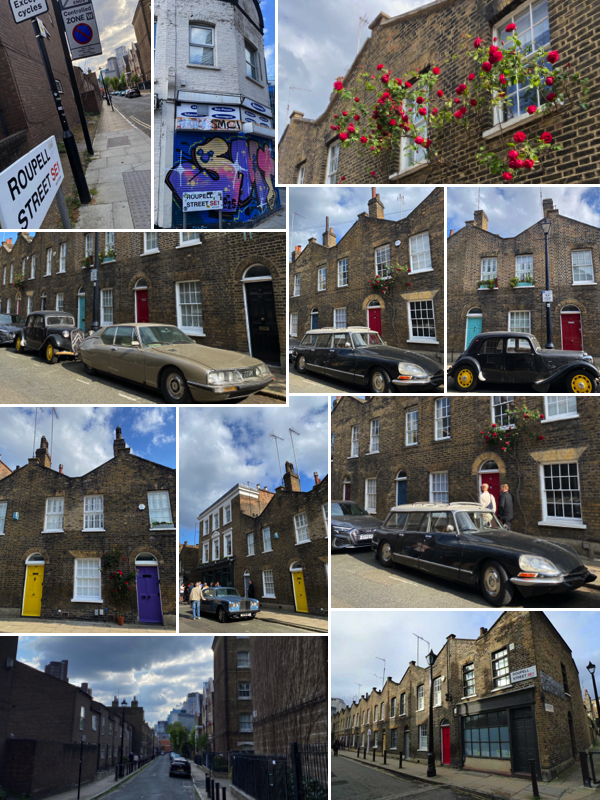
Step back 150 years (no Tardis required)
Imagine cobbles, gas lamps, two?storey terraced houses with slate roofs, and corner shops that still look like they’ve just served a Victorian blacksmith his lunch. That’s Roupell Street. And Whittlesey Street. And Theed Street. A whole little time capsule, tucked between Waterloo Road and the river.
These aren’t museum pieces, though. People actually live here. Children kick footballs against walls that were built in the 1820s. And somehow, miraculously, the bombs of the Blitz missed them. Developers with deep pockets have circled for decades, but these streets have survived – stubborn, charming, and almost impossibly intact.
Walking down Roupell Street, I actually laughed out loud. Not because anything was funny, but because I felt like I’d wandered into a film set. And then I found out: I had. This is where they filmed bits of Legend (the Kray twins film with Tom Hardy), plus episodes of Call the Midwife, Doctor Who, and Mr Selfridge. No wonder it felt familiar.
The cars tell the story (and made me smile)
There’s a pair of old photos of Roupell Street from the 1960s that I found online, and honestly, the cars are the real stars. You’ve got these wonderful boxy British saloons – Morris Oxfords, Austin Cambridges, maybe a Hillman Minx – all chrome bumpers and rounded edges, parked outside those same terraced houses.
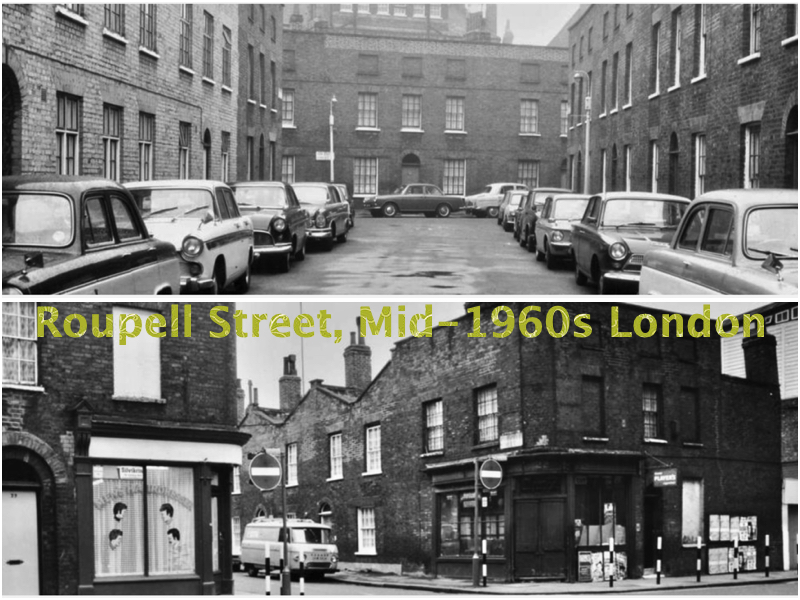
One photo has a mix of early?60s and mid?60s cars together, but nothing from the 1970s. No black grilles, no square modernist bodies. So the detectives date it to around 1966–1967. I love that. A street so unchanged that you can pinpoint a photo to within a year just by looking at the cars.
I half expected a man in a flat cap to come out and start polishing his Ford Anglia.
A quick history (with scandal – my favourite bit)
The story starts in the 1820s with a man named John Palmer Roupell. He was a gold refiner with ambition. He bought marshland on the south side of the Thames and started building modest two?storey houses for working families – builders, printers, saddlers, blacksmiths, butchers, bakers, teachers, and nurses.
Originally, the streets were named after his family: John Street, Catherine Street (his wife), Richard Street (his son). But there were so many similarly named streets in the area that the postmen rebelled. So they changed them to Theed Street, Whittlesey Street, and only Roupell Street remains to remember the family.
Then came disaster. In 1829, a fire broke out in a nearly finished house. Workmen had been pitching gutters late at night (to meet a contract deadline), a pot boiled over, and whoosh. One house was totally destroyed, another badly damaged. None were insured because they weren’t finished. You can still see metal insurance plaques on some walls today – a lesson learned the hard way.
But the real scandal came later. John’s grandson, William Roupell, forged a will, defrauded the family, fled to Spain, was caught, and sentenced to penal servitude for life. He served 14 years, came back to London, reinvented himself as a horticulturalist, and died in poverty – but 300 people came to his funeral. You couldn’t make it up.
The pub that feels like a village local
In the middle of all this is the King’s Arms – a proper, old?school pub that feels like it’s been serving the same families for two centuries. It’s got that dark wood, etched glass, and a quiet warmth that makes you want to order a half of shandy and read the newspaper. (Do they still call it a “public house” unironically? They should.)
I sat outside for ten minutes, watched a dad push a pram past, and thought: this is what London used to feel like. Slower. Friendlier. Less frantic.
Why London mums will love it
Here’s the practical bit, because I know you’re busy.
- It’s free. No tickets, no entry fees. Just walk.
- It’s five minutes from Waterloo. You can get off a train, see this, and be back on a train within an hour.
- It’s pram?friendly. Flat pavements, quiet streets, no stairs.
- Kids will love spotting the film locations. “Mum, was that in Doctor Who?”
- You can combine it with the South Bank. Walk from Roupell Street to the river, then along to the National Theatre, the BFI, or the Royal Festival Hall. Grab an ice cream. Make a day of it.
- There’s a corner shop that still looks like it’s from 1920. Perfect for a photo that’ll confuse your Instagram followers.
How to find this secret village
Head to Roupell Street, SE1 (nearest tube: Waterloo). From the station, walk down Waterloo Road towards the river, then turn right onto Roupell Street. You’ll know you’ve arrived when the noise drops and the bricks turn old.
Spend twenty minutes wandering. Look up at the insurance plaques. Peek down Windmill Walk and Cornwall Road. Say hello to the pub. Take a photo of a vintage car if you’re lucky.
Then go back to the 21st century, smug in the knowledge that you’ve found one of London’s best?kept secrets.
I’ve walked past the entrance to Roupell Street more times than I can count. I never turned down it. I was always rushing somewhere – to a meeting, to a school pick?up, to a train home.
But this week, I was early. And I turned. It reminded me that London is still full of magic, if you just look sideways. So next time you have half an hour near Waterloo, leave the main road. Go find the cobbles. You won’t regret it.
And if you see a woman staring dreamily at a 1960s Morris Oxford, that’ll be me.
Have you discovered any secret London streets? Tell me on Instagram or X – I’d love to add to my list.

Monica Costa founded London Mums in September 2006 after her son Diego’s birth together with a group of mothers who felt the need of meeting up regularly to share the challenges and joys of motherhood in metropolitan and multicultural London. London Mums is the FREE and independent peer support group for mums and mumpreneurs based in London https://www.londonmumsmagazine.com and you can connect on Twitter @londonmums
