

Yesterday, it was officially the hottest day in 40 years. London had melted into a sticky, shimmering puddle and I was wading through it, late, with blisters bubbling on my heels, running towards the Royal Albert Hall in a state of considerable dishevelment. I arrived sweaty, flustered and deeply apologetic about both. I need not have worried. Every single person filing through those grand doors was in exactly the same state, and nobody cared one bit. The Hall was absolutely packed, every seat taken for the premiere of English National Ballet’s The Sleeping Beauty, and the atmosphere crackled with the kind of electric anticipation that only a full house in a great venue can generate. By the time the lights went down I had already forgotten my feet.
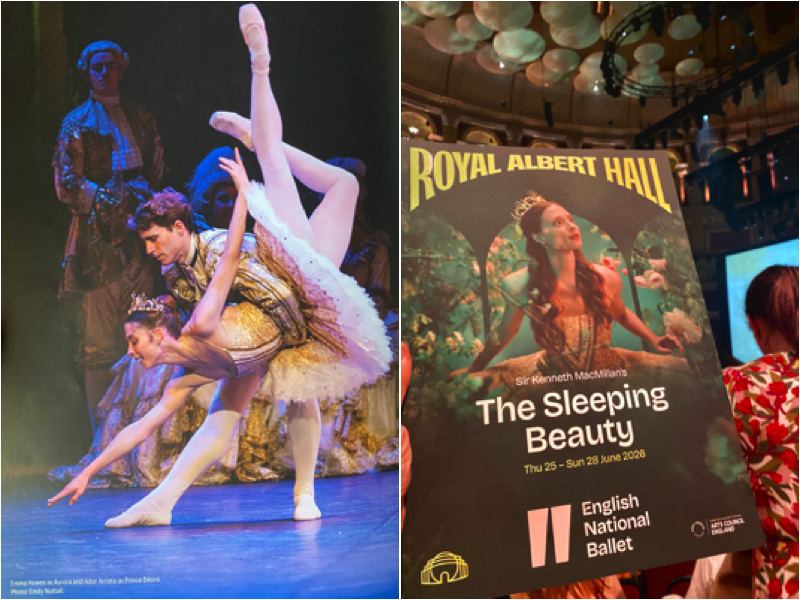
What followed was the finest ballet I have ever experienced. I say that without a shred of hyperbole. I have seen ballet in grand theatres and on modest stages, but the only performance that ever came close to this level of professionalism and soul was a Bolshoi production I attended in Russia back in 1990. This was world class. Pure, radiant, tear-to-the-eye world class.
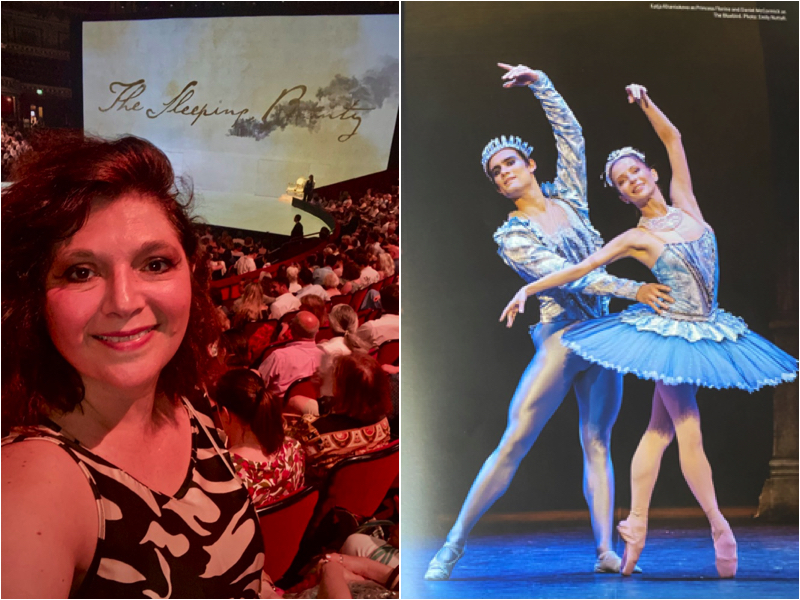
Wonderful storytelling through dance and music, without a single spoken word, is one of the hardest things to pull off, and this production makes it look effortless. The story of Princess Aurora is known to anyone who has ever watched a Disney film or shivered at Maleficent’s magnificence, but somehow, in the hands of this company, it felt brand new. I know The Sleeping Beauty extremely well, yet I was on the edge of my seat from the first note to the final bow. That is the mark of something truly special.
The grace and elegance of the dancers is almost impossible to describe without reaching for words that sound like clichés, but I will try. Lead Principal Emma Hawes, born in Ohio and trained in ballet from her earliest years, danced Aurora with a luminous clarity that made the character feel both regal and deeply human. Every extension was perfectly placed, every turn so controlled it seemed to slow time. Opposite her, Lead Principal Aitor Arrieta, originally from Spain’s Basque Country, was a Prince Désiré of extraordinary tenderness and strength. Their chemistry was palpable, and when he finally awakened Aurora with a kiss, the Hall was so silent I could hear the woman next to me holding her breath. English National Ballet should be immensely proud of these two artists. They embody everything that is great about the English style: the precision, the musicality, the understated elegance that never shouts but somehow resonates all the way to the back row.
The costumes deserve a mention of their own because I am still dreaming about them. Designed by Nicholas Georgiadis and set across the 17th and 18th centuries, they are sumptuous in the truest sense. Think 1750s court elegance, silks and velvets drenched in gold and silver, bodices that glitter, tutus that float like spun sugar. The evil fairy Carabosse, styled to resemble a terrifying Elizabeth I with striking red hair and an elaborate ruff, is the only character who breaks the period, and the effect is brilliantly unsettling. I learned afterwards that around 130 costumes are needed per cast, with many fabrics having to be dyed in-house because the original suppliers no longer exist. That labour of love shows in every seam.
What elevated the whole evening for me was the production’s commitment to elegance over spectacle. There is no excessive use of lighting, no bombardment of special effects. The most obvious technological flourish is a set of electronically created clouds that move softly in the background, a gentle, poetic touch that frames the dancing without ever distracting from it. Props are used with the same restraint; just enough to suggest a forest, a palace, a spell, and then they melt away to let the choreography breathe. It is a masterclass in how less can be immeasurably more.
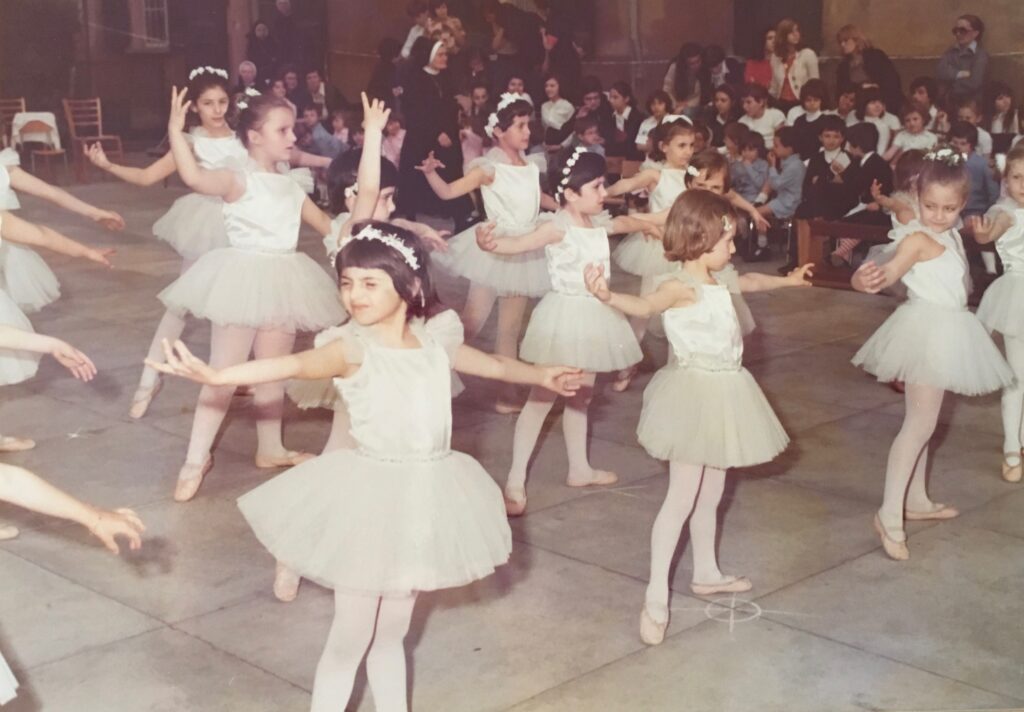
And the music. Oh, the music. Tchaikovsky’s glorious score, played live by the English National Ballet Philharmonic, undid me completely. This is the music my grandparents played in their home when I was a child. I grew up with these melodies; they are stitched into my earliest memories. At around four or five years old I started ballet classes, and although I quickly abandoned them because I hated the extreme discipline required, something I deeply regret now, as I suspect I had a natural talent, the love for the music never left me. There I was, a grown woman in a packed Royal Albert Hall, weeping quietly into my programme because every phrase of the orchestra brought back the smell of my grandparents’ living room and the feeling of being a little girl spinning in the kitchen. It was overwhelming in the most beautiful way.
For parents reading this, I have a heartfelt recommendation. If you want your children to fall in love with ballet, take them not just to full-length productions like this one but also to English National Ballet’s wonderful ‘My First Ballet’ series. It is the perfect introduction, and it plants a seed that can grow into a lifelong passion.
English ballet has such a rich tradition because its roots stretch back to the court of King Louis XIV of France. The Sun King was an accomplished dancer who famously performed on stage himself and, in 1661, founded the first Royal Academy of Dance, helping transform ballet from an elegant court pastime into a disciplined professional art. That French legacy spread across Europe, but Britain’s own ballet story truly blossomed in the twentieth century thanks to pioneers such as Ninette de Valois, whose vision helped establish one of the world’s finest ballet traditions. Today, every breathtaking performance on a British stage carries a little echo of both the Sun King’s passion for dance and Dame Ninette’s extraordinary legacy.
This production, choreographed by Sir Kenneth MacMillan after Marius Petipa’s original, has been sensitively reshaped into two acts to make it more accessible for modern audiences without losing a single ounce of its grandeur. Artistic Director Aaron S. Watkin and his team have created something that feels both timeless and fresh. The traditional mime sequences, those marvellous conversations between fairies conducted entirely through gesture, are preserved and performed with such clarity that you understand every word that is not being spoken. The battle between the Lilac Fairy’s benevolence and Carabosse’s fury is written into the choreography itself, a wordless drama that a child could follow and an adult could marvel at. And Puss in Boots dance with a cheeky white cat fighting and playing together was just delightful and funny.
I left the Royal Albert Hall with my feet still throbbing, my face still damp, and my heart completely full. The journey through stifling heat and painful blisters had been worth every step.
This is a five-star production in every sense, the kind of evening that reminds you why live performance matters, why we drag ourselves across town when it would be easier to stay home, and why we bring our children to sit in the dark and watch bodies tell stories that words cannot capture.
The Sleeping Beauty runs for a limited season at the Royal Albert Hall until 28 June 2026. If you can get a ticket, do not hesitate. Take your mother, take your daughter, take your friend who says they do not like ballet. They will come out a convert. I promise.

Monica Costa founded London Mums in September 2006 after her son Diego’s birth together with a group of mothers who felt the need of meeting up regularly to share the challenges and joys of motherhood in metropolitan and multicultural London. London Mums is the FREE and independent peer support group for mums and mumpreneurs based in London https://www.londonmumsmagazine.com and you can connect on Twitter @londonmums
