

I have a confession. I am a massive fan of Richard III. Not the Shakespearean villain who murders children and shouts for a horse. The real man. The warrior king who introduced bail, translated laws into English so ordinary people could understand them, and basically laid the groundwork for our entire legal system. He was a genius and a pioneer. He protected the poor and the vulnerable. He walked the talk. So when I heard about a one?man performance called 1 King, 2 Princes & Shakespeare’s Lie, closing the Fireside Folktales Fringe at the Methodist Church Sanctuary in Barnes on Sunday 24 May, I was in.
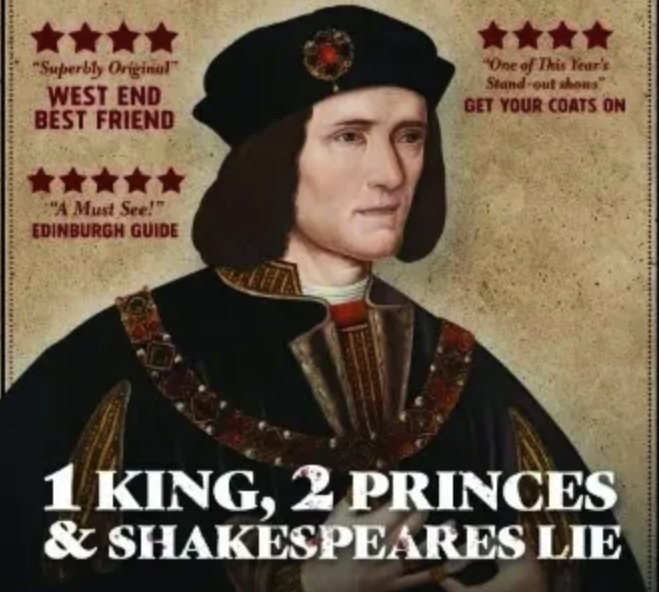
Richard III himself returns to confront the myths that condemned him, challenging Shakespeare’s version of events and putting history on trial. Provocative, compelling, and darkly entertaining. Sign me up.
A fringe festival with heart
Fireside Folktales Fringe is the brainchild of Shadow Road Productions, a company that specialises in intimate, inventive theatre in unusual spaces. Think historic buildings, bell tents, gardens, even care homes. They have worked with the National Trust, Combat Stress, and the Barnes Children’s Literature Festival, so they know their onions. The whole weekend was a delight, and this play was its perfect closing note.
The play: a king takes the stand
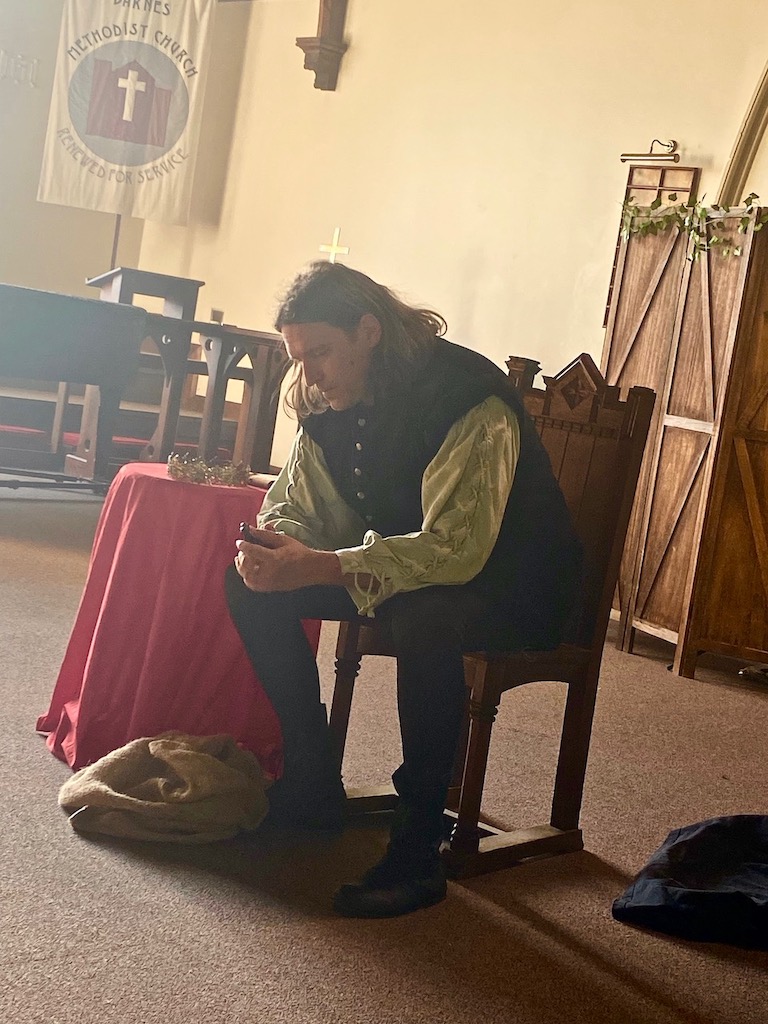
You hear them before you see anyone. Voices from different directions recite that famous line: “Now is the winter of our discontent . . .” Then a figure in a black cloak steps forward, dressed in Plantagenet style. That is Andrew Slade. He wrote this piece and he performs it alone. And he is brilliant. Passionate, utterly compelling, and never once boring.For fifty minutes, he builds a defence that would make any barrister proud. Richard of Gloucester, he argues, was no scheming uncle. He was a trusted guardian of his brother King Edward IV’s two sons. He ruled the north of England with a reputation for fairness. Even Elizabeth Woodville, Edward’s second wife, trusted the man. So far, no villain in sight.Then the Tudors get involved. Henry VII had a shaky claim to the crown and needed to look legitimate. Step forward Shakespeare, writing for a Tudor queen. He painted Richard as a monstrous, hunchbacked usurper. The play cleverly contrasts the Bard’s dramatic lines with the real historical record. The difference is staggering.
The man who changed the law for the better
What I loved most was how Andrew Slade celebrated Richard’s real achievements. The man introduced standardised weights and measures that lasted half a millennium. He created the Court of Requests, giving poor people a way to petition for fairness. Widows who would have lost their homes when their husbands died were allowed to stay. That was genuinely radical.Then the play dismantles the so-called evidence piece by piece. Consider the staircase in the Tower of London. The princes were supposedly murdered there, but that staircase was built years after they vanished. Or consider this: nobody even said the princes were dead during Richard’s reign. They had been declared illegitimate by Parliament after Edward IV’s secret marriage was discovered. That is not murder. That is politics. And then there is Henry Tudor’s own ruthlessness. He backdated his reign to a time before Richard fell at Bosworth. That meant every single person who fought for Richard was retroactively a traitor. Their punishment? A cruel death. Does that sound like a noble hero to you?
The Lost King and Philippa Langley
I have been fascinated by the injustice done to Richard III since I learned about it in school in the 1980s. Any drama about him draws me in. I have seen Adjoa Andoh play Richard at the Rose Theatre in Kingston (a stunning performance, by the way).
I have also watched the film The Lost King with Sally Hawkins and Steve Coogan, which tells the story of Philippa Langley, the amateur historian who refused to be ignored and found Richard’s remains under a Leicester car park in 2012.
That film is brilliant. It shows how Langley, haunted by visions of the king, defied the academic establishment. Her work forced the Royal Family to finally recognise Richard III as a rightful King of England from 1483 to 1485. Before that, he was not even listed as a monarch. She was awarded an MBE. And the state funeral they gave him was a moment of genuine justice.
Andrew Slade’s play is very much in that spirit. It asks the audience to be the jury. At the end, you have to decide: did history judge the wrong man? I already knew my answer before I walked in.
The verdict
Andrew Slade is the perfect advocate for Richard. His performance is intelligent without being a lecture, entertaining without being shallow. He acts Shakespeare’s villain alongside the reasonable, fair-minded king, and the contrast is stark. The audience was captivated. Everyone wanted to talk to him after the show. I sincerely hope to see it again.
One small thing I learned: Henry Tudor’s pre-dating of his reign meant that everyone who fought for Richard was technically a traitor. That is how you rewrite history. You punish the loyal and reward the usurper.
More than five hundred years later, Richard’s body was found under a car park in Leicester, unforgettably marked by a painted letter R. No body said the princes were dead in his reign. The physical evidence of the staircase alone should make us pause. And yet the myth persists.
I am giving 1 King, 2 Princes five shining stars. Not just for the performance, but for finally telling the truth about a man who deserved better.
Rating: Five stars – for the history nerds, the legal professionals, and anyone tired of the hunchback propaganda.
1 King, 2 Princes & Shakespeare’s Lie is produced by Slade Wolfe Enterprises. Keep an eye on their socials for future performances. If you get a chance to see it, go. Bring an open mind and leave the Tudor bias at the door.
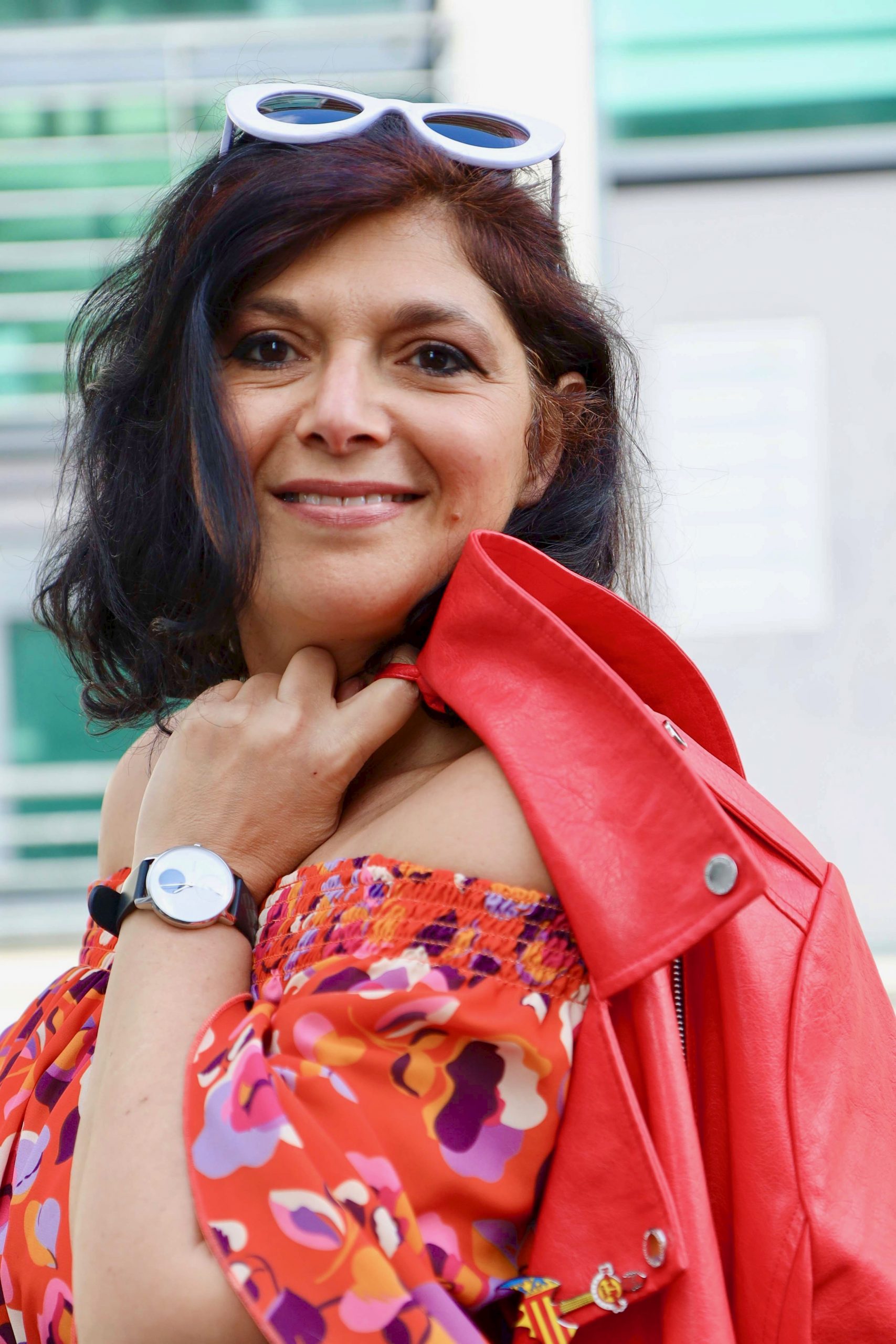
Monica Costa founded London Mums in September 2006 after her son Diego’s birth together with a group of mothers who felt the need of meeting up regularly to share the challenges and joys of motherhood in metropolitan and multicultural London. London Mums is the FREE and independent peer support group for mums and mumpreneurs based in London https://www.londonmumsmagazine.com and you can connect on Twitter @londonmums
