

Last week I did something I haven’t done in years: I lay down on a mat in a room full of strangers, closed my eyes, and did absolutely nothing for an hour. On purpose. While someone played singing bowls. I’m as surprised as you are.
I’d been invited to Olbas’ Road to Recovery event and, if I’m honest, the sound bath was the bit I was most unsure about. I’m a busy London mum with a magazine to run and a to-do list that has its own to-do list. Lying still with my eyes shut while someone gently banged a gong felt, frankly, self-indulgent. It was glorious.
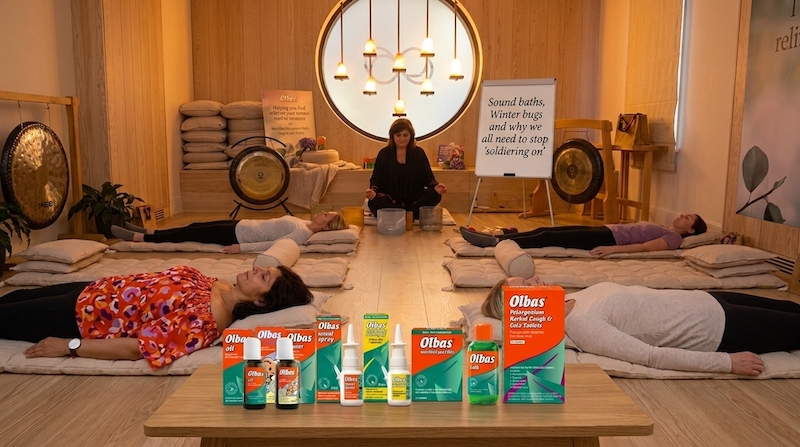
What actually is a Sound Bath?
If you’ve never been to one, a sound bath is exactly what it sounds like minus the water. You lie down, get cosy under a blanket (this one came with an eye pillow, which was a lovely touch), and a practitioner plays a range of instruments: singing bowls, gongs, chimes, sometimes a rain stick. The vibrations fill the room, and you’re invited to simply… be.
For the first five minutes, my brain was still running through my inbox. By minute fifteen, I’d stopped mentally rehearsing what I needed to do when I got home. By the end, I felt properly rested in a way I hadn’t in weeks.
There’s something about the sound and vibration that pulls you out of your head and into your body. It’s hard to explain until you’ve tried it, but the closest I can get is this: it’s like someone pressed a gentle reset button on your nervous system. The low hum of the bowls seems to slow everything down, your breathing, your thoughts, your shoulders (which, it turns out, had been up by my ears for approximately three weeks).
Rest is genuinely important. Not just because it feels nice, but because it’s one of the most effective things we can do for our health. Which brings me neatly to why Olbas had gathered us there in the first place.
The research that made me sit up (then lie back down)
Over breakfast I heard about Olbas’ new Winter Recovery Report, which explores how Britain recovers from seasonal illness. And the findings were, well, eye-opening. Also slightly depressing. Also very relatable.
Here’s the headline: nearly nine in 10 Brits (86%) have gone to work while ill, despite 74% saying staying home is the responsible thing to do. A quarter believe it’s not acceptable to take time off for a cold or flu-like symptoms. And 13% feel guilty when they do take sick leave.
The research also found that Gen Z are the most likely generation to take a sick day: 21% of 18–29 year-olds do, compared with just 7% of Boomers. Dr Roger Henderson, NHS GP and spokesperson for Olbas, says the younger generation are actually doing the right thing.
Dr Henderson explained: “The research points towards a ‘winter recovery gap’. The issue isn’t simply whether people know they should rest, it’s about feeling able to give yourself permission to do so. ‘Powering through’ work when we feel unwell can become deeply ingrained, so we convince ourselves that because a medicine has made us feel better, or because we can get through the working day, we must be well enough to carry on. However, symptom relief and recovery aren’t necessarily the same thing.”
That last line really stopped me in my tracks. Symptom relief and recovery aren’t the same thing. How many times have I dosed myself up, powered through the school run and a deadline, and called it “fine”?
What can we do abut it?
Dr Henderson’s advice is refreshingly simple: “Rest, sleep and hydration are some of the best things people can do to help themselves recover. It’s important to listen to how you’re actually feeling rather than using symptom relief as a signal that you’re completely recovered.”
The research backs this up: 62% of people say drinking plenty of fluids helps, 60% rely on sleep, and 56% make sure they rest. About half (47%) take over-the-counter remedies, and 30% use a decongestant when needed.
Dr Henderson also points out that small measures can make a real difference: warm drinks for a sore throat, natural decongestants for a blocked nose, staying hydrated. He also mentions that there’s evidence for using the herbal ingredient Pelargonium, which some studies suggest may help reduce the severity of an acute cough and help symptoms resolve sooner.
Here’s where it all comes together. The sound bath wasn’t just a lovely way to spend a morning, it was a reminder of something we all know but rarely act on: rest is not a luxury. It’s part of how we recover. From illness, from stress, from the relentless juggle of modern family life.
I left the event feeling calmer, clearer, and slightly guilty about all the times I’ve told myself I’d rest “when things quieten down.” (Spoiler: they never do.)
Now, I’m not suggesting you book a sound bath every time you feel a cold coming on. But I am suggesting this: when winter hits and it’s coming, whether we like it or not, give yourself permission to slow down. Take the sick day if you need it. Nap when you can. And if the opportunity for a sound bath presents itself, say yes.
The Olbas Winter Recovery Report launched with the new Olbas Pelargonium Herbal Cough & Cold Relief Tablets (£7.99 for 21 tablets), available at Amazon, Tesco, Sainsbury’s and other retailers. They’re a traditional herbal medicinal product used to relieve symptoms of upper respiratory tract infections, including colds, coughs, sore throats and blocked noses suitable for adults and children aged 12 and over.
And if you fancy trying a sound bath? I can highly recommend it. Just don’t be surprised if you fall asleep. Apparently, that’s a sign it’s working.
With thanks to Olbas for inviting London Mums to the Road to Recovery event. For more information, visit olbas.co.uk.
Related reads

Monica Costa founded London Mums in September 2006 after her son Diego’s birth together with a group of mothers who felt the need of meeting up regularly to share the challenges and joys of motherhood in metropolitan and multicultural London. London Mums is the FREE and independent peer support group for mums and mumpreneurs based in London https://www.londonmumsmagazine.com and you can connect on Twitter @londonmums
